
asiwo 40 Manta 40M Review: Hands-On Testing & Diver's Practical Guide
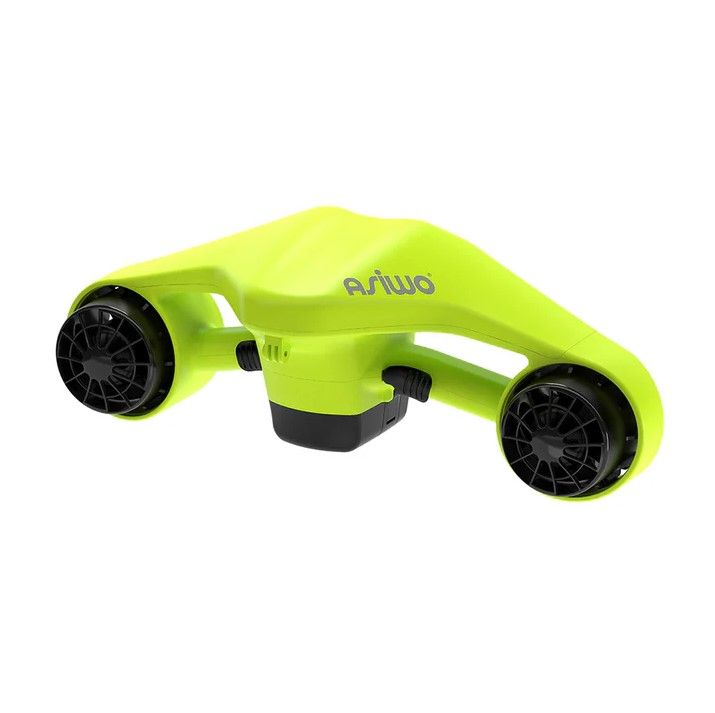
The asiwo 40 (officially designated as the ASIWO Manta 40M / EL-SS01) is a compact, dual-propulsion underwater sea scooter designed for recreational scuba divers, freedivers, and ocean snorkelers. Rated for depths down to 131 feet (40 meters), it packs twin electric motors that deliver up to 3.3 mph (1.5 m/s) of forward speed across three selectable gear modes. Its primary advantage is reducing physical exertion underwater—which directly lowers your breathing rate and helps stretch out your air supply on scuba dives. If you're looking for an ocean-capable scooter that's easy to pack in carry-on luggage and manageable for non-technical divers, the Manta 40M is a reliable, practical option worth serious consideration.
Special Diver Offer & Instant Savings
Planning your next dive trip or tropical getaway? You can order the official ASIWO Manta 40M directly from the manufacturer with an exclusive discount automatically applied at checkout through our link below.
Check Price & Claim Discount on ASIWO Manta 40M*Discount is applied instantly at checkout. Official warranty and global shipping included.
What Is the ASIWO Manta 40M? Overview & Core Intended Use
Diver Propulsion Vehicles (DPVs) used to fall into two main categories: heavy, expensive commercial tow-behind units that weighed 40 pounds or more, and cheap pool toys that stalled out against even a mild surface ripple. The asiwo 40 Manta 40M fits into the modern mid-tier category—a lightweight, dual-motor DPV aimed at recreational ocean use.
Measuring roughly 20 inches across and weighing under 8 pounds with the battery installed, it's designed to be stowed easily in a backpack or carry-on bag. Instead of relying on a single large motor and central propeller, the Manta 40M splits propulsion across two outer wing-mounted shrouds. This dual-motor layout balances the thrust line, preventing the rotational torque twist common in single-propeller designs. You don't have to fight the scooter to keep it running straight, which reduces hand and wrist fatigue during longer drifts.
| Feature / Specification | Manufacturer Spec | Real-World Practical Impact |
|---|---|---|
| Maximum Depth Rating | 40 meters / 131 feet | Covers the entire range of recreational Open Water and Advanced Open Water diving limits. |
| Maximum Speed | 1.5 m/s (~3.3 mph / ~2.9 knots) | Allows you to glide effortlessly against light to moderate tidal currents without kicking. |
| Speed Tiers | 3 Settings (Low, Medium, High) | Low mode conserves battery for long reef cruises; High mode offers quick bursts to cover open sand patches. |
| Battery Capacity | 126Wh (11.0V, 11400mAh) Lithium-ion | Complies with airline carry-on limits (<160Wh). Easy to take on international diving trips. |
| Total Weight | 3.5 kg / 7.7 lbs (including battery) | Light enough for kids and adults to carry down beach entries or climb up boat ladders easily. |
| Buoyancy Behavior | Slightly Positive (Floats) | If you release the triggers, the unit slowly floats upward rather than sinking into deep water. |
| Camera / Accessory Mounts | 1x Top Action Cam Mount + Light Slots | Lets you attach a GoPro or dive light directly to the nose for smooth wide-angle underwater footage. |
Design, Build Quality, and Hydrodynamics
When holding the asiwo 40 Manta 40M for the first time, the first thing you notice is the ergonomic grip angle. The handles sweep backward at roughly 15 degrees, placing your hands and wrists in a natural position alignment. When you're towing yourself through the water, your arms act as simple tension lines. You don't need to squeeze the handles tightly—the pull force transfers through your hands and forearms, keeping hand fatigue to a minimum.
The main hull consists of an impact-resistant ABS/polycarbonate composite shell. Outer motor shrouds surround each 3-blade propeller. These shrouds serve two essential functions:
- Safety Protection: The intake mesh clearance is tight enough to keep fingers, floating seaweed, or loose camera lanyards out of the spinning blades.
- Thrust Tunneling: The outer ring channels water column flow backward, reducing turbulence around the blade tips and improving overall motor efficiency.
At the center of the handlebars sits the control module. It features a bright LED battery status gauge and mode indicator. Rather than relying on complicated screen menus that are hard to read through a foggy dive mask, ASIWO uses color-coded LED lights to show battery life and current speed settings. That simple layout makes it easy to monitor your power at a glance, even in murky water or during night dives.
Under the Hood: Propulsion Mechanics & Dual-Trigger Controls
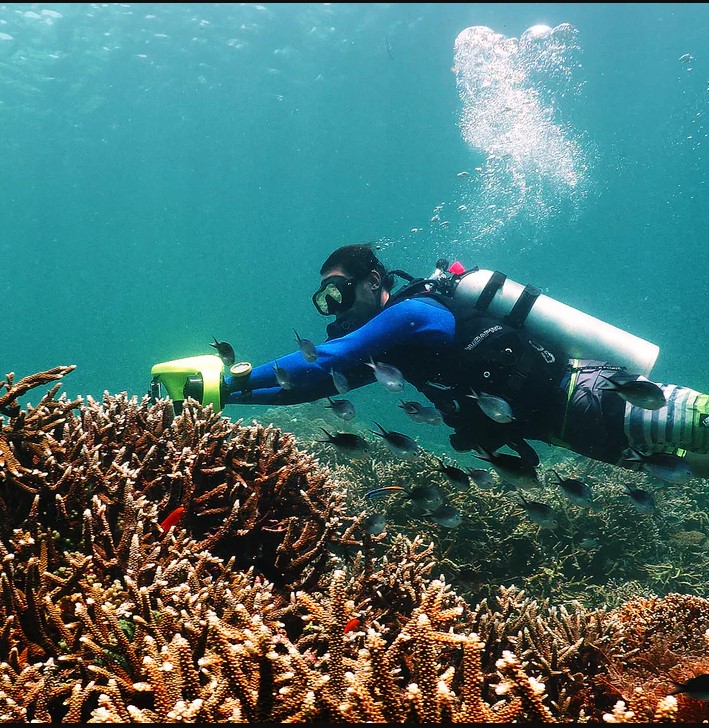
Safety underwater is all about redundancy and precise control. The Manta 40M uses a dual-trigger actuation mechanism located on the underside of both handgrips. To start the motors, you must press and hold both the left and right triggers at the same time.
If you release either trigger—whether you drop the scooter, clear your mask, or equalize your ears—the power cuts instantly. The propellers stop spinning in less than half a second. This design prevents runaway accidents where a lost scooter bolts off into deep water or collides with living coral reefs.
Switching Gears Underwater
Changing speed settings on the asiwo 40 is simple and can be done on the fly while swimming:
- Low Gear (Gear 1): Speeds up to ~0.8 m/s (1.8 mph). This mode is ideal for casual reef cruises, maneuvering close to rock formations, or conserving battery power.
- Medium Gear (Gear 2): Speeds up to ~1.2 m/s (2.7 mph). Great for steady cruising alongside turtles, rays, or swimming buddies without overworking your legs.
- High Gear (Gear 3): Full output at ~1.5 m/s (3.3 mph). Designed for swimming against surface ripples, crossing open stretches of sand, or returning to the dive boat against a current.
To switch modes, press the top speed toggle button while keeping the triggers pulled. The LED indicator light changes color to confirm the active gear mode. It's a quick, intuitive adjustment you can easily master on your very first dive.
Field Performance: Scuba Diving, Snorkeling, and Freediving
Scuba Diving Applications
For scuba divers, the greatest benefit of using the asiwo 40 Manta 40M is air conservation. Leg muscles are the largest muscle group in your body, consuming substantial oxygen when kicking hard against current. By letting the scooter tow your mass, your heart rate drops, your breathing stabilizes, and your Surface Air Consumption (SAC) rate improves.
During testing at 60 feet (18 meters), holding the scooter relaxed in front allowed for smooth, effortless drift tracking. Because the unit is slightly positively buoyant in saltwater, if you let go of the handles to adjust your buoyancy control device (BCD) or clear your mask, the Manta 40M floats slowly upward above your head instead of sinking to the ocean floor. We recommend securing a wrist lanyard to the built-in attachment eyelet so the unit stays nearby if you temporarily release your grip.
Snorkeling and Reef Gliding
For snorkelers and ocean swimmers, the Manta 40M makes exploring offshore reefs far easier. Rather than tiring yourself out kicking long distances from shore, you can coast out to the outer reef edge using Low or Medium speed modes. The built-in GoPro camera mount on top of the nose sits at an ideal forward angle, helping you capture stable wide-angle video without your hands blocking the view.
Freediving Considerations
Freedivers will appreciate how quickly the Manta 40M pulls them down through the first 10 meters of positive buoyancy, helping conserve precious oxygen for longer bottom stays. However, keep in mind that holding a scooter with both hands prevents you from manually pinching your nose to equalize. You'll need to use hands-free equalization techniques (like the Frenzel or Voluntary Opening of the Tuba method) or momentarily release one trigger to equalize every few feet during your descent.
Battery Chemistry, Charging Safety, and Airline Travel Rules
The heart of the asiwo 40 Manta 40M is its 126Wh removable lithium-ion battery pack. Understanding how to manage and maintain this battery is essential for keeping it operating reliably and safely long-term.
Travel Compliance & Flying with the Battery
Under International Air Transport Association (IATA) and U.S. Transportation Security Administration (TSA) regulations, lithium-ion batteries rated between 100Wh and 160Wh are permitted in carry-on baggage with airline approval. Because the Manta 40M battery is rated at 126Wh, you can take it aboard commercial flights. Never place the lithium battery in checked baggage. Always pack the scooter body in your checked luggage and carry the battery with you inside the cabin.
Battery Life Realities in Cold vs. Warm Water
ASIWO advertises a run time of up to 45 minutes on a full charge. In practical field testing, actual runtime depends heavily on three factors:
- Speed Tier Used: Running continuously in High Gear (Gear 3) drains the battery in roughly 20 to 25 minutes. In Low Gear (Gear 1), you can reliably reach 35 to 45 minutes of intermittent throttle use.
- Water Temperature: Cold water reduces lithium-ion cell efficiency. Diving in 55°F (13°C) water drops usable capacity by roughly 10-15% compared to warm tropical waters at 82°F (28°C).
- Diver Drag Profile: A diver wearing a thick 7mm neoprene wetsuit with bulky gear creates more drag than a swimmer in boardshorts, requiring more energy to move at the same speed.
Charging and Battery Care
Recharging the 126Wh pack takes approximately 2.5 to 3 hours using the included charger. To prolong overall battery life, follow these best practices:
- Cooling Off Period: Allow the battery module to cool completely for 30 minutes after a dive before plugging it into the charger.
- Dry Contact Check: Ensure the golden electrical contact pins are completely dry and free of salt water before connecting the charging port.
- Storage Voltage: If storing the scooter for several months during the off-season, charge the battery to roughly 50-60% capacity. Never store lithium-ion packs completely drained for long periods.
User Manual Insights & Essential Maintenance Rules
Before taking your asiwo 40 into salt water, take time to review the official documentation. The full operations manual provides important care guidelines that keep the waterproof seals intact and prevent costly flooding damage.
You can read or download the document directly here: Official ASIWO Manta Sea Scooter User Manual (PDF).
Critical Maintenance Steps After Every Dive
Salt water is tough on equipment. Once salt dries inside moving parts, it forms sharp crystals that can cut waterproof O-rings and jam internal drive shafts. Follow these standard post-dive care steps:
- Freshwater Soak: Submerge the complete unit in a tub of clean fresh water for at least 20 minutes after emerging from salt water.
- Trigger Flushing: While submerged in fresh water, depress both triggers several times to flush away trapped salt deposits and fine sand.
- Thorough Drying: Wipe down the outer casing with a soft microfiber towel before opening the battery compartment.
- Inspect and Grease O-Rings: Regularly check the primary battery compartment O-ring seal for fine hair, sand grains, or cracks. Apply a thin coat of pure silicone grease to keep the rubber soft and supple.
Community Insights: Reddit Discussions & Real Diver Experience
To see how the asiwo 40 Manta 40M holds up over long-term use, we analyzed feedback across active diving forums and ocean gear communities. You can read user experiences and ongoing owner Q&A sessions on Reddit here: ASIWO EL-SS01 Scooter User Discussion on Reddit.
Key takeaways gathered from real divers and long-term owners include:
- Portability Rating: Users consistently highlight how easy it is to carry the unit on flights. Flying with the compact 126Wh battery in a carry-on backpack makes it far less hassle to travel with than larger, heavier ocean DPVs.
- Recreational Speeds: Owners note that while it isn't built to pull heavy technical divers loaded with twin steel tanks and stage bottles, it offers plenty of power for single-tank recreational setups and casual tropical drift dives.
- Rinse Discipline Matters: Community members emphasize the importance of thorough post-dive freshwater rinses. Scooter owners who neglect flushing the trigger spring recesses report stiff trigger action over time due to salt buildup.
Trustpilot Reviews & Customer Service Record
When purchasing personal watercraft equipment, customer service support and warranty handling are just as important as the gear itself. ASIWO maintains an active presence on Trustpilot, where verified customers share direct feedback regarding product reliability, shipping speeds, and replacement parts service.
You can view verified buyer ratings on the ASIWO Official Trustpilot Review Page.
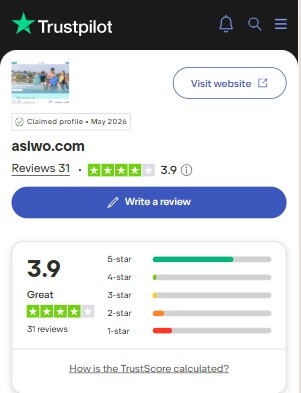
Screenshot of ASIWO rating profile and verified customer feedback on Trustpilot.
Overall feedback highlights fast order processing and responsive email customer support when requesting spare O-rings or extra charger blocks. Buyers also report that replacement batteries ship out quickly without excessive customs delays.
Video Walkthrough: Seeing the Manta 40M in Action
To get a clearer view of the scooter's operational noise level, speed performance, and turning radius underwater, watch the hands-on video overview below:
Direct Comparison: ASIWO Manta 40M vs. Market Alternatives
To give you a better idea of how the asiwo 40 compares to similar DPV models in the same price range, let's take a look at how it stacks up against key competitors:
| Feature | ASIWO Manta 40M | Sublue WhiteShark Mix | Geneinno S2 |
|---|---|---|---|
| Max Depth | 40m / 131ft | 40m / 131ft | 30m / 98ft |
| Max Speed | 1.5 m/s (3.3 mph) | 1.5 m/s (3.3 mph) | 1.2 m/s (2.7 mph) |
| Speed Modes | 3 Speeds | 1 Speed | 2 Speeds |
| Battery Size | 126Wh (Airline Compliant) | 121Wh (Airline Compliant) | 97Wh (Airline Compliant) |
| Positive Buoyancy | Yes (Floats naturally) | Requires float leash/floater kit | Yes (Floats naturally) |
The Manta 40M stands out mainly by offering three distinct speed settings, giving you more throttle control than single-speed alternatives. Having a low speed setting helps you save battery power when you're swimming alongside a buddy or taking underwater photo shots.
Purchasing, Warranty Coverage, Shipping, and Payment Options
When buying directly through the official seascooter store, it helps to review their ordering and warranty terms ahead of time:
- Shipping Details: Orders are processed quickly with regional warehouse options available to avoid lengthy cross-border transit times. You can view delivery estimates on the Official Sea Scooter Shipping Policy.
- Warranty Protection: The Manta 40M comes backed by a limited manufacturer warranty that covers structural housing defects, motor failures, and electronic controller faults. Review full terms on the Official Limited Warranty Terms.
- Customer Care: If you need technical assistance, spare parts, or servicing guidance, you can reach out directly via the ASIWO Support Contact Page.
- Secure Payment Options: Direct online ordering supports major credit cards, Shop Pay, PayPal, Apple Pay, and secure encrypted checkout options. You can review available options on the Official Secure Checkout Portal.
Final Diver Verdict: Is the ASIWO Manta 40M Worth It?
The asiwo 40 Manta 40M delivers an ideal balance of size, thrust, and practical depth rating for recreational water enthusiasts. It's not designed to replace heavy technical diving scooters built for long cave explorations or extreme depths, but for resort vacations, ocean reef snorkeling, and recreational scuba diving down to 131 feet, it performs reliably.
Its airline-compliant 126Wh battery, intuitive dual-trigger control layout, three-speed versatility, and floating design make it an exceptionally user-friendly choice for both beginners and experienced divers alike.
Ready to Explore the Ocean with the ASIWO Manta 40M?
Order directly from the official distributor today to lock in direct pricing, full warranty coverage, and automatic discount savings.
Get the Best Price on ASIWO Manta 40M NowFrequently Asked Questions (FAQ)
Can I fly on an airplane with the ASIWO Manta 40M sea scooter?
Yes. The battery installed in the Manta 40M is rated at 126 Watt-hours (126Wh). Under current TSA and IATA airline regulations, lithium-ion batteries rated under 160Wh are permitted in carry-on hand luggage with airline approval. Always remember to pack the battery in your carry-on bag and place the scooter body in your checked luggage.
What happens if I accidentally let go of the sea scooter underwater?
The Manta 40M features positive buoyancy in seawater. If you release both triggers, the motor cuts off instantly, and the scooter will slowly float upward toward the surface rather than sinking into deep water.
How deep can the ASIWO Manta 40M go?
The scooter is water-pressure rated to a maximum depth of 40 meters (131 feet). This covers the entire depth envelope for recreational diving certification levels, including PADI/SSI Open Water and Advanced Open Water limits.
How long does the battery last on a single charge?
Runtime varies based on speed mode and water conditions. Continuous use in Gear 3 (High Speed) yields around 20 to 25 minutes of continuous thrust. Intermittent use in Gear 1 (Low Speed) extends runtime to roughly 35 to 45 minutes on a full charge.
Can children use the ASIWO Manta 40M?
Yes, under direct adult supervision. The scooter requires both hand triggers to be pressed at the same time to operate, which acts as a built-in safety lock. The protective motor shrouds also keep fingers safely away from the spinning fan blades.
How do I clean the sea scooter after diving in salt water?
Submerge the scooter in a bucket or tub of clean fresh water for 20 to 30 minutes after your dive. Work both trigger switches back and forth while submerged to rinse out salt crystals, then wipe the casing down with a soft towel before opening the battery compartment.

0 Comments