
ASIWO Manta S (Manta 2) Underwater Sea Scooter Review
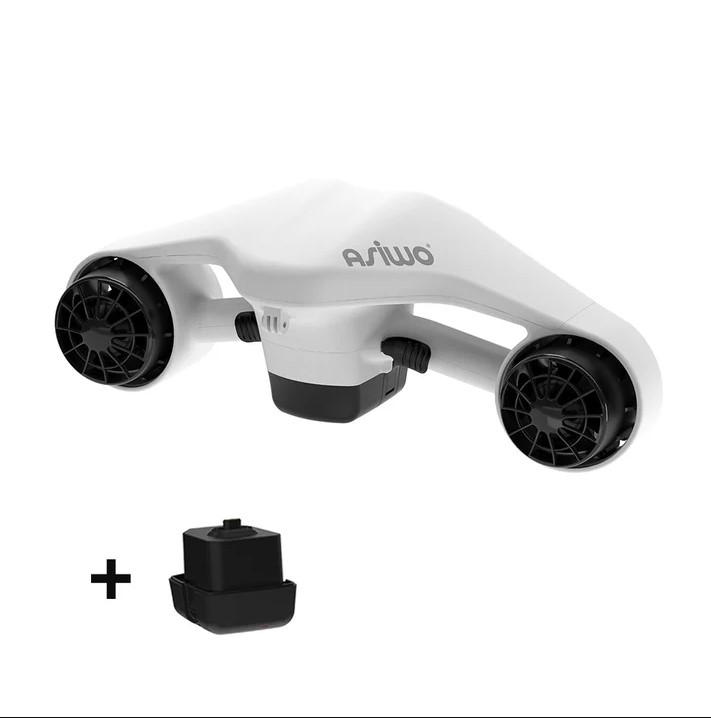
The asiwo manta 2 (officially known as the ASIWO Manta S) is a compact, dual-thruster underwater sea scooter engineered for snorkelers, recreational divers, and ocean enthusiasts who want smooth propulsion down to depths of 131 feet (40 meters). Capable of reaching top speeds of roughly 3.35 mph (1.5 m/s) across three distinct speed modes, it balances lightweight portability with enough thrust to pull a fully geared adult through open water. If you're searching for an accessible, airline-friendly underwater scooter with safety lock features, integrated action camera mounts, and swappable batteries, the Manta S stands out as one of the most practical and well-rounded options available today.
Exclusive Pricing Applied
Ready to explore the reef without exhausting your legs? Click below to check current availability with an automatic discount applied at checkout.
Get the ASIWO Manta S Direct Discount HereWhat Is the ASIWO Manta S (Manta 2) & Who Is It Really For?
When you first handle an underwater sea scooter, the design balance immediately tells you how the manufacturer expects you to move through the water column. The ASIWO Manta S uses a wing-style shape that houses two parallel electric thrusters. Rather than relying on a heavy single-propeller barrel like traditional Diver Propulsion Vehicles (DPVs) built for commercial wreck diving, this dual-motor layout spreads the pulling force evenly across both of your arms.
That balance makes a substantial difference when you're swimming over a shallow coral head or maintaining horizontal trim along a drop-off. You don't have to fight torque twisting your wrists. The unit stays flat, letting you steer simply by tilting your shoulders or dipping one wing edge.
Who Should Buy the Manta S?
- Snorkelers & Reef Explorers: If you love spend hours over marine sanctuaries but hate getting leg cramps from constant finning, this unit carries you smoothly over long distances while preserving your stamina.
- Recreational Scuba Divers: Rated down to 131 feet (40 meters), it gives shallow-to-mid-depth divers an efficient way to extend air supply. By letting the scooter do the physical work, your breathing rate drops, which directly extends your tank bottom time.
- Families & Pool Enthusiasts: Thanks to built-in child safety lock controls and covered propeller grilles, it works safely in residential or resort swimming pools under adult supervision.
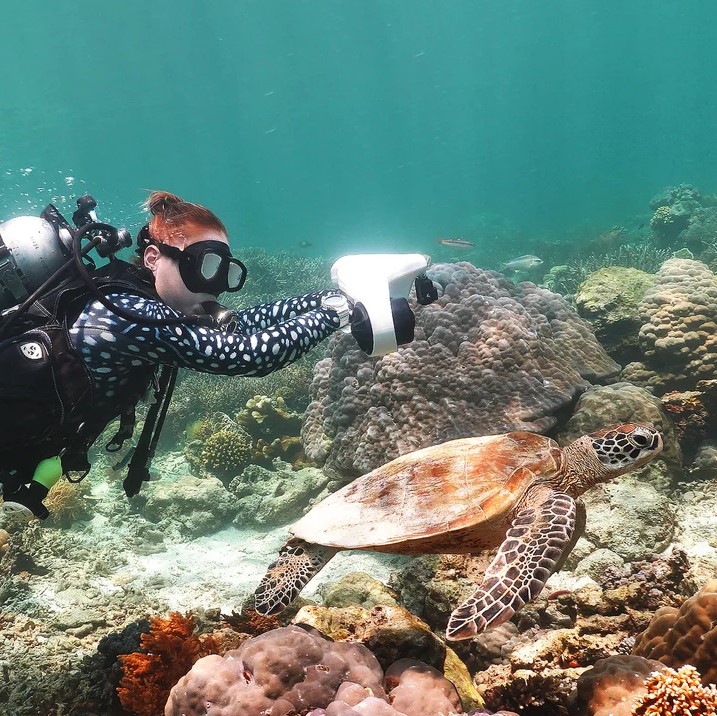
- Underwater Content Creators: With a built-in top camera mount compatible with GoPro and other action cameras, you can capture stabilized forward-facing footage without holding a camera tray in one hand while swimming.
Who Should Look Elsewhere?
- Technical Cave & Deep Wreck Divers: If you need a heavy-duty DPV to tow three stage bottles through thousands of feet of cave passages against heavy flow, you need a high-capacity technical DPV that costs thousands more. The Manta S is designed for light-to-moderate recreational propulsion.
- Divers Wanting 2-Hour Continuous Full-Throttle Runs: Compact sea scooters rely on lightweight lithium batteries to stay under airline carry-on limits. If you need several hours of non-stop full-power pulling without swapping batteries, a larger, heavier chassis is required.
Technical Specifications Breakdown
Understanding what a sea scooter can do requires examining the raw performance metrics. Here is how the ASIWO Manta S builds out its functional profile based on official technical data:
| Specification | Details & Value |
|---|---|
| Model Name | ASIWO Manta S (Manta 2) / EL-SS01 |
| Maximum Depth Rating | 131 feet / 40 meters |
| Top Speed | Up to 3.35 mph (1.5 m/s) across 3 speed modes |
| Speed Modes | Low (approx. 0.8 m/s), Medium (approx. 1.2 m/s), High (approx. 1.5 m/s) |
| Motor Setup | Dual Brushless Electric Motors |
| Total Thrust Output | Approx. 19.8 lbs (9 kgf / 88N) combined thrust |
| Battery Capacity | 126 Wh Lithium-ion (Rechargeable, Swappable) |
| Average Battery Runtime | 30 to 45 minutes (varies by speed mode and diver weight) |
| Recharge Time | Approx. 2 to 3 hours from empty |
| Total Weight (with battery) | Approx. 7.7 lbs (3.5 kg) |
| Buoyancy Characteristic | Slightly positive in salt water; near-neutral in fresh water |
| Accessory Mounting | Standard Action Camera Mount (GoPro compatible) |
Hydrodynamics and Water Handling
The main issue with traditional single-propeller sea scooters is rotational torque. When a single large blade spins clockwise inside a body tube, it exerts counter-rotational force on your arms. To keep the unit level, you constantly have to twist against that motor force. Over a 45-minute dive, that torque causes wrist fatigue.
The ASIWO Manta S solves this issue by deploying two separate brushless thrusters mounted on opposite sides of the central housing. The dual propellers counter-rotate or work in parallel alignment within streamlined ducts. This arrangement cancels out lateral torque. When you press both thumb triggers, the scooter pulls in a straight line without pulling to the left or right.
Because the body features a flat, wing-like hydrodynamic profile, it generates minor lift when moving forward through the water. This wing effect reduces underwater drag. When moving along a reef wall, you don't need to tilt the scooter upward to maintain depth—it glides naturally through the water column.
Ergonomics, Dual Triggers, and Safety Features
Human interface design is critical for water gear. Cold water, gloves, and limited visibility make complicated control schemes frustrating and unsafe. The Manta S uses a simple dual-trigger setup on comfortable rubberized handgrips.
How the Dual-Trigger System Works
To run the motors, you hold both left and right handgrips and depress both triggers simultaneously. If you let go with either hand, the motors stop almost instantly. This standard dead-man switch design serves two purposes:
- Prevents Runaway Scooter Scenarios: If you drop the scooter underwater, it stops immediately rather than swimming away into deep water or out to sea.
- One-Hand Safety Prevention: Requiring both hands ensures you keep control over the device while motors are active, keeping hands away from the intake ducts.
Integrated Safety Lock for Storage and Transport
Accidental motor activation on dry land can burn out brushless motor seals or cause injury if loose items hit the spinning blades. The ASIWO Manta S includes a safety lock mode that prevents power delivery until disengaged.
This lock is essential when carrying the scooter on a dive boat, stowing it in a backpack, or letting children handle the unit on the beach. Before entering the water, you unlock the power pathway, press both triggers, and head down into your dive.
Action Camera Integration
Holding a camera steady while finning underwater is tricky. The top cowl of the Manta S features an integrated action camera interface compatible with standard GoPro mounting feet. Mounting your camera directly to the front of the scooter turns the unit into a self-stabilizing camera rig.
Because the scooter's weight smooths out jittery hand movements, forward footage captured while riding the Manta S looks remarkably smooth. The camera sits directly above the center point, keeping thruster bubbles out of the field of view.
Real-World Speed and Thrust Performance
Sea scooter manufacturers often publish optimistic top speeds measured in ideal pool environments with streamlined swimmers. To evaluate real-world expectations, you need to factor in diver size, equipment drag, and water conditions.
Speed Modes in Practice
- Low Speed (~0.8 m/s / 1.8 mph): Ideal for cruising closely along shallow coral formations or pacing a group of snorkelers. This setting conserves the maximum amount of battery power, giving you up to 45 minutes of run time.
- Medium Speed (~1.2 m/s / 2.7 mph): The standard operational mode for moving between dive sites. It provides a noticeable boost over normal finning speed while maintaining an efficient power draw.
- High Speed (~1.5 m/s / 3.35 mph): Full power deployment. This mode generates roughly 19.8 lbs (9 kgf) of pulling force. It is useful for swimming against mild surface currents or returning quickly to the dive boat. Keep in mind that continuous high-speed operation drains the battery faster, yielding roughly 25 to 30 minutes of continuous runtime.
If you wear a thick 7mm wetsuit with a scuba tank and weight belt, water drag increases significantly. While the scooter will still pull you forward effortlessly without leg work, your top speed drops slightly compared to wearing a light rash guard. For snorkelers and skin divers, the full 3.35 mph top speed is readily achievable.
Battery System, Runtime, and Air Travel Compliance
The battery system is the core engine of any cordless underwater equipment. The ASIWO Manta S uses a removable 126 Wh lithium-ion battery pack protected inside a double-O-ring sealed compartment.
Understanding the 126 Wh Airline Regulation Advantage
For traveling divers, battery capacity dictates whether gear can be brought on commercial flights. According to global aviation standards (FAA and IATA):
- Lithium-ion batteries under 100 Wh are permitted in carry-on luggage without special airline approval.
- Batteries between 100 Wh and 160 Wh are generally permitted in carry-on baggage with airline approval (usually up to 2 spare batteries per passenger).
- Batteries over 160 Wh are strictly forbidden on passenger aircraft.
At 126 Wh, the Manta S battery falls squarely into the travel-approved category. You cannot place lithium batteries in checked baggage due to fire safety regulations, but you can carry the Manta S battery in your carry-on backpack while stowing the hollow chassis in your checked suitcase.
Battery Swapping Mechanics
If you plan to execute two separate dive sessions on a charter boat, waiting 2.5 hours to recharge a single battery isn't practical. The Manta S features a quick-release battery compartment. By unlocking the latch system, you can swap a spent battery pack for a fresh unit in less than two minutes on dry land.
When swapping batteries on a boat, ensure your hands are dry and no sand or sea salt falls into the internal sealing channel. Even a single grain of sand sitting on an O-ring gasket can compromise the watertight seal under pressure.
Community Experience, User Feedback & Trust
A technical spec sheet only tells part of the story. Real-world long-term reliability shows up in user discussions, forum reports, and customer satisfaction ratings.
Reddit Community Insights
In community discussions on Reddit's Diving Gear Review forum, users who tested the ASIWO EL-SS01 (Manta S platform) frequently highlight three key observations:
- Portability vs Power Ratio: Owners appreciate that the scooter weighs under 8 lbs, making it light enough to carry down a beach ladder or haul in a beach tote alongside fins and masks.
- Child Safety Confidence: Parents note that the dual-trigger mechanism and fine-mesh intake grilles prevent fingers or long hair from contacting the spinning internal blades.
- Thrust Limitations in Heavy Currents: Users mention that while the scooter works great in calm waters, coves, and mild tides, it is not designed to push against strong rip currents or heavy swells. Knowing when to rely on the scooter and when to switch back to kick finning is crucial for water safety.
Trustpilot and Platform Reliability
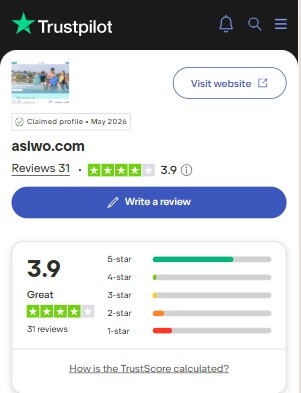
Evaluating brand support before purchasing expensive underwater electronics is vital. ASIWO maintains an active presence verified on Trustpilot's official index. Customer satisfaction ratings highlight prompt communication regarding warranty inquiries and fast replacement shipping for wear-and-tear components like chargers and sealing gaskets.
Video Performance Breakdown
To see how the dual thrusters handle actual water resistance and maneuverability underwater, watch this detailed video review demonstrating turning radius and speed mode changes:
Official Manual Protocol, Setup, and Step-by-Step Maintenance
Like all marine equipment operating in salt water environments, properly following maintenance guidelines determines whether your equipment lasts for years or fails prematurely. According to the Official ASIWO Manta User Manual, maintaining seal integrity requires specific post-use care routines.
Pre-Dive Preparation Checklist
- Inspect the Main O-Rings: Remove the battery compartment door and check the silicon O-rings for cracks, hair, grit, or dirt. Wipe them clean with a lint-free microfiber cloth.
- Apply Silicone Grease: Apply a thin coat of marine silicone grease to the sealing O-rings. The gasket should look glossy but not messy.
- Verify Battery Latch Seat: Place the fully charged 126 Wh battery into the compartment and press down firmly until the locking latch clicks shut.
- Perform Dry Safety Lock Check: Press the triggers while locked to confirm the propellers do not turn on land. Disengage the safety lock to verify motor readiness, then re-lock before heading into the water.
Post-Dive Care and Storage Protocol
Salt water leaves behind microscopic salt crystals as it evaporates. If left on shaft seals, these sharp crystals act like sandpaper, scoring rubber gaskets and letting water seep into internal electrics. Follow this routine immediately after every salt water session:
- Freshwater Soak: Submerge the entire unit in a tub of clean freshwater for 10 to 15 minutes.
- Flush the Motors: While submerged in clean fresh water, turn the safety switch on and run the thrusters for 10 seconds to flush out salt buildup from the motor shafts and propeller housings.
- Dry Before Opening: Towel-dry the exterior completely before opening the battery compartment to prevent stray salt water drops from dripping inside.
- Store at Partial Charge: If storing the scooter for winter or long periods, keep the battery charged to roughly 50% to 60% capacity in a cool, dry room. Avoid storing lithium batteries fully drained or exposed to direct heat.
Logistics, Shipping, Warranty, and Customer Support
When buying directly online, understanding fulfillment terms, warranty coverage, and payment options gives you peace of mind before placing an order.
Shipping and Delivery Policies
Orders are dispatched directly through regional distribution warehouses. Based on the official Shipping Policy guidelines, orders typically ship within 1 to 3 business days, with standard ground delivery taking between 3 to 7 business days depending on destination logistics. Real-time tracking numbers are generated upon shipment dispatch.
Warranty Protection Coverage
Underwater gear operates in harsh salt water environments, so having reliable warranty protection is crucial. Under the official Limited Warranty Policy, the scooter mainboard and electric motors are protected against manufacturing defects for up to 12 months from purchase. Wear items like O-rings and consumable seals are supported through dedicated spare parts inventories.
Customer Support and Contact Channels
If you ever require assistance with technical troubleshooting, ordering replacement sealing kits, or organizing a warranty claim, you can reach out directly through the official Customer Support Portal.
Accepted Payment Methods
Checkout security is handled through encrypted processing channels. According to the official Payment Methods Portal, supported purchase options include major credit cards (Visa, MasterCard, American Express, Discover), Express Checkout platforms (Shop Pay, Apple Pay, Google Pay), and secure third-party checkout services.
How the ASIWO Manta S Compares to the Competition
To help you choose the right model, let's compare the ASIWO Manta S with two other popular recreational sea scooters on the market: the Sublue Whiteshark Mix and the Geneinno S2.
| Feature / Specification | ASIWO Manta S | Sublue Whiteshark Mix | Geneinno S2 |
|---|---|---|---|
| Top Speed | 3.35 mph (1.5 m/s) | 3.35 mph (1.5 m/s) | 2.7 mph (1.2 m/s) |
| Speed Modes | 3 Levels | 1 Level | 2 Levels |
| Depth Rating | 131 ft (40 m) | 131 ft (40 m) | 98 ft (30 m) |
| Battery Capacity | 126 Wh (Swappable) | 121 Wh (Swappable) | 97 Wh (Built-in) |
| Airline Compliant | Yes (Carry-on) | Yes (Carry-on) | Yes (Carry-on) |
| Weight | 7.7 lbs (3.5 kg) | 7.7 lbs (3.5 kg) | 5.9 lbs (2.7 kg) |
While the Sublue Whiteshark Mix matches the Manta S in speed and weight, it only offers a single speed setting, meaning you run at full motor output regardless of whether you're navigating tight shallow reefs or cruising open water. The ASIWO Manta S gives you three selectable speed tiers, letting you conserve battery capacity on low speeds when fast propulsion isn't needed.
The Geneinno S2 is slightly lighter, but its built-in battery cannot be swapped on a boat. Once empty, your dive session is finished until you recharge the unit near a wall outlet. The swappable battery architecture of the Manta S makes it much more practical for full days on the water.
Frequently Asked Questions (FAQ)
Can I take the ASIWO Manta S on a commercial airplane?
Yes. The 126 Wh lithium-ion battery meets standard international aviation regulations (FAA/IATA) for carry-on baggage. You simply remove the battery from the chassis, stow the battery in your carry-on luggage, and put the hollow scooter body in your checked baggage.
What happens if I release the handles while underwater?
The Manta S features a dual dead-man trigger switch. The moment you let go of either handle, the motors stop spinning instantly. Because the unit features slightly positive buoyancy in salt water, it slowly floats toward the surface, preventing it from sinking into deep water.
Can kids use the ASIWO Manta S safely in a pool?
Yes, provided there is direct adult supervision. The scooter features fine-mesh safety grilles over both thruster ports to keep fingers and hair away from the blades. Additionally, the integrated safety lock switch prevents accidental power activation.
How long does the battery take to charge fully?
Using the official standard wall charger, an empty battery takes approximately 2 to 3 hours to reach 100% capacity. It is recommended to let the battery cool down for 15 minutes after a dive before plugging it into the charger.
Can I switch speed modes while swimming underwater?
Yes. You can toggle through the three speed modes using the control interface without needing to return to the surface or shore, giving you on-the-fly thrust adjustments.
Does salt water damage the motors if not rinsed immediately?
While short delays won't ruin the scooter, allowing salt water to dry inside the thrusters causes salt crystals to form along the motor shaft seals. Over time, these hard crystals can damage the watertight seals. Rinsing and flushing the unit in clean fresh water after every ocean dive is crucial for long-term reliability.
Final Verdict & Recommendation
The asiwo manta 2 (Manta S) succeeds by delivering the right balance of practical underwater features. It isn't an overly heavy technical DPV meant for deep caves, nor is it a weak pool toy that stalls against light currents. It hits the sweet spot for snorkelers, recreational scuba divers, and families looking for dependable propulsion.
With its balanced dual-thruster wing design, three speed settings, travel-friendly 126 Wh swappable battery, and integrated action camera mount, it provides everything you need to explore reefs effortlessly.
Ready to Upgrade Your Underwater Adventures?
Get your ASIWO Manta S with 2-battery bundles directly with discount pricing applied through the official store link below.
Check Official ASIWO Manta S Pricing & Availability
0 Comments