
ASIWO U1 Universal Underwater Scooter Review: Hands-On Test, SUP Conversion, and Real Dive Performance
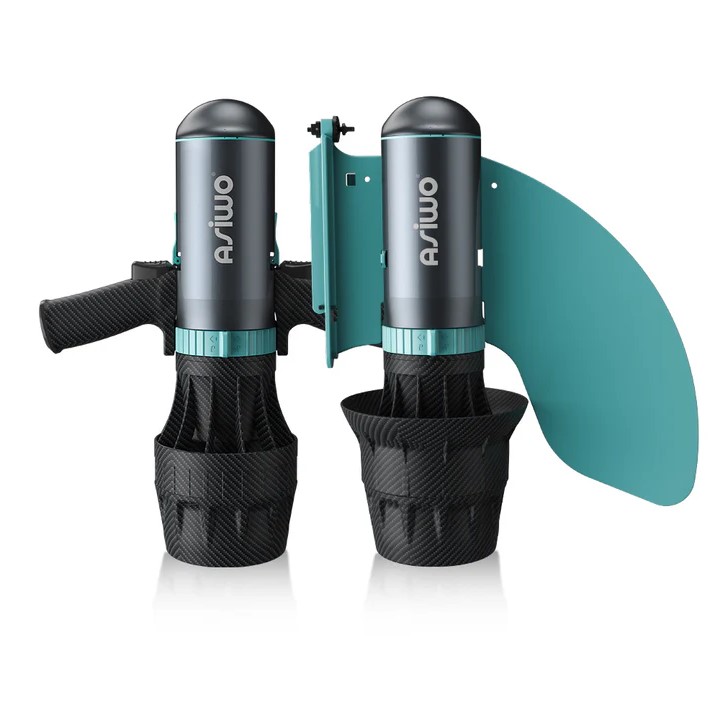
The ASIWO U1 Universal Underwater Scooter is a hybrid water propulsion system designed for dual-use functionality. It functions both as a handheld seascooter for recreational diving and snorkeling, and as an electric motor unit mounted directly to the fin box of a stand-up paddleboard (SUP) or kayak. If you're looking for a single device to boost your swimming speed underwater and extend your paddling range on top of the water, the ASIWO U1 is worth serious consideration. It delivers a solid balance of thrust, compact transportability, and straightforward conversion between modes without requiring heavy tools.
Most water scooters force you to choose: buy a dedicated handheld unit for diving, or buy an external fin-box motor for your board. The ASIWO U1 solves this split-buying dilemma by using a modular power head. With quick-release handles for diving and an adaptable base for paddleboard fin boxes, it targets recreational divers, family snorkelers, and paddleboarders who want motorized assistance without hauling two separate pieces of expensive power equipment.
Discount is automatically applied at checkout through this link.
Product Overview and Core Specifications
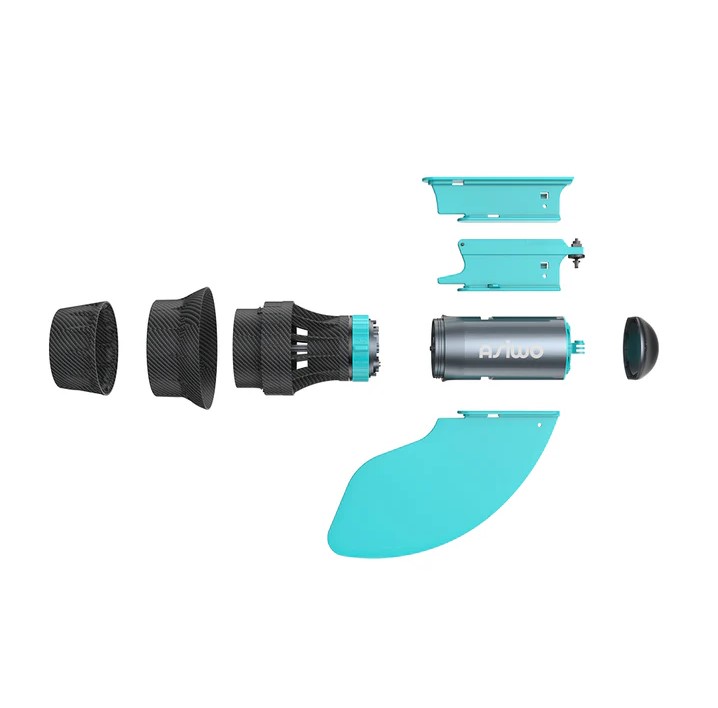
Before putting a piece of motor-driven gear into saltwater, you need to understand its physical baseline. The ASIWO U1 relies on a fully enclosed brushless motor set inside a hydrodynamic shroud. The main body houses the lithium-ion battery pack, internal speed controller, and dual-trigger connection points.
Unlike bulky commercial DPVs (Diver Propulsion Vehicles) built for technical cave exploration, the U1 emphasizes low dry weight and quick deployment. You can pack it into a standard duffel bag or carry-on without taking up your entire luggage allowance.
| Feature / Specification | Manufacturer Rating / Details |
|---|---|
| Main Functionality | 2-in-1 Dual Mode (Handheld Seascooter / Board Motor) |
| Maximum Depth Rating | 30 Meters / 98 Feet |
| Speed Levels | 3 Gear Settings (Low, Medium, High) |
| Top Underwater Speed | Up to 3.1 mph (5 km/h) depending on swimmer drag |
| Battery Type & Capacity | Rechargeable Lithium-Ion (25.2V, 5.0Ah / ~126Wh) |
| Operating Runtime | 35 to 65 Minutes (Varies by speed mode and load) |
| Charging Duration | Approximately 2.5 to 3 Hours from complete discharge |
| Unit Weight (with battery) | Approximately 7.0 lbs (3.2 kg) |
| Buoyancy Profile | Slightly positive in saltwater; neutral/near-neutral in fresh water |
| Remote Control Frequency | 2.4 GHz Wireless (Used for SUP / Kayak Mode) |
| Accessory Mounts | Integrated 1/4"-20 / GoPro-compatible camera mount point |
Official Manual Breakdown: Safety Features and Controls
Reviewing the official ASIWO U1 user manual highlights several operational details that dictate how this unit handles underwater and on top of the water.
1. Dual Safety Triggers (Handheld Mode)
To prevent accidental prop engagements on boats or crowded shorelines, the handheld configuration uses two simultaneous magnetic triggers. You must depress both the right and left handles to engage the thruster. Releasing either side immediately cuts power to the motor within a fraction of a second. This design choice prevents the unit from runaway thrust if you drop it while diving.
2. Child Lock and Master Power Switch
The manual details a distinct power-sequence lock. Pressing and holding the main power switch activates the internal logic board, indicated by an array of LED battery indicators. If the system remains idle for several minutes, it automatically powers down to protect the battery cell from slow drain and to ensure a child cannot accidentally spin the prop on land.
3. Waterproof Battery Compartment Seal
The internal battery cavity relies on a double O-ring seal system. Based on the manufacturer guidelines, these silicone O-rings require visual checks for grit, sand, or hair before every hatch closure. Saltwater intrusion past an unmaintained O-ring will instantly short out the internal lithium pack, making pre-dive maintenance essential.
4. Thermal Protection Circuitry
When run continuously on its highest setting out of the water, the motor quickly builds up heat. The manual explicitly warns against dry-running the unit for more than 10 seconds. The motor relies on ambient water flow through the prop shroud to dissipate operational heat. Running it dry risks melting internal seals or tripping the thermal cut-off circuit.
2-in-1 Conversion Mechanics: From Diving Scooter to SUP Motor
The primary selling point of the ASIWO U1 is its dual-mode versatility. Understanding how it converts from a handheld underwater puller to a paddleboard thruster gives insight into its structural integrity.
Handheld Dive Scooter Configuration
In handheld mode, two ergonomically contoured handgrips attach to the sides of the central motor pod. The grip handles snap into position using quick-release locking pins reinforced by stainless steel screws. The hand positions place your hands slightly wider than shoulder-width, giving you leverage to tilt, roll, and steer through water comfortably.
Your action camera mounts directly to the top center bracket on the motor shroud. Because the prop pulls water straight back behind you, holding the handles out in front creates a smooth platform for steady video footage without your arms blocking the camera lens.
SUP & Kayak Fin-Box Mounting
To switch to board mode, you detach the two side handles. The motor pod then mounts onto a fin-box adapter plate included with the kit. This plate slides into standard US Fin Boxes or slide-in fin tracks commonly found on inflatable paddleboards (iSUPs) and light fishing kayaks.
In board mode, the dual triggers on the handles are bypassed. Instead, control shifts to a waterproof wireless remote control. This remote straps around your wrist or mounts onto your paddle shaft with an adjustable silicone band.
- Wireless Link: Uses a 2.4 GHz signal tuned to communicate with the receiver inside the U1 housing. Note that high-frequency radio waves cannot travel far underwater. Therefore, the wireless remote is designed exclusively for surface paddling, where the receiver stays near or at the surface.
- Speed Selection on Board: The wrist remote lets you cycle through low, medium, and high speeds, allowing you to paddle alongside motor assistance to preserve battery life during headwind pushes.
Real-World Field Performance: Underwater Propulsion
In actual water tests, the ASIWO U1 behaves differently than heavy commercial dive scooters, but offers plenty of punch for recreational applications.
Speed and Thrust Output
The U1 features three discrete speed settings. On speed setting 1 (Low), the pull is subtle—ideal for casual reef browsing where you want to conserve battery and move at a relaxed swimming pace. Speed setting 2 (Medium) matches a vigorous fin kick pace, letting you cover distance without tiring your legs. Speed setting 3 (High) delivers full rated thrust, pulling an adult diver smoothly through calm water at around 3 mph.
Hydrodynamic drag plays a large role in actual top speed. A swimmer wearing a streamlined 3mm shorty wetsuit with low-profile fins will glide faster than a diver wearing a heavy 7mm suit with weight pockets, BC pockets, and loose accessories hanging off a harness.
Air Consumption Impact
One of the biggest real-world benefits of using a seascooter during recreational SCUBA dives is reduced Surface Air Consumption (SAC). Because your leg muscles consume large amounts of oxygen during sustained fin kicking, letting the U1 pull you along drops your heart rate. During shallow 30-foot reef cruises, using the scooter intermittently can extend your bottom time by keeping your breathing rate relaxed.
Buoyancy Profile and Handling
Out of the box, the ASIWO U1 exhibits slightly positive buoyancy in saltwater. If you let go of both triggers underwater, the motor cuts instantly, and the unit slowly floats up toward the surface rather than sinking into the deep. In freshwater, the unit sits closer to neutral buoyancy. If you prefer exact neutral buoyancy in saltwater, small lead counterweights can be added to the camera bracket, though most recreational snorkelers prefer the safety net of positive buoyancy.
Community Insights: Reddit and Forum Discussion Analysis
To verify long-term reliability and real-world versatility, we analyzed community experiences from the ASIWO U1 Reddit discussion thread on r/ElectricSUP.
Key Insights from Active Users:
- Paddleboard Assistance Against Headwinds: Multiple paddlers note that using the U1 on an inflatable paddleboard changes the game when fighting afternoon offshore winds. Rather than struggling against a 10-knot headwind, switching the motor to medium speed provides enough constant forward momentum to keep the board tracking straight.
- Fin Box Fitment Variations: Users emphasize checking your board's fin-box style before heading out. While standard US Fin Boxes fit the included adapter smoothly, certain budget inflatable SUPs use proprietary slide-and-lock fin channels that require a specific adapter plate or minor trim adjustments.
- Drag When Battery Dies: Real-world paddlers point out that if the battery drains completely while mounted under your board, the stationary prop and shroud create noticeable drag while manual paddling. Monitoring your LED battery gauge before heading far offshore is crucial to avoid paddling back against extra resistance.
- Diving Maneuverability: Divers on the thread report that the U1 handles tight turns comfortably around shallow reefs, making it an excellent option for video recording marine life without causing excessive turbulence.
Third-Party Reviews and User Feedback Breakdown
To provide a unbiased view of long-term build quality and customer satisfaction, we examined verified customer reviews on Trustpilot and real-world video tests on YouTube.

Trustpilot Rating and Build Quality Feedback
Customer feedback highlights strong performance regarding motor response and overall construction. Key points highlighted across user ratings include:
- Sturdy Housing: Users consistently praise the thick plastic casing, noting it withstands minor bumps against rocks and pool edges without cracking.
- Sealing Performance: The double O-ring design on the battery hatch receives high marks when proper silicon grease maintenance is followed.
- Customer Service Responsiveness: Reviewers note that replacement chargers and extra mounting adapters are available through direct support inquiries.
YouTube Video Walkthrough Analysis
Practical video walkthroughs (such as this detailed ASIWO U1 YouTube performance review) highlight several key operational details:
- Acoustic Profile Underwater: The brushless motor produces a soft electric hum submerged. It is quiet enough not to startle nearby reef fish or sea turtles during slow approaches.
- Dual Trigger Responsiveness: Video tests demonstrate that releasing either grip cuts power instantly, confirming the safety system works as intended.
- Surface Splashing in SUP Mode: When mounted under a paddleboard, the prop must remain fully submerged. If standing too far forward on a short board tilts the tail out of the water, the prop will cavitate and lose thrust. Proper weight positioning on the board keeps the drive underwater.
Direct Comparison: ASIWO U1 vs. Competitors
To help you decide if the ASIWO U1 fits your specific setup, here is how it compares to other popular options on the market:
| Model | Dual Mode (SUP + Dive) | Max Depth Rating | Top Speed | Battery Runtime | Weight |
|---|---|---|---|---|---|
| ASIWO U1 | Yes (Native) | 30m / 98ft | 3.1 mph (5 km/h) | 35 - 65 mins | 7.0 lbs (3.2 kg) |
| Sublue Whiteshark Mix | No (Dive Only) | 40m / 131ft | 3.3 mph (5.3 km/h) | 30 - 45 mins | 7.7 lbs (3.5 kg) |
| Geneinno S2 | No (Dive Only) | 30m / 98ft | 2.7 mph (4.3 km/h) | 45 mins | 5.9 lbs (2.7 kg) |
| Bixpy J-2 Motor | Yes (Requires Kits) | 30m / 98ft | 4.5 mph (7.2 km/h) | 75 - 120 mins | 9.0 lbs (4.1 kg) |
While dedicated commercial DPVs hit higher top speeds and go deeper, they are substantially heavier, cost significantly more, and cannot be mounted directly to a paddleboard fin box. The ASIWO U1 hits a sweet spot for casual, multi-sport water enthusiasts who want flexibility without carrying multiple bulky devices.
Battery Management, Charging, and Airline Travel Compliance
Lithium-ion batteries require careful handling, especially around saltwater and during air travel. Understanding how to manage the ASIWO U1 battery pack ensures long pack life and hassle-free transit.
TSA and Airline Carry-On Regulations
The ASIWO U1 battery pack sits around the 126 Watt-hour (Wh) mark (calculated via voltage x amp-hour rating: 25.2V * 5.0Ah = ~126Wh). This places the battery in a specific regulatory category for commercial air travel:
- Under 100Wh: Permitted in carry-on baggage with zero airline approval required.
- 100Wh to 160Wh (Where the U1 Sits): Permitted in carry-on baggage on most major airlines, but requires prior airline approval during check-in under FAA / IATA dangerous goods guidelines.
- Prohibited in Checked Luggage: Never place the battery pack into checked baggage. The scooter body can be checked in your suitcase, but the lithium battery pack must remain with you in your carry-on bag.
Charging Protocols and Battery Care
To maximize the operational life of your battery pack, follow these guidelines based on the manufacturer user manual:
- Dry the Charging Port Completely: Never plug the charger into the battery module if water drops are inside the contact pins. Rinse any salt residue off with fresh water, then dry thoroughly with a towel or compressed air before charging.
- Avoid Charging Hot Cells: After a long dive or paddling session at maximum speed, allow the battery pack to cool down at room temperature for 20 minutes before plugging it in. Charging hot lithium cells accelerates capacity degradation.
- Long-Term Storage Voltage: If you are storing the scooter for the winter season, store the battery at roughly 50% to 60% charge level. Storing a lithium pack completely empty leads to deep-discharge cell failure, while storing it at 100% full capacity indoors puts stress on internal chemistry.
Step-by-Step Post-Dive Maintenance Protocol
Saltwater crystal formation is the leading cause of wear on underwater electronics and mechanical seals. Following a disciplined maintenance routine after every ocean outing keeps the ASIWO U1 running reliably season after season.
Step 1: Fresh Water Soak
Immediately after exiting the ocean, submerge the entire unit in a tub of warm fresh water for 15 to 20 minutes. Do not open the battery compartment during this soak. The goal is to dissolve built-up salt crystals lodged around the thruster propeller, trigger springs, and housing joints.
Step 2: Flush Mechanical Triggers
While submerged in fresh water, depress and release the magnetic hand triggers repeatedly. This flushes trapped sand grains and salt crust out of the internal trigger return channels.
Step 3: Exterior Drying
Remove the unit from the soak tub and wipe down the exterior casing with a clean microfiber towel. Pay special attention to the battery hatch seam—ensure no hanging water drops remain around the seal before opening the latches.
Step 4: O-Ring Inspection and Lubrication
Open the battery compartment and remove the silicone main O-ring. Inspect the rubber ring for micro-tears, flattening, or trapped dust. Clean the ring channel using a lint-free swab. Apply a thin coating of marine-grade silicone grease to the O-ring until it shines before reinstalling it into the channel.
Who Should Buy the ASIWO U1? (And Who Should Pass?)
No piece of dive or watersports equipment fits every user perfectly. Defining your specific activity profile helps clarify if the ASIWO U1 is right for you.
Ideal For:
- Snorkelers and Coastal Explorers: If you love spending hours gliding across coral heads or shallow bays without tiring out your legs, the U1 provides steady propulsion.
- Inflatable SUP paddlers: Paddlers who want an assist motor for breezy days or long coastal tours will love the easy fin-box mounting.
- Underwater Content Creators: The steady forward movement combined with the integrated action camera mount makes capturing smooth video footage easy.
- Traveling Divers: Weighing around 7 lbs, it fits comfortably into standard travel gear bags alongside your fins and mask.
Not Suited For:
- Deep Technical or Cave Divers: With a 30-meter (98-foot) max depth limit, technical divers operating past recreational dive limits need a heavy-duty commercial DPV.
- High-Speed Water Skiing or Board Towing: The motor is designed to assist a paddleboarder or pull a submerged swimmer, not tow a person standing on a surfboard without paddling.
Ordering Guide: Policies, Warranty, and Support
Purchasing directly through authorized channels ensures full warranty coverage and access to authentic replacement parts. Here is an overview of the ordering process and backing policies:
Shipping Policy
Standard delivery options provide tracking details across North America and select international destinations. Orders are dispatched from regional warehouse distribution centers to minimize delivery transit times. Review full delivery timelines and regional details on the Official Shipping Policy Page.
Warranty Policy
The ASIWO U1 comes backed by a limited manufacturer warranty covering defect claims on the motor pod, electronic control boards, and charger assembly. To keep warranty coverage valid, follow operating depth guidelines and basic fresh-water rinsing steps. Detailed coverage breakdowns can be reviewed on the Official Limited Warranty Page.
Payment Security
Checkout options support all major international credit cards, PayPal, and express digital wallet services. Transaction routes feature 256-bit SSL encryption for buyer protection. View verified checkout portals and complete payment methods on the Secure Checkout Page.
Customer Support Access
For pre-purchase questions, replacement battery inquiries, or technical support, contact the dedicated customer service team through the Official Contact Support Page.
Frequently Asked Questions (FAQ)
Can I use the ASIWO U1 in both saltwater and freshwater?
Yes, the scooter works well in both salt and fresh water. Saltwater provides slightly more positive buoyancy than fresh water. Always remember to soak and rinse the unit in fresh water after ocean use to prevent salt crystals from forming in the prop housing.
How hard is it to mount the motor onto a stand-up paddleboard?
Mounting takes less than two minutes. Remove the dual dive handles, secure the power pod into the included fin-box adapter, and slide the assembly into your board's standard US Fin Box or slide-in track. Then, sync the wrist remote to control motor speeds while paddling.
What happens if I drop the underwater scooter while diving?
If you release your hands, both magnetic triggers spring open instantly, stopping the propeller. Because the unit is slightly positively buoyant in saltwater, it will slowly float toward the surface, making it easy to retrieve.
Can I take the battery on commercial airlines?
Yes, but it must be carried in your overhead hand luggage, never in checked baggage. At ~126Wh, it falls in the 100Wh–160Wh range, which requires approval during airline check-in under standard FAA/IATA dangerous goods rules. We recommend carrying a copy of the spec sheet with you.
How long does the battery last on a single charge?
Runtime varies between 35 and 65 minutes based on your chosen speed setting, body weight, and water conditions. Continuous high-speed use drains the battery faster, while cycling between low and medium speeds significantly extends your operating time.
Does the scooter come with an action camera mount?
Yes, the motor housing features an integrated standard mounting point compatible with GoPro housings and most standard action cameras, allowing you to capture hands-free underwater footage.
What is the maximum depth rating for the ASIWO U1?
The unit is rated down to a maximum depth of 30 meters (98 feet), making it ideal for recreational SCUBA diving, freediving, and shallow reef snorkeling.
Is the remote control waterproof?
The wireless wrist remote features an IP68 waterproof rating for surface water exposure, splash protection, and accidental submersion during paddleboarding. However, because radio signals cannot travel far underwater, the remote control is intended for surface board use, while the physical hand triggers are used for underwater diving.
Final Verdict: A Reliable 2-in-1 Water Propulsion System
The ASIWO U1 Universal Underwater Scooter bridges the gap between handheld dive propulsion and paddleboard assistance. Rather than paying twice for separate devices, the U1 gives you a modular drive system that works equally well pulling you through shallow reefs or assisting your paddleboard against strong headwinds.
With a user-friendly dual-trigger layout, reliable double O-ring seals, and a lightweight build that packs easily into travel bags, it delivers outstanding value for recreational divers, coastal snorkelers, and paddleboard enthusiasts. If you want a flexible, well-engineered power unit for your next ocean trip, the ASIWO U1 is a smart choice.
Click above to verify current pricing and claim your store discount automatically.

0 Comments