
The Apeks MTX-RC Regulator is an ultra-rugged, military-grade scuba breathing system designed specifically for cold-water, technical, and demanding recreational divers who refuse to let freezing temperatures or challenging depths dictate their dive plan. Its strongest benefit is its extreme freeze resistance coupled with real-time breathing resistance adjustments, allowing you to fine-tune gas delivery on the fly. If you want a bombproof life-support system that breathes smoothly from shallow reefs to near-freezing deep wrecks, the MTX-RC is absolutely worth considering.
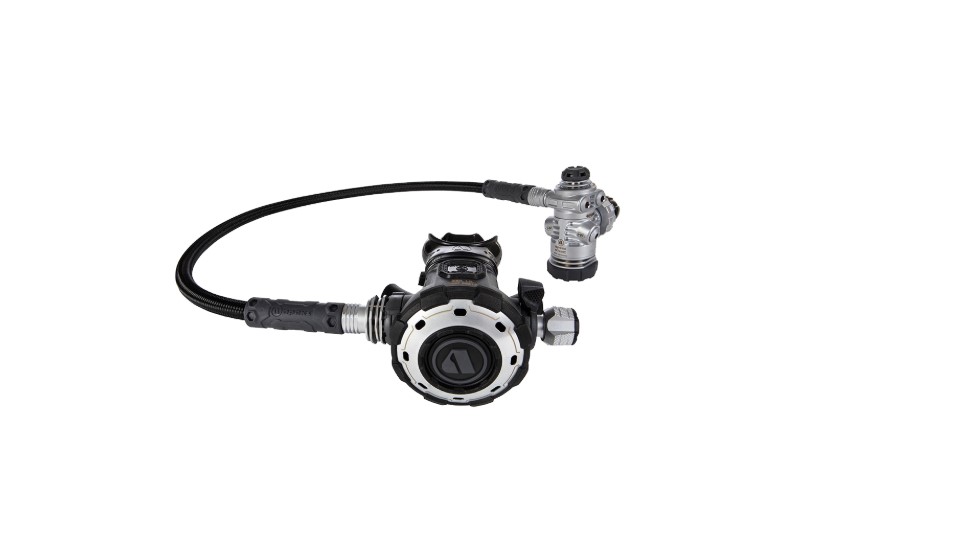
Why Cold-Water Regulators Fail (and How the MTX-RC Solves It)
To appreciate why the MTX-RC is built the way it is, you have to understand the thermal physics of scuba diving. When high-pressure gas from your cylinder (typically pressurized to 3,000 psi or higher) passes through the first stage, it expands rapidly into the intermediate pressure hose at around 135 to 140 psi. This sudden drop in pressure causes a massive temperature drop inside the regulator—a physical phenomenon known as the Joule-Thomson effect.
In water temperatures below 50°F (10°C), this internal drop can easily plunge the regulator components well below freezing. If ambient water enters the spring chamber of an unsealed first stage, ice crystals form. These crystals jam the main spring or piston in the open position, leading to a catastrophic, continuous free-flow of your breathing gas. On a deep dive, a free-flow means you're losing gas at an alarming rate, turning a routine dive into an immediate emergency.
The MTX-RC solves this problem through heavy brass thermal mass and an environmental dry-seal system. By isolating the internal mechanics from the water and using heavy-duty, ribbed satin-chrome plating as a massive heat sink, the regulator draws thermal energy from the surrounding water (even if it's only 38°F / 3°C) to keep the internal working parts warm enough to prevent freezing. It doesn't rely on plastic caps or silicone grease packings that can degrade over time; instead, it uses robust mechanical engineering to ensure reliability under extreme conditions.
Deep Dive: The MTX-RC First Stage
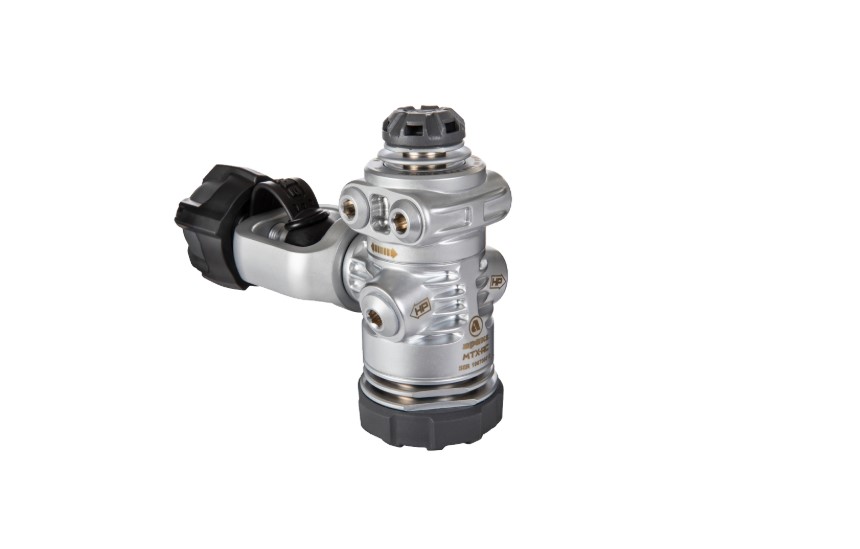
The first stage of the MTX-RC is a masterclass in over-engineered metalwork. Based on the military-grade MTX platform, which was developed in accordance with the United States Navy Experimental Dive Unit (NEDU) extreme cold-water testing standards, this first stage is machined from a solid block of marine-grade brass. The entire body is coated in a satin-chrome finish that feels incredibly tough and resists scratches, dents, and saltwater corrosion far better than high-polished decorative chrome.
The Environmental Dry Seal Chamber
Unlike standard balanced diaphragm regulators that allow water to enter the spring chamber to transmit ambient water pressure to the internal diaphragm, the MTX-RC uses an external dry diaphragm. This diaphragm presses against a robust, solid load transmitter which in turn acts on the inner diaphragm. Because the spring chamber is completely dry, there's absolutely zero water contact with the main spring. This keeps mud, silt, sand, and freezing water completely out of the delicate mechanical loop.
Deep Heat Exchanger Ribs
If you look closely at the body of the first stage, you'll see deep, aggressive cooling fins machined directly into the brass. These ribs function exactly like the radiator on a car, but in reverse. They maximize the surface area exposed to the surrounding water. Because water is a highly efficient conductor of heat compared to air, the massive thermal contact allows the cold metal inside to absorb ambient heat from the water, preventing the internal freezing that leads to free-flows.
Swineling Turret and Parallel Port Configuration
For technical and sidemount divers, hose routing is everything. The MTX-RC first stage features a rotating turret that houses five low-pressure (LP) ports (3/8" UNF). Four of these ports are arranged radially around the turret, while the fifth port is located directly on the end face of the turret. Having that fifth port makes a massive difference for routing a drysuit inflation hose or running a streamlined long-hose setup down your right side without awkward bends.
Additionally, the first stage includes two high-pressure (HP) ports angled downward at a 45-degree angle. This orientation keeps your submersible pressure gauge (SPG) hose or wireless transmitter tucked in close to your body, reducing drag and minimizing the risk of snagging on wrecks, caves, or kelp. This clean routing profile makes it an incredibly versatile option whether you're diving a single tank backmount, technical doubles, or a multi-stage sidemount configuration.
Deep Dive: The MTX-RC Second Stage
While the first stage manages high-pressure gas delivery, the second stage is where your breathing comfort is decided. The MTX-RC second stage is a pneumatically balanced demand valve that offers a natural, effortless inhalation cycle. Let's look at the key physical components that set this second stage apart from standard models.
The Dynamic Breathing Resistance Adjustment Knob
The major difference between the older MTX-R and the MTX-RC is the addition of the control knob (hence the "C" in the name). The military-spec MTX-R was designed with zero external user controls to prevent divers from accidentally making the regulator too hard to breathe at depth under high stress. However, recreational and technical divers wanted the ability to adjust inhalation effort based on their immediate environment.
The MTX-RC features a large, heavy-duty mechanical adjustment dial that is easy to grip even when wearing thick drysuit gloves or 7mm neoprene mitts. By turning this dial, you can adjust the spring tension against the second stage poppet. In mild, shallow water, you can back the tension off for a incredibly light, silky breath. If you're heading into a high-current channel or preparing for a deep entry where waves might crash against your second stage, you can dial the resistance in slightly to prevent unwanted free-flows.
The Venturi Control Lever
Working in unison with the adjustment knob is a distinct Venturi lever. This lever alters the internal airflow path within the second stage body. When set to the "Pre-Dive" position, the air is deflected away from the diaphragm, preventing a sudden rush of air from creating a vacuum and locking the valve open (a classic free-flow on the surface). Once you're underwater and ready to breathe, switching it to the "Dive" position harnesses the Venturi effect to assist the diaphragm, pulling air smoothly into your lungs with minimal physical effort.
Dual-Material Over-Molded Purge Button
The front cover of the second stage features a large, high-visibility purge button. It's constructed from a durable, flexible polymer that doesn't become stiff or brittle in icy water. The design is self-flushing, meaning sand and grit are washed away from the internal spring mechanism every time you purge or rinse the regulator. It is physically impossible for a piece of small gravel to get wedged behind the button and lock the purge valve open, which is a common failure point on cheaper, plastic-molded second stages.
Interchangeable Exhaust Tees
The MTX-RC comes supplied with Apeks' innovative Diver Changeable Exhaust (DCE) system. You get two sets of exhaust tees in the box:
- The Wide Exhaust Tees: These deflect bubbles far back and away from your face. If you are an underwater photographer, video creator, or scientific diver who needs an unobstructed field of view, these are indispensable. They also reduce bubble noise significantly.
- The Compact Exhaust Tees: These are smaller, lighter, and streamline the second stage. This is perfect if you're using the MTX-RC as a backup regulator (octopus), travel regulator, or if you prefer a highly compact profile that doesn't catch on your chin or BC collar.
Unboxing and Technical Specifications
When you invest in an Apeks regulator, you're buying a piece of high-precision life-support machinery. Analyzing the specifications shows why this system stands out from standard recreational models. According to the Apeks Official Manual, the regulator is built to meet and exceed the stringent European standard EN250A, which requires the regulator to pass cold-water breathing tests at a depth of 50 meters (164 feet) in water temperatures below 4°C (39°F).
| Specification | First Stage | Second Stage |
|---|---|---|
| Valve Type | Over-balanced, diaphragm design | Pneumatically balanced, demand valve |
| Connection Options | DIN (300 bar / 4,351 psi) or Yoke (232 bar / 3,364 psi) | Flexible, braided nylon hose (Miflex) |
| Weight (Excluding Hose) | approx. 755 grams (DIN version) | approx. 288 grams |
| Ports | 5 Low-Pressure (3/8" UNF), 2 High-Pressure (7/16" UNF) | N/A |
| Intermediate Pressure | 9.5 bar +/- 0.5 bar (137 psi +/- 7 psi) | N/A |
| Nitrox Compatibility | Up to 40% O2 out of the box (standard recreational limit) | |
The weight of the DIN first stage is slightly heavier than ultra-light aluminum travel regulators. This is intentional. The additional brass mass behaves as a thermal stabilizer. If you're looking to shave every single ounce for carry-on luggage, you might feel the weight, but for cold-water performance, that extra metal is exactly what keeps your breathing loop functioning safely.
Real-World Testing: How It Performs Underwater
To truly understand this regulator, you need to take it out of the classroom and drop it into cold, dark water. Let's look at how the MTX-RC behaves in two very different diving environments: a near-freezing deep quarry and a warm, shallow tropical reef.
Scenario A: Lake Michigan Deep Wreck (Water Temp: 38°F / 3.3°C at 110 feet)
Dropping down through the thermocline into 38°F water can be a shock to both your body and your equipment. As you descend, the ambient pressure increases, which requires your regulator to supply denser air. With an unsealed, lower-end regulator, breathing deeply at this depth often results in a "wet" feel, a stiff inhalation cycle, or worse, a sudden free-flow as ice forms in the first stage.
With the MTX-RC, the breathing effort remains virtually unchanged from the surface. The over-balanced diaphragm design means that as you descend, the intermediate pressure rises at a rate slightly faster than ambient pressure. This compensates for the increased density of the gas, giving you an incredibly smooth, consistent breath without having to suck hard on the mouthpiece.
Even during heavy inhalation cycles under exertion (for instance, swimming against a moderate bottom current along a wreck's hull), the heat exchangers on both the first and second stages do their job perfectly. The second stage features a metal heat-retention ring at the hose connection. This metal ring conducts cold away from the valve housing and acts as a barrier, preventing ice crystals from forming on the second stage demand valve lever and orifice.
Scenario B: Caribbean Reef Dive (Water Temp: 82°F / 27.7°C at 40 feet)
Many divers wonder if a heavy, cold-water technical regulator is overkill for warm, shallow holiday diving. While you don't need the extreme freeze resistance of the MTX-RC in Cozumel, the comfort benefits are still highly noticeable.
By backing out the inhalation adjustment knob and setting the Venturi lever to the "Dive" position, you get a breath that is incredibly effortless. In shallow water, you can practically breathe with the natural movement of your chest, without feeling like you're fighting the regulator mechanism. The light polymer body of the second stage prevents jaw fatigue (TMJ strain), which is common with older, all-metal second stages that pull downward on your teeth. The braided nylon Miflex hose is highly flexible, meaning it doesn't push or pull against your jaw when you turn your head to look at a passing sea turtle.
Comparing the Apeks Lineup: MTX-RC vs. XTX50 vs. MTX-R
Apeks makes some of the best regulators in the world, which can make choosing between their models difficult. Let's break down how the MTX-RC compares to two of its closest siblings: the classic XTX50 and the military-spec MTX-R.
| Feature | MTX-RC | XTX50 | MTX-R |
|---|---|---|---|
| First Stage Porting | Rotating Turret with 5th Port | Rotating Turret (4 ports standard, 5th port optional upgrade) | Rotating Turret with 5th Port |
| Freeze Resistance | Extreme (Military Spec) | Excellent (Cold-water rated) | Extreme (Military Spec) |
| User Controls | Inhalation Adjustment Knob & Venturi Lever | Inhalation Adjustment Knob & Venturi Lever | None (Pre-set internal spring tension, no external knobs) |
| First Stage Shell | Satin Chrome with massive cooling ribs | Polished Chrome, standard dry-seal cap | Satin Chrome with massive cooling ribs |
| Best For | Technical, cold-water, and advanced recreational divers wanting full control | Advanced recreational and light technical divers on a budget | Public safety, military, and extreme technical divers who want simple, foolproof gear |
The XTX50 has been a legendary workhorse for decades. It is slightly cheaper and lighter, making it highly attractive for recreational divers who occasionally do cold-water dives. However, the MTX-RC offers a significantly more robust first stage design with its heavily ribbed body, providing a higher safety margin against freezing. Compared to the MTX-R, the MTX-RC's inclusion of user-adjustable breathing resistance makes it far more versatile for everyday diving, as you aren't locked into a single factory-set breathing resistance.
Analyzing the Reddit Community's Verdict
Before pulling the trigger on high-end scuba gear, it is always a smart move to see what real-world divers are saying in the community forums. In a notable Reddit Discussion, a diver asked if the Apeks MTX-RC was "too much regulator" for their style of diving.
The consensus from experienced dive instructors, technical divers, and weekend warriors was clear: There is no such thing as "too much safety" when it comes to life-support equipment.
Several key points emerged from that community discussion:
- Over-Engineering is a Safety Cushion: Divers pointed out that while you might not *need* military-grade freeze resistance on a warm-water holiday, having a regulator that is designed to perform in the absolute worst conditions means it will perform flawlessly in good conditions. It gives you incredible peace of mind.
- The Weight Consideration: Some users noted that the heavy first stage makes it a bit of a heavy carry-on option if you fly frequently. If you are strictly a warm-water travel diver who only packs light, an ultra-compact regulator like the Apeks XL4+ might be easier on your luggage allowance. But if you do any diving in northern lakes, quarries, drysuits, or deep technical profiles, the MTX-RC is the clear winner.
- Built for a Lifetime: Divers on Reddit emphasized that Apeks regulators are lifetime investments. Unlike cheap entry-level regulators that wear out or become difficult to find service parts for after a decade, Apeks has a massive global dealer network and a parts-for-life program that ensures your regulator will be serviceable for twenty or thirty years, provided you maintain it.
Expert Maintenance and Servicing Guidelines
To keep your MTX-RC functioning at its peak and to protect your investment, you must follow the correct maintenance procedures. Scuba regulators are high-precision mechanical instruments, and salt crystals, sand grains, and chlorinated pool water are their natural enemies.
Post-Dive Care Routine
Immediately after every dive day, rinse the regulator thoroughly in clean, warm fresh water. Here is the step-by-step procedure:
- Secure the Dust Cap: Ensure that the first stage inlet protector (dust cap) is completely dry and screwed tightly in place. The absolute worst thing you can do is allow water to enter the high-pressure inlet hole of your first stage, as this will carry moisture directly to the internal high-pressure seat, leading to corrosion.
- Soak, Don't Just Spray: If possible, submerge the entire regulator system in a tub of warm, fresh water for 10 to 15 minutes. This allows salt deposits trapped inside the second stage and under the hose protectors to dissolve.
- Do NOT Press the Purge Button: While the regulator is submerged and unpressurized, never press the second stage purge button. Doing so opens the demand valve, allowing water to flow backward through the low-pressure hose directly into the dry-sealed first stage.
- Rinse the Exhaust Tees: Direct water through the exhaust tees to wash away any sand or mud that might have accumulated during a shore entry or bottom silting.
- Dry and Store: Hang the regulator in a cool, well-ventilated area out of direct sunlight. Do not store it inside a sealed, damp gear bag, as this encourages mold growth inside the mouthpiece.
Professional Servicing Intervals
As detailed in the official manual, your regulator should be inspected and serviced by an authorized Apeks technician every two years (or every 100 dives, whichever comes first). During a professional overhaul, the technician will completely disassemble the first and second stages, clean all metal parts in an ultrasonic bath, replace all dynamic O-rings, seats, and filters using an official Apeks service kit, and calibrate the intermediate pressure and cracking effort to factory specifications. Keeping up with this service schedule is vital for keeping your lifetime warranty active.
Video Review: See the MTX-RC in Action
To get a better visual understanding of the physical build, hose routing possibilities, and internal component layout of the MTX-RC, check out this excellent hands-on overview video:
E-Commerce Verification: Trust, Support, and Protection
When purchasing high-end dive gear, where you buy matters just as much as what you buy. Buying from unauthorized sellers or grey-market websites can void your manufacturer warranty, meaning you won't have access to free parts-for-life programs or authorized service. It is critical to purchase your MTX-RC through an authorized retailer like Dive Right In Scuba, who stands behind every piece of equipment they sell.
A Trustworthy Buying Experience
Dive Right In Scuba is highly recognized for its industry-leading service and support. They maintain an exceptional rating on Trustpilot, with thousands of positive reviews from active divers praising their speed of delivery, deep technical knowledge, and hassle-free return policies.
Check out the latest buyer feedback on Dive Right In Scuba Trustpilot Reviews
Warranty, Shipping, and Payment Options
Buying from an authorized shop offers critical benefits:
- Lifetime Warranty Protection: The MTX-RC is covered by Apeks' lifetime warranty, which protects you against material and manufacturing defects. When serviced regularly at an authorized dealer, you can also qualify for free replacement parts under their service program. You can read the detailed terms on the Dive Right In Scuba Warranty Policy.
- Reliable Shipping: Safe, secure shipping is essential for high-value dive gear. Dive Right In Scuba package their shipments carefully to ensure your regulator arrives in pristine, ready-to-test condition. For shipping times and international options, check out the Dive Right In Scuba Shipping Policy.
- Flexible Payment Methods: To make high-performance safety gear accessible, you can take advantage of secure interest-free payment plans and price-match guarantees. Learn more about how to spread out your investment on the Price Match and Payment Plan Page.
- Dedicated Customer Support: If you have questions about hose configurations, matching pressure gauges, or choosing the right octopus, you can speak directly with certified dive professionals through Dive Right In Scuba Customer Support. They are active divers who can configure your regulator system before shipping it to your door.
Final Verdict: Is the Apeks MTX-RC Worth It?
If you are a diver who stays in shallow, warm water and only plans to dive on tropical holidays once a year, the MTX-RC is admittedly more regulator than you strictly need. You would likely be very happy with a lighter, simpler system like the Apeks XL4+.
However, if you are a technical diver, a drysuit diver, an ice diving enthusiast, or a recreational diver who values absolute reliability, rugged construction, and wants a regulator that scales perfectly with your training and depth limits, the Apeks MTX-RC is one of the finest breathing systems money can buy. Its robust first stage, heavy-duty cooling ribs, rotating port turret, and highly adjustable second stage make it a versatile, lifelong companion in any environment.
Secure Transaction Completed on the Official Dive Right In Scuba Website
Frequently Asked Questions (FAQ)
Is the MTX-RC cold-water certified?
Yes, the MTX-RC is fully certified under European standard EN250A. This means it has been rigorously tested in water below 4°C (39°F) at a depth of 50 meters (164 feet) while maintaining low breathing resistance and zero freezing issues.
What is the difference between the Apeks MTX-R and MTX-RC?
The MTX-R was designed for military use and has no external user-adjustable controls (no breathing adjustment knob or Venturi lever) to keep it as simple and foolproof as possible. The MTX-RC (the "C" stands for Control) adds a mechanical breathing resistance adjustment knob and a Venturi lever, allowing recreational and technical divers to fine-tune their breathing cycle on the fly.
Does the regulator come with hoses included?
Yes, the MTX-RC comes standard with a flexible, lightweight braided nylon Miflex-style low-pressure hose. This hose is highly resistant to kinking and reduces pulling forces on your mouth, helping to minimize jaw fatigue during long dives.
Can I use the MTX-RC for sidemount diving?
Absolutely. The first stage features a rotating turret with five low-pressure ports, including a 5th port located on the end cap. This layout is widely considered the gold standard for clean, streamlined hose routing in both sidemount and backmount technical doubles configurations.
Is this regulator compatible with Nitrox?
Yes, out of the box, the MTX-RC is fully compatible with Nitrox mixes containing up to 40% oxygen. If you plan to use oxygen concentrations greater than 40%, you must have the regulator cleaned and prepared for oxygen service by a certified technician using specialized oxygen-compatible lubricants.

0 Comments