
Apeks MTX-R vs MTX-RC: Direct Technical Breakdown for Demanding Divers
The Apeks MTX series represents some of the most freeze-resistant scuba engineering ever built for civilian and military dive operations. When comparing the mtx r vs mtx rc, the fundamental decision comes down to one critical design choice: preset, tamper-resistant simplicity versus dynamic diver control. Both regulators share the exact same battle-tested forged first-stage architecture engineered to conquer near-freezing polar expeditions. However, the Apeks MTX-RC introduces an external breathing resistance adjustment knob and a fine-tuned Venturi control lever on the second stage. If you dive in variable current, switch between deep technical mixes and shallow deco stops, or want custom inhalation effort, the MTX-RC is the superior tool. If you run school gear, military ops, or want a bulletproof setup where an accidental adjustment cannot trigger a freeflow in freezing water, the standard MTX-R remains unmatched.
Choosing between these two models isn't just about price; it directly affects your gas consumption, work of breathing at depth, and comfort during cold-water descents. Let's break down the mechanics, bench data, real-world ergonomics, and field feedback to see which regulator belongs on your rig.
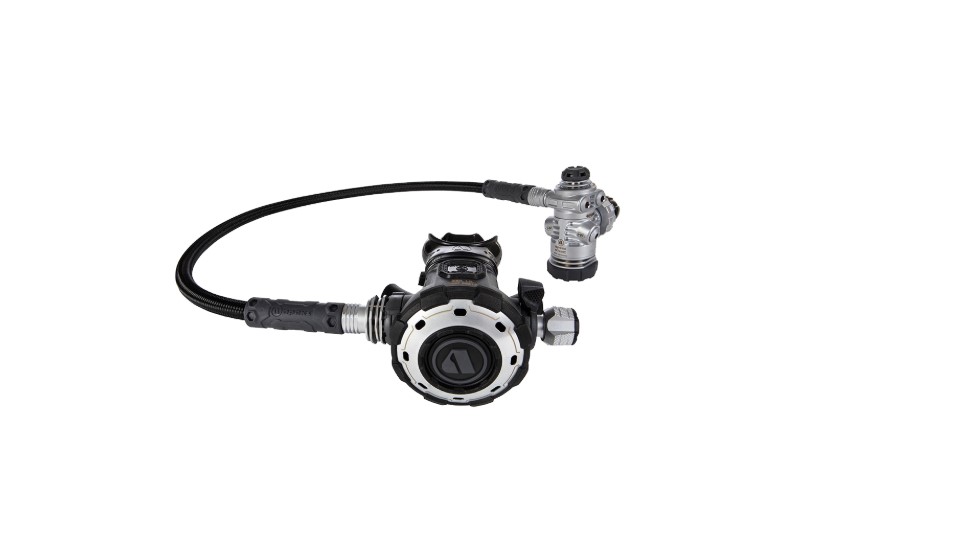
The Apeks MTX-RC balanced regulator set featuring the external adjustment control on the second stage.
Secure checkout through Dive Right In Scuba • Automatic discount applied at checkout • Authorized Apeks Dealer
Key Differences at a Glance: MTX-R vs MTX-RC
To understand why these models exist side-by-side, it helps to examine their mechanical differences. The Apeks MTX-R was created around the United States Navy Experimental Dive Unit (NEDU) extreme cold-water testing protocol. The MTX-RC takes that identical cold-water chassis and adapts it for recreational, technical, and commercial divers who demand on-the-fly breathing adjustments.
| Feature | Apeks MTX-R | Apeks MTX-RC |
|---|---|---|
| Second Stage Adjustment | Factory preset (No external knob) | Fully adjustable inhalation resistance knob |
| Venturi Control | Single-position dive/pre-dive lever | Ergonomic progressive Venturi lever |
| First Stage Design | Over-balanced forged body, dry sealed | Over-balanced forged body, dry sealed |
| Heat Exchanger Fins | Ribbed satin brass on 1st & 2nd stage | Ribbed satin brass on 1st & 2nd stage |
| Low Pressure (LP) Ports | 5 LP ports on rotating turret | 5 LP ports on rotating turret |
| High Pressure (HP) Ports | 2 angled HP ports (7/16" UNF) | 2 angled HP ports (7/16" UNF) |
| Extreme Cold Water Rating | Tested below 0.5°C (32.9°F) at 60m | Tested below 0.5°C (32.9°F) at 60m |
| Second Stage Accent Trim | Matte satin finish with olive/black trim | Satin chrome with dark grey/silver trim |
| Ideal Dive Application | Ice diving, cave exploration, dive schools | Technical diving, deep wrecks, mixed conditions |
First Stage Engineering: The Shared Foundation
Both models use the exact same first-stage architecture, which sets a benchmark for cold-water gas delivery. Unlike traditional regulators that machine a cylinder block from extruded brass rod, Apeks uses a one-piece forged brass body. Forging aligns the metallic grain structure, significantly increasing structural strength while allowing external heat-radiating ribs to be molded directly into the housing.
Over-Balanced Diaphragm Mechanism
As a diver descends, ambient water pressure increases. Standard balanced diaphragm regulators increase intermediate pressure (IP) at a 1:1 ratio to match ambient depth. Apeks implements an over-balanced design: as depth increases, the intermediate pressure climbs faster than ambient pressure. This compensates for the increased gas density you experience past 100 feet (30 meters), ensuring that breathing effort feels as effortless at 180 feet as it does near the safety stop.
Environmental Dry Seal & Over-Molded Cap
Water entering the spring cavity of a first stage is the number one cause of internal freezing and freeflows in ice diving. The MTX platform eliminates this vulnerability completely with an over-molded environmental dry seal cap. A heavy-duty elastomer membrane completely seals the main spring chamber from ambient water. Ambient pressure transfers through the flexible diaphragm to the internal mechanism without allowing a single drop of freezing moisture inside. This physical barrier stops ice crystals from jamming the main diaphragm spring open.
Technical Insight: According to the official Apeks regulator manual, intermediate pressure should sit strictly between 9.0 and 10.0 bar (130-145 psi) at 200 bar cylinder pressure. The over-balanced system maintains smooth delivery even when supply cylinder pressure drops near reserve levels.
Port Configuration and Turret Flexibility
Routing hoses cleanly is essential whether you dive a single tank, double backmount, or sidemount. The MTX first stage comes equipped with:
- 4 Radial Low-Pressure Ports: Mounted on a rotating turret to ensure flexible hose angles that eliminate neck strain and pull on the mouthpiece.
- 5th Axial Low-Pressure Port: Positioned directly on top of the turret for clean long-hose routing on technical rigs or direct drysuit inflation setups.
- 2 Angled High-Pressure Ports: Tilted backward at an optimal angle for transmitter clearance and traditional SPG console routing.
Second Stage Comparison: Diver Control vs Fail-Safe Simplicity
The primary divergence in the mtx r vs mtx rc debate lies inside the second stage housing. Both units utilize pneumatically balanced poppet valves and oversized heat exchangers, but their user-interface philosophies serve different operational needs.
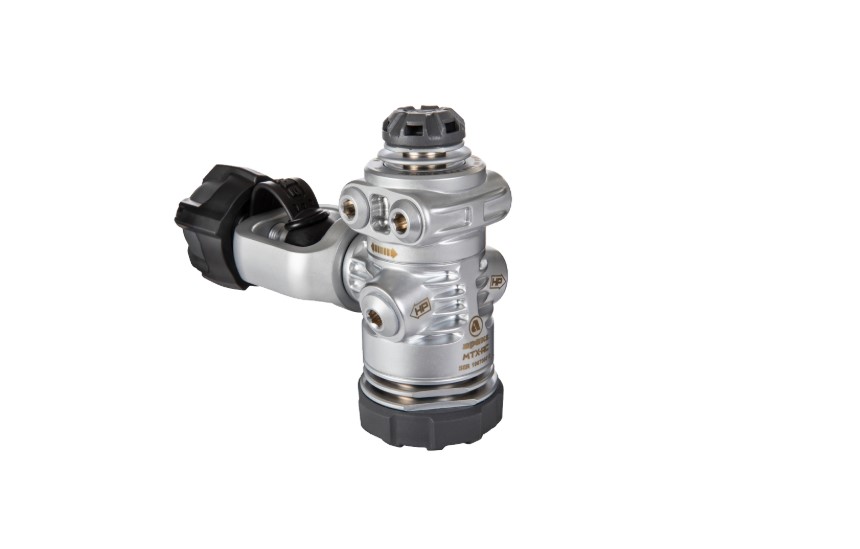
Close-up of the MTX-RC second stage displaying the thermal heat sink collar and breathing effort adjustment knob.
Apeks MTX-R: The "Set and Forget" Philosophy
The MTX-R second stage does not feature an external inhalation adjustment knob. Apeks intentionally built this model without user-accessible spring tension screws to eliminate human error during extreme ice expeditions. In sub-freezing water, divers who dial an adjustment knob too soft can cause instant venturi rush, drawing freezing gas through the valve orifice and triggering a catastrophic ice-lock freeflow.
Instead, the MTX-R is preset at the factory to a balanced spring tension that remains stable across cold water parameters. It includes a simplified pre-dive/dive lever to avoid surface freeflows, but leaves breathing tension untouched. It's tough, simple, and virtually impossible to misconfigure underwater.
Apeks MTX-RC: Complete Breathing Customization
The MTX-RC (where "RC" stands for Regulator Controllable) adds a large, tactile adjustment knob coated in protective rubber. This allows divers to tune the spring preload against the poppet valve on the fly:
- High Flow / Deep Drops: Backing the knob out reduces crack pressure to the bare minimum, providing effortless air delivery when gas density thickens at depth.
- Heavy Current / Scooter Dives: Tightening the knob increases cracking effort, preventing high-speed water currents or DPV backwash from depressing the front purge cover and causing continuous bubbling.
- Stage & Deco Bottles: Technical divers can detune the MTX-RC second stage when clipped to harness D-rings, ensuring it won't freeflow while swimming vigorously.
The MTX-RC also features a refined, progressive Venturi lever with clear, rubberized grip ridges. It lets you smoothly direct airflow toward the diaphragm for pre-dive suppression or straight into the mouthpiece tube for maximum venturi assist once submerged.
Thermal Heat Exchangers on the Second Stage
Expanding high-pressure gas into low-pressure gas causes adiabatic cooling, dropping the internal air temperature by up to 20°C (36°F) below ambient water temperature. In 4°C (39°F) quarry water, the valve mechanism inside your second stage easily reaches sub-zero temperatures. Both the MTX-R and MTX-RC combat this with a heavy, ribbed metal heat exchanger collar surrounding the valve mechanism. This solid brass band absorbs ambient heat from surrounding water and conducts it directly to the internal poppet, preventing ice crystal nucleation at the rubber valve seat.
NEDU Extreme Testing: What Makes These Regulators Different?
Most commercial scuba regulators are certified to the European standard EN250A, which requires a regulator to perform reliably at 50 meters (164 feet) in water temperatures of 4°C (39°F). While sufficient for standard sport diving, it leaves very little safety margin for ice diving, high-latitude tech expeditions, or commercial public safety recovery ops.
Apeks designed the MTX platform to meet the significantly more punishing United States Navy Experimental Dive Unit (NEDU) test standards:
- Water Temperature: Tested in extreme sub-freezing saltwater slush at 0.5°C (32.9°F).
- Depth: Cycled under high breathing workload simulator machines down to 60 meters (198 feet).
- Breathing Rate: Driven at a heavy ventilatory rate of 62.5 liters per minute (representing high-stress diver exertion) while simulating freeflows to test freeze tolerance.
Both the MTX-R and MTX-RC pass these tests cleanly. The heavy front cover features an over-molded elastomer purge button integrated with a rigid brass internal plate. This armor plating resists physical impacts against boat hulls and rocky cave ceilings, while preventing current flow from pushing against the diaphragm during fast scooter runs.
Community Feedback & Real-World Diver Experiences
Evaluating bench test specifications is crucial, but real-world diver feedback shows how equipment performs after hundreds of logbook entries.
Reddit Diver Consensus: "Is the MTX-RC Too Much Regulator?"
In community discussions on Reddit's r/scubadiving, divers frequently ask whether the MTX-RC is overkill for recreational or temperate diving. The overwhelming feedback from cold-water instructors and technical divers highlights three key realities:
- Breathing Smoothness: Divers praise the MTX-RC's wide-open breathing ease, noting that even in warm Caribbean waters, having fine-tuning control over inhalation resistance reduces jaw fatigue and conserves gas.
- Weight Profile: Due to its heavy forged brass first stage and metal heat sinks, the MTX series is noticeably heavier in your carry-on bag than travel-oriented regulators like the Apeks Flight or XL4+. Divers who primarily fly to tropical destinations occasionally find it bulky, but cold-water divers consider the thermal mass an indispensable safety asset.
- Reliability Under Abuse: Multiple Great Lakes wreck divers and Scandinavian cold-water divers reported zero freeze incidents across hundreds of winter dives, noting the adjustment knob on the MTX-RC never locked up or jammed with silt.
Retailer Reputation & Customer Trust
When investing in high-end life-support equipment, sourcing through an authorized dealer ensures genuine factory parts, up-to-date warranty protections, and proper pre-delivery bench inspection. Dive Right In Scuba maintains an exceptional track record among divers, backed by independent verified customer reviews on Trustpilot.
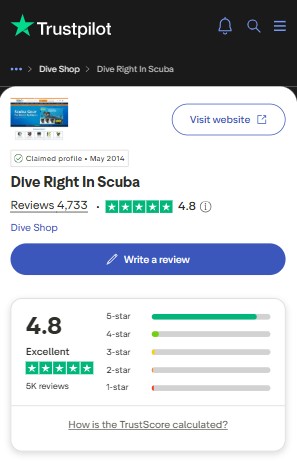
Dive Right In Scuba maintains verified high satisfaction ratings for technical gear fulfillment and customer support.
Video Analysis: Bench Performance & Field Overview
To see the internal architecture, heat sink finish, and physical adjustment mechanism in detail, watch this comprehensive technical breakdown:
Practical Scuba Scenarios: Choosing the Right Model
Scenario 1: Cold Quarry, Deep Wreck, and Technical Diving
Winner: Apeks MTX-RC
If you regularly dive deeper than 100 feet (30 meters) or encounter thermoclines where water temperature plummets, the MTX-RC is our clear recommendation. At depth, gas density increases your physical work of breathing. Opening the MTX-RC's adjustment knob allows effortless gas flow, reducing CO2 buildup and lower-body exertion. When passing through heavy current on an anchor line, dialing the knob inward stops annoying gas loss.
Scenario 2: Dive Centers, Rental Fleets, and Military Training
Winner: Apeks MTX-R
If you manage an institutional dive team, rescue squad, or technical training center, the standard MTX-R is ideal. Students and inexperienced divers can inadvertently turn adjustment knobs the wrong way or leave valves wide open before jumping in. The MTX-R eliminates these user errors, providing bulletproof, factory-locked breathing reliability.
Scenario 3: Dedicated Sidemount & Stage Bottle Rigs
Winner: Apeks MTX-RC
Sidemount divers constantly manage bottle positions, swimming dynamics, and stage handoffs. Having the ability to detune an idle second stage prevents accidental water-entry freeflows while keeping your primary stage tuned for lightning-fast air delivery.
Includes Official Manufacturer Warranty • Free Shipping Options • Full Technical Support
Maintenance, Service Intervals, and Ownership Costs
Life-support gear is only as reliable as its service plan. Apeks recommends servicing both the MTX-R and MTX-RC once every two years or 200 dive hours, whichever comes first, alongside an annual intermediate inspection by an authorized service technician.
Key Service Best Practices
- Rinsing Procedure: Always keep the first stage dust cap firmly secured before soaking. Never press the purge button while rinsing in a wash tank, as this opens the second stage valve and allows moisture into the low-pressure hose.
- Oxygen Compatibility: From the factory, standard MTX models are compatible with Nitrox mixes up to 40% O2 straight out of the box when used in the European Union / North America under international standards. Dedicated 100% Oxygen M26 versions are manufactured specifically for clean technical decompression mixtures.
- Mouthpiece Comfort: Both regulators come standard with the patented Apeks Comfo-Bite mouthpiece, which features a bridge across the upper palate to eliminate jaw clamping during multi-hour decompression schedules.
Purchasing, Shipping, and Warranty Confidence
Investing in a top-tier regulator requires confidence in fulfillment, payment options, and long-term customer care. When ordering through an established technical outfitter like Dive Right In Scuba, divers receive comprehensive service protections:
- Delivery Logistics: Clear domestic and international delivery times are outlined in the official shipping policy, including fast tracking and signature-insured courier options.
- Flexible Financing: Equipment upgrades can be managed using available payment plans and competitive price-matching options outlined in their pricing & financing terms.
- Manufacturer Protection: Gear is backed by the manufacturer warranty alongside store service guarantees detailed under the equipment warranty policy.
- Direct Technical Support: If you need advice on DIN vs Yoke configurations or custom technical hose lengths, you can reach experienced divers directly via their customer support team.
Frequently Asked Questions
What is the difference between MTX-R and MTX-RC?
The Apeks MTX-R features a factory-preset second stage with no external breathing effort knob, designed for military and extreme ice dive simplicity. The MTX-RC uses the same rugged cold-water chassis but adds an external diver-adjustable inhalation control knob and a progressive Venturi lever for on-the-fly tuning.
Can the MTX-R or MTX-RC freeze during winter diving?
While any regulator can freeze under severe conditions (such as holding the purge button down for prolonged periods in freezing water), the MTX series is tested to NEDU military standards in water below 0.5°C (32.9°F) at 60 meters. Its forged heat exchangers and environmentally sealed dry chamber make it one of the most freeze-resistant regulators ever produced.
Is the MTX-RC suitable for warm tropical waters?
Yes. Although engineered for polar conditions, the MTX-RC breathes exceptionally well in warm water. Its over-balanced first stage delivers high gas volume at any depth, though it is slightly heavier than dedicated lightweight travel regulators.
Should I choose DIN or Yoke (A-Clamp)?
For cold water and technical diving, DIN (300 bar) is strongly recommended. DIN threads directly into the cylinder valve, capturing the O-ring securely and handling higher pressures without risk of slipping or extrusion in cold environments.
Can I convert an MTX-R second stage into an MTX-RC?
Converting an MTX-R to an MTX-RC requires replacing the entire second stage barrel assembly, adjustment knob, and internal spring assembly. Due to parts and labor costs, it is almost always more economical to purchase the MTX-RC directly if you desire user adjustability.
Final Verdict: Which Regulator Should You Buy?
The mtx r vs mtx rc showdown isn't about which regulator breathes better—their underlying pneumatics are identical. It's about how much control you want over your breathing cycle.
For 90% of sport, wreck, and technical divers, the Apeks MTX-RC is the clear winner. The ability to fine-tune inhalation crack resistance against strong currents, scooter backwash, and changing gas densities makes it one of the most versatile high-performance regulators on the market today. If you demand bulletproof peace of mind with total diver adjustability, the MTX-RC is an investment that will serve you across thousands of dives.
Fast Shipping • 100% Authorized Apeks Dealer • Industry-Leading Diver Support

0 Comments