
Seac Smart BCD Review: An In-Depth Look at Fit, Buoyancy Control, and Field Durability
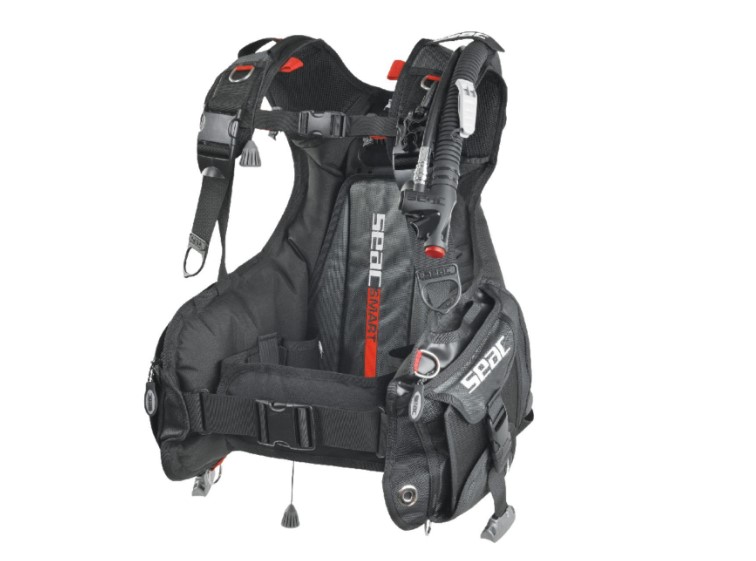
The seac smart bcd is a traditional jacket-style buoyancy compensator designed for recreational divers who want a reliable, dual-purpose rig for local diving and tropical travel. Built with heavy-duty 1000D Cordura on high-wear exterior panels and a quick-release integrated weight system, its strongest benefit is providing upright surface flotation and reliable tank stability without adding excessive bulk to your gear bag. If you're looking for an accessible, hard-wearing BCD that handles standard aluminum 80s as smoothly in cold quarry water as it does over a 3mm shorty in the Caribbean, it's definitely worth considering. In this guide, we'll break down its air cell geometry, dumping mechanisms, trim balance, and long-term durability based on extensive underwater testing and hands-on mechanical evaluation.
Your discount is automatically applied via the link above. Purchases are completed securely on the official dealer platform.
Understanding the Design Philosophy Behind the Seac Smart BCD
When you take a close look at buoyancy compensators across the industry, they generally fall into two structural families: rear-inflation back-wings and traditional jacket (or vest) style units. The Seac Smart BCD sits firmly in the jacket category, but it avoids many of the common pitfalls that make traditional jackets feel restrictive underwater.
Traditional jacket BCDs wrap the air cell completely around your torso—extending from your back, under your arms, and across your sides. The main advantage here is surface behavior. When you surface at the end of a dive and inflate your wing fully, a jacket BCD keeps your head high out of the water without pitching you forward onto your face, which can happen with back-inflation wings if you don't adjust your body angle properly. This makes jacket BCDs reassuring for newer divers, instructors working with students, or anyone who spends a lot of time waiting on the surface for boat pickups in choppy seas.
However, older jacket designs often suffered from a issue known as "chest squeeze." When you pump air into the bladder at depth or on the surface, the expanding air cell presses inward against your ribs, making it harder to take a deep breath. Seac tackled this problem in the Smart BCD by decoupling the outer harness adjustment straps from the internal air cell expansion path. As the bladder inflates, it expands outward away from your torso rather than crushing inward against your chest. You get the upright surface stability of a classic vest BCD without feeling constricted when the bladder is filled to maximum capacity.
Materials and Structural Build Quality: 1000D vs 500D Cordura
A BCD lives a harsh life. It gets dragged across concrete boat decks, scraped against barnacle-crusted ladder rungs, stuffed into tight mesh transport bags, and exposed to harsh ultraviolet light during surface intervals. Seac selected a hybrid fabric construction for the Smart BCD to balance structural toughness with packability.
The exterior shell features 1000-Denier Cordura nylon on high-friction impact zones. Denier refers to the linear mass density of the fabric threads; a higher number indicates thicker, heavier threads. 1000D fabric is standard in high-end commercial and technical diving gear because it resists tears, punctures, and abrasion from rough rock walls or rusty boat wrecks. If you accidentally scrape against a quarry ledge or lean against a rough wooden bench, the 1000D outer layer takes the abuse without fraying.
For the internal bladder lining and inner harness sections, Seac utilizes 500-Denier Cordura polyurethane-coated nylon. This lighter fabric is significantly softer to the touch, reducing friction against your wetsuit or skin. More importantly, using 500D on internal sections keeps the BCD's dry weight down to roughly 6.6 pounds (3.0 kg) for a size Medium. This makes it manageable for air travel while retaining rugged 1000D protection on the outer shell where protection actually matters.
The seams are high-frequency radio-frequency (RF) welded and reinforced with heavy nylon stitching along stress points like the shoulder strap anchor points and the tank band webbing tracks. RF welding fuses the polyurethane inner coating into a single solid layer, preventing microscopic air leaks that can develop in lower-tier sewn or glued seams over extended use.
Ergonomics, Harness System, and Fit Customization
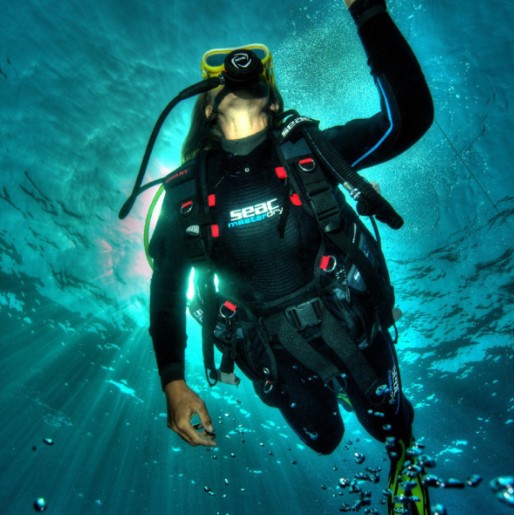
A BCD can have the best dump valves and fabric in the world, but if it shifts around on your back underwater, your buoyancy and trim will suffer. The Seac Smart BCD uses an adjustable three-point harness assembly designed to accommodate a wide variety of diver body profiles.
Shoulder Straps and Quick-Release Buckles
The shoulder straps feature heavy-duty 40mm quick-release pinch buckles. The straps are anchored independently from the waist cummerbund, allowing you to adjust shoulder height separately from torso tightness. This independent adjustment helps divers with longer torsos avoid the "short-jacket" feeling where the BCD rides up into the armpits during dive operations.
The shoulder straps are padded with high-density EVA foam that resists water absorption. Unlike open-cell foam padding that acts like a sponge and stays wet inside your gear bag, closed-cell EVA foam sheds water quickly, dries fast, and won't compress down to paper-thinness under depth pressure when you're wearing a heavy tank.
Adjustable Waist Cummerbund and Sternum Strap
The waist closure uses a dual-adjustment system. First, an elasticized neoprene cummerbund wraps around your waist with a wide hook-and-loop velcro fastener. The elasticity is critical: as you descend and your wetsuit compresses under hydrostatic pressure, your waist circumference shrinks slightly. The elastic cummerbund takes up that slack automatically, keeping the BCD snug against your lower back without forcing you to readjust your waist belt mid-dive.
Over top of the cummerbund sits a heavy nylon webbing strap with a high-impact resin squeeze buckle. This primary webbing strap anchors the lower frame of the BCD securely against your hips. Higher up on the chest, a two-position adjustable sternum (chest) strap prevents the shoulder harnesses from slipping outward off your shoulders when you're swimming hard against a strong surface current or climbing up a boat dive ladder.
Buoyancy Lift Capacity Breakdown
Buoyancy lift capacity determines how much weight a BCD can support at the surface and how effectively it can keep your head out of the water while fully loaded with tanks, weights, and accessories. Lift requirements change depending on gear configuration, water density (salt vs. fresh), and suit compression.
Here is how the official lift specs break down across the sizing spectrum for the Seac Smart BCD:
| Size | Lift Capacity (Kilograms) | Lift Capacity (Pounds) | Lift Capacity (Newtons) |
|---|---|---|---|
| X-Small (XS) | 11.2 kg | 24.6 lbs | 110 N |
| Small (S) | 13.3 kg | 29.3 lbs | 130 N |
| Medium (M) | 15.3 kg | 33.7 lbs | 150 N |
| Large (L) | 17.3 kg | 38.1 lbs | 170 N |
| X-Large (XL) | 18.3 kg | 40.3 lbs | 180 N |
For standard single-tank recreational diving with an Aluminum 80 (11.1-liter) or Steel 100 cylinder, 33.7 lbs of lift in size Medium is more than enough. It easily supports the negative weight of a full cylinder at the start of a dive, offsets the 6 to 8 pounds of gas weight you burn through during the dive, and holds you high out of choppy surface waters upon return.
Safety Quick Release (SQR) Integrated Weight System
One of the defining mechanical features of the Smart BCD is Seac's Safety Quick Release (SQR) integrated weight system. Weight belts can slip off hips, pull on the lower back, or become difficult to manage when donning gear on a rolling boat deck. Integrated weight pockets solve these issues by moving ballast off your waist and directly onto the BCD frame.
SQR Pocket Mechanics and Insertion
The SQR system uses stiffened fabric weight pouches equipped with an ergonomic red release handle. Each main pocket can hold up to 9.0 lbs (4.0 kg) of block lead or soft shot lead, giving you a total main weight capacity of 18.0 lbs (8.0 kg).
To lock a pocket in place, you slide the weight pouch along the reinforced plastic tracking guide inside the BCD sleeve until you hear a mechanical snap. The primary locking mechanism consists of a dual-jaw squeeze latch. Once engaged, the pocket cannot slide out backward on its own, even if you dive head-down or swim through heavy surge.
Ditching Weights in Emergency Situations
If an emergency requires immediate positive buoyancy at the surface, ditching the weights is straightforward and intuitive. You grab the bright red handles, squeeze the center release catch with your thumb and fingers, and pull directly outward away from your body. The system releases cleanly without snagging on the pocket edges or catching on adjacent D-rings.
During our functional testing, the SQR system released cleanly even when loaded with uneven block lead weights. The rigid internal guide channels prevent soft lead bags from bulging and causing friction jams inside the sleeve, ensuring a smooth, instant release when pulled firmly.
Rear Trim Weight Pockets
To achieve horizontal trim (keeping your hips elevated so your legs don't drag through the reef), shifting all your weight to the front hips isn't always ideal. The Seac Smart BCD includes two non-ditchable trim weight pockets mounted on the rear tank band on either side of the cylinder.
Each rear trim pocket holds up to 4.4 lbs (2.0 kg) of lead. By placing 2 to 4 pounds of lead in these rear pockets, you move your center of mass closer to your pivot point near your spine. This helps offset the buoyant tendency of thick neoprene booties and legs, making it far easier to maintain a clean, horizontal hovering position without constant leg kicking.
Pneumatics, Inflator Assembly, and Dump Valves
Precise buoyancy control depends on responsive air management. If an inflator valve sticks or dump valves vent too slowly, adjusting your buoyancy during ascents becomes challenging. Seac uses a time-tested pneumatic power inflator design paired with three separate dump valves.
Power Inflator Mechanics
The corrugated inflator hose features an ergonomic power head with high-visibility buttons. The gray push-button controls power inflation, feeding low-pressure gas from your regulator's first stage directly into the air cell. The valve action is progressive: pressing lightly delivers a slow, controlled burst of air for fine-tuning trim, while pressing firmly delivers rapid air flow when compensating for sudden depth changes or adding surface buoyancy.
The red oral inflation button at the end of the mouthpiece opens the internal exhaust valve. Oral inflation is smooth and easy, featuring a contoured mouthpiece that seals comfortably against your lips if you need to orally inflate at the surface during drill practice or in the unlikely event of a low-pressure hose issue.
The Three Exhaust Dump Valve Locations
Controlling air release requires dump valves positioned at various high points of the BCD relative to your body orientation:
- Upper Right Shoulder Pull Dump: Located on the right shoulder, operated by a pull-cord with an easy-to-grip toggle ball. This is your primary valve for venting air while swimming upright or during controlled vertical ascents.
- Manual Hose Pull Dump (Upper Left): Jerking downward on the corrugated inflator hose activates an internal stainless steel cable connected to the upper left shoulder valve, allowing quick venting without taking your eyes off your dive buddy.
- Lower Rear Right Dump Valve: Located at the lower right bottom edge of the BCD bladder. When you're swimming horizontally or head-down searching for tiny macro life under a coral ledge, air migrates to the bottom of the BCD. The rear dump valve allows you to pull the low toggle cord and release air without turning upright and disturbing your horizontal trim.
All three valves feature internal stainless steel springs engineered with precise tension settings to prevent inadvertent water entry when the valve closes after dumping gas.
Storage Capacity, Pockets, and D-Ring Layout
Recreational divers need practical places to store safety equipment like Surface Marker Buoys (SMBs), finger spools, slates, compact dive lights, and backup masks. The Seac Smart BCD excels in utility with a practical storage configuration.
Zippered Cargo Pockets
The BCD features two large zippered side pockets. Unlike mesh slip pockets that let smaller items slide out, these pockets close securely with high-gauge YKK zippers with large pull tabs that are easy to manipulate while wearing 5mm neoprene cold-water gloves.
The pockets expand outward slightly due to a bellowed fabric fold. Inside, there's enough volume to store a folded high-visibility SMB, a 100-foot aluminum finger spool, and a compact backup light without forcing the zipper or bulging against your hips.
D-Ring Equipment Attachment Points
To keep gear streamlined and off the fragile marine floor, the BCD features six heavy-duty D-rings strategically positioned across the harness:
- 4 Technopolymer D-Rings (30mm): Located on the upper shoulder straps and upper pocket edges, ideal for securing light lanyards, gauge consoles, or pressure gauge clips.
- 2 Stainless Steel D-Rings (50mm): Positioned on the lower edge of the BCD harness frame. These heavy-duty metal rings are built to support heavier accessories like dive lights or extra clip-on gear.
Field Testing and Real-World Diving Scenarios
To evaluate how the Seac Smart BCD performs under real dive conditions, we reviewed performance across three common diving environments: tropical reef diving, cold-water quarry diving, and travel logistics.
Scenario 1: Tropical Reef Diving (Caribbean, 3mm Wetsuit)
In warm water wearing a thin 3mm wetsuit, buoyancy shifts are minimal because thin neoprene undergoes very little pressure compression at depth. The Smart BCD shines here. With only 6 to 8 pounds of total weight split between the SQR main pockets and rear trim pockets, the BCD feels light and unobtrusive.
Because warm water allows for lower weight requirements, you barely need to add air to the bladder at a cruising depth of 50 feet (15 meters). The low profile of the bladder reduces drag through the water column, conserving your breathing gas and making swim cycles efficient. Upright surface flotation is stable, keeping splash off your face while waiting for the dive boat pickup.
Scenario 2: Cold-Water Quarry / Pacific Northwest Shore Dive (7mm Wetsuit)
Cold-water diving demands significantly more weight to submerge a thick 7mm full suit, hood, boots, and gloves—often requiring 18 to 24 pounds of total ballast depending on body composition. This scenario tests the maximum limits of a BCD's weight capacity and structural stability.
Loading 16 pounds into the SQR main pockets and 4 pounds into the rear trim pockets keeps the weight distributed balanced across the torso. When descending past 60 feet (18 meters), thick neoprene compresses significantly, losing positive buoyancy. The Smart BCD's 33.7 lbs of lift (Medium size) effortlessly compensated for this loss of suit buoyancy.
Even under heavy load, the 1000D Cordura fabric shows no signs of stress or stretching along the tank band connection points. The dump valves cleared air reliably without water backflowing into the bladder, even during rapid depth adjustments near cold thermoclines.
Scenario 3: Travel Logistics and Packing Efficiency
For traveling divers, weight and packability are key considerations when trying to avoid airline baggage fees. At roughly 6.6 lbs (3.0 kg), the Smart BCD is relatively light for a full-featured 1000D jacket BCD.
While dedicated ultra-light travel BCDs (which often trade away integrated weight systems and pockets to drop under 5 lbs) fold down slightly smaller, the Smart BCD packs reasonably flat. By laying the backplate flat in the bottom of a standard rolling dive bag, packing wetsuits over the harness, and tucking the shoulder straps inward, it takes up minimal vertical space in your luggage.
Seac Smart BCD vs. Competitors
To put the performance of the Seac Smart BCD into perspective, let's examine how it stacks up against three other popular recreational jacket-style BCDs in the same category: the Cressi Start Pro, the Mares Rover, and the Aqualung Wave.
| Feature / Feature | Seac Smart BCD | Cressi Start Pro | Mares Rover | Aqualung Wave |
|---|---|---|---|---|
| Primary Fabric | 1000D / 500D Cordura | 500D / 1000D Cordura | 1000D Cordura | Resstek High-Tenacity Fabric |
| Weight Integration | SQR Mechanical Release | Gravity Release Pockets | Optional (Traditional Weight Belt) | Optional / Modular Pockets |
| Rear Trim Pockets | Included (Tank Band Mounted) | Not Included | Not Included | Not Included |
| Lift Capacity (Size M) | 33.7 lbs (15.3 kg) | 31.5 lbs (14.3 kg) | 33.0 lbs (15.0 kg) | 33.0 lbs (15.0 kg) |
| Cargo Storage | 2 High-Capacity Zipper Pockets | 2 Large Zipper Pockets | 2 Large Zipper Pockets | 2 Open / Velcro Pockets |
While the Cressi Start Pro and Mares Rover are rental-fleet staples renowned for simple durability, the Seac Smart BCD provides a noticeable step up in standard feature inclusions. Having dedicated rear trim pockets standard out of the box gives you superior horizontal balance options compared to rental-oriented designs that force you to wear all your lead on your hips or buy add-on trim pouches later.
Setup, Tank Mounting, and Adjustments
Getting your gear set up properly before stepping onto the dive boat prevents equipment shifts and makes your dive significantly smoother. Here is the recommended procedure for setting up the Seac Smart BCD with a standard aluminum 80 cylinder:
- Tank Band Alignment: Slide the rear tank loop down over the top of your tank valve. Position the height of the BCD frame so that the tank valve neck sits roughly level with the carrying handle loop on top of the backplate.
- Cylinder Cam Buckle Tension: Wet the woven nylon tank strap before tightening. Nylon stretches slightly when wet; securing the cam buckle while dry can cause the tank to slip once submerged. Thread the webbing through the four-slot cam buckle and cinch it down until the latch snaps firmly against the tank wall. Give the BCD frame a strong upward tug to confirm the cylinder is locked tight.
- Connecting the Low-Pressure Inflator Hose: Connect the LP inflator hose coming from your regulator's first stage to the quick-disconnect nipple on the power inflator head. Pull back on the knurled sleeve, snap it over the nipple, and release it. Tug lightly to ensure the locking collar is fully seated.
- SQR Weight Loading: Slide your pre-measured weight blocks or soft lead shot pouches into the SQR inserts. Insert the pouches straight into the BCD side tracks until the dual-jaw latches click audibly into place. Give each red handle a gentle tug outward to verify that the release mechanism is locked in position.
Community Discussions and Diver Feedback
To verify our findings against broader long-term ownership experiences, we examined real-world diver feedback from Reddit's r/scuba community discussions on Seac BCDs as well as long-term owner reviews.
Divers consistently highlight several long-term strengths:
- Reliable SQR Mechanics: Divers appreciate that the weight release mechanism stays secure during shore entries and rough surf, yet drops cleanly when pulled intentionally.
- Comfortable Shoulder Profile: Reviewers with broader shoulders note that the cut of the shoulder harness prevents pinching around the neck and collarbones.
- Robust Zipper Construction: The YKK zipper closures on the cargo pockets receive praise for remaining functional after hundreds of salt-water dive cycles without binding or seizing up, provided standard fresh-water rinsing is performed.
A minor point noted by some users involves sizing: Seac's sizing chart runs true to European athletic standards. If you plan to wear this BCD primarily over thick cold-water suit combinations (like a 7mm wetsuit plus a neoprene hooded vest), consider taking careful torso measurements with your suit on or stepping up one size if you land right on the upper threshold of a size boundary.
Video Review and Visual Overview
For a detailed visual walkthrough of the harness controls, valve placements, and pocket construction, watch this breakdown video:
Maintenance, Post-Dive Care, and Internal Bladder Rinsing
Salt crystals and trapped sand are the primary causes of premature BCD wear. Salt crystallizes inside the bladder as water evaporates, creating sharp micro-edges that can abrade internal polyurethane coatings over time. Following a thorough post-dive care protocol ensures your BCD performs reliably for years.
Step-by-Step Cleaning Protocol:
- Rinse the Exterior: Soak the entire BCD in clean, fresh water immediately after diving. Operate the dump valve toggles and depress the inflator buttons under water to rinse trapped salt out of internal spring cavities.
- Flush the Internal Bladder: Depress the red oral inflation button while holding the mouthpiece under a stream of fresh running water to fill the internal bladder about one-third full.
- Agitate and Drain: Partially inflate the BCD with air, then shake and roll the BCD so the fresh water reaches all internal corners. Turn the BCD upside down and dump the water out through the corrugated hose by holding the oral inflator button down.
- Drying and Storage: Partially inflate the bladder with air and hang the BCD on a thick, wide hanger in a cool, shaded place out of direct sunlight. Never store a BCD completely deflated or folded tightly while internal moisture is present, as the inner walls can stick together.
For official manufacturer guidance regarding internal valve servicing intervals and maintenance standards, consult the Official Seac Equipment User Manual.
Retailer Credibility, Shipping, and Customer Support
When purchasing life-support diving equipment online, vendor reputation, genuine warranty coverage, and reliable shipping logistics are critical factors. Purchasing through an authorized dealer ensures you receive factory-fresh gear backstopped by full customer support.
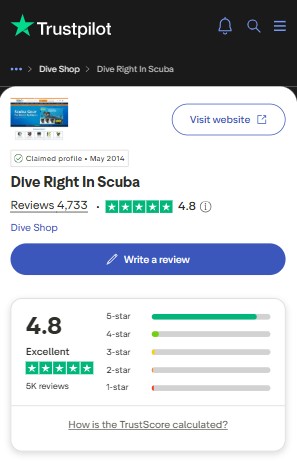
Ordering through Dive Right In Scuba connects you with one of the most established authorized technical and recreational dive outfits in the United States. Here is a breakdown of their store policies and service standards:
- Shipping Options: Standard orders ship fast with reliable tracking protocols. You can review exact delivery timelines, international shipping policies, and carrier details via their Official Shipping Policy Page.
- Warranty Protection: Authorized gear purchases come backed by complete manufacturer warranties protecting against material defects and manufacturing flaws. Read more about protection guarantees on the Warranty Policy Directory.
- Price Match & Flexible Payment Plans: To ensure you get the best deal, price matching policies and flexible financing options are available. Detailed terms can be found on the Payment and Price Match Portal.
- Expert Customer Support: If you have specific sizing questions or need advice on gear configuration, active divers are available to assist via the Dive Right In Scuba Customer Contact Center.
Pros and Cons
What We Like (Pros)
- Heavy-Duty 1000D Fabric: Exterior impact zones resist scrapes and abrasions exceptional well.
- SQR Weight System: Reliable locking mechanism that dumps smoothly under emergency conditions.
- Rear Trim Pockets Included: Mounted on the tank band to help maintain horizontal trim easily.
- Comfortable Cushioning: Closed-cell EVA foam padding doesn't absorb water or crush thin at depth.
- Balanced Surface Flotation: Keeps your head high above chop without chest compression.
Things to Consider (Cons)
- European Fit Standard: Runs slightly trim; divers wearing thick cold-water suits should measure carefully.
- Jacket Profile: Offers slightly more bulk than minimalist, ultra-light travel wings designed exclusively for warm water.
Who Should Buy the Seac Smart BCD?
The seac smart bcd is an ideal choice for several categories of divers:
- Newly Certified Divers: If you recently finished your Open Water certification and want a dependable, intuitive BCD that behaves predictably at the surface and underwater.
- Recreational Divers Wanting Integrated Weights: Divers who want to ditch weight belts in favor of an integrated locking system with rear trim adjustments.
- Multi-Environment Divers: Divers who divide their time between local cold-water lakes and sunny tropical vacations and need a single BCD that handles both well.
Who Should Look Elsewhere?
- Dedicated Technical Divers: If you plan on twinset double-tank diving, stage bottles, or advanced decompression overhead environments, you will need a dedicated modular backplate and wing harness setup.
- Strictly Warm-Water Minimalists: If you travel exclusively to the tropics and want an ultra-light rig under 4.5 lbs that folds down into the size of a towel, a back-inflation travel wing might better suit your needs.
Frequently Asked Questions (FAQ)
1. Is the Seac Smart BCD suitable for cold-water diving with heavy weights?
Yes. With a robust 1000D Cordura shell, up to 18 lbs of capacity in the main SQR ditchable pockets, and an additional 8.8 lbs of rear trim pocket capacity, it can comfortably handle the ballast requirements of 7mm wetsuit configurations.
2. How do I know what size to order?
Measure your height, chest circumference, and waist size. Compare those numbers against the manufacturer chart. If you plan to dive primarily in thick thermal suits (like a 7mm wetsuit or drysuit), measure yourself while wearing the suit or step up one size if you land near the upper limit of a size range.
3. Can I use soft lead shot bags in the SQR pockets?
Yes. The SQR weight pouches are designed to accept both hard block lead weights and soft lead shot bags up to 9 lbs (4 kg) per main pocket.
4. Does the BCD come with a low-pressure inflator hose?
In most retail packaging configurations, the low-pressure inflator hose is included with your primary regulator purchase. However, the BCD features a standard quick-disconnect inflator fitting compatible with all standard regulator low-pressure inflator hoses.
5. Can I attach a dive knife directly to the BCD?
Yes. Grommet attachment points and heavy webbing tracks on the pocket flaps allow for simple mounting of standard recreational dive knife sheaths using hose mounts or knife grommet screws.
6. How do rear trim pockets affect my swimming position?
By moving a portion of your lead ballast to the back frame on either side of the air cylinder, rear trim pockets shift your center of gravity upward toward your spine. This helps raise your legs and hips, making it easier to maintain a flat, horizontal profile in the water without kicking constantly.
7. Is this BCD compatible with steel dive tanks?
Yes. The backplate and heavy-duty nylon tank band comfortably hold standard aluminum cylinders (like an AL80) as well as various steel tanks (such as Steel 80, 100, or 120 cylinders).
Final Verdict & Ordering Information
The seac smart bcd delivers a smart balance of structural durability, comfortable fit customization, and intuitive air control. By combining a 1000D outer shell with an effective Safety Quick Release weight system and rear trim pockets, Seac built a versatile BCD that serves recreational divers reliably across diverse environments.
Whether you're exploring shallow tropical reefs or navigating local lakes, this BCD offers the lift capacity, storage, and build quality needed for safe, comfortable dives.
Click above to visit the official dealer store. Discounts automatically calculate at checkout on their secure server.

0 Comments