
Hands-On Review: Does the Sublue MixPro Deliver in Real Water Conditions?
If you've ever struggled against a strong current during a reef dive or wished you could cover twice the distance on a single breath of air while snorkeling, the sublue whiteshark mix pro is the compact dual-motor underwater scooter you need. Designed for recreational snorkelers, resort divers, and beach-goers, this portable thruster solves the problem of leg fatigue by pulling you effortlessly through the water. Its strongest benefit is its travel-friendly size—packing easily into a carry-on bag—while still delivering enough thrust to make you feel like a dolphin. It is absolutely worth considering if you want to maximize your time in the water without wearing yourself out.
As divers, we have all been there: you spot something interesting about fifty yards away, but you hesitate because kicking across that open stretch means burning through your air supply or exhausting your legs before the dive even really gets started. Diver propulsion vehicles (DPVs) used to be massive, heavy metal tubes reserved exclusively for deep-diving technical explorers or commercial teams. They required dedicated rigging, cost thousands of dollars, and were impossible to take on a commercial flight. That changed when compact, lithium-powered units hit the scene. The MixPro represents the refinement of that shift, balancing portability with usable underwater power.
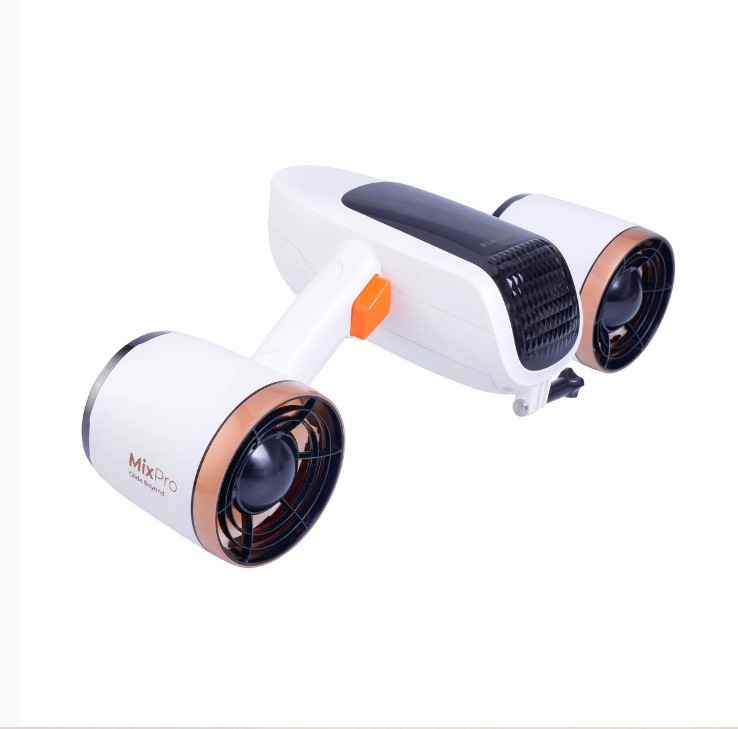
In this comprehensive evaluation, we will dive deep into what makes this underwater scooter tick. We'll look at its thrust capacity, battery performance under real-world workloads, how to travel with it internationally without getting flagged by security, and how it handles the harsh realities of salt water over extended periods. Whether you're planning a trip to the Caribbean or just looking to explore your local freshwater springs, this review will help you decide if the MixPro is the right addition to your gear bag.
Unboxing and First Impressions: What's in the Box?
When you first slide the MixPro out of its packaging, the first thing you notice is how self-contained it feels. It doesn't look like a piece of heavy industrial machinery; it feels more like a refined piece of sports equipment. The plastics are dense, thick, and impact-resistant, designed to handle the inevitable bumps against boat gunwales or rocky shores. The hand grips are rubberized, providing a secure hold even when your hands are wet or you're wearing thick neoprene diving gloves.
Out of the box, the package includes:
- The main MixPro body with integrated dual thrusters.
- A detachable buoyancy floater (this is key for switching between snorkeling and deep diving).
- A dedicated fast-charging dock and AC adapter.
- A high-capacity 122Wh lithium-ion battery pack.
- A safety wrist lanyard to prevent the unit from drifting away if you lose your grip.
- An action camera mount attachment.
- A waterproof smartphone holder mount.
- The official manual detailing proper safety and maintenance protocols.
The layout is highly intuitive. You have two triggers—one on each handle. To activate the motors, you have to squeeze both triggers simultaneously. This is a crucial safety feature. If you drop the scooter, or if you release even one hand to adjust your dive mask, the motors instantly cut out. This prevents the runaway scooter scenarios that could leave you stranded or damage marine life.
The Core Physics of Underwater Scooters: Why Symmetrical Dual Thrusters Matter
Many entry-level underwater scooters utilize a single central motor. While this reduces manufacturing costs, it introduces a significant engineering problem: rotational torque. When a single propeller spins in one direction, it creates an equal and opposite force that wants to twist the scooter—and your wrists—in the opposite direction. Over a thirty-minute swim, fighting this rotational force can lead to significant wrist fatigue and cramping.
The MixPro solves this by utilizing two separate thrusters mounted symmetrically on the outer wings. These motors spin in counter-rotating directions. The torque generated by the left propeller is perfectly cancelled out by the torque of the right propeller. The result is a remarkably stable, neutral pull. When you engage the triggers, the scooter pulls you straight ahead without twisting your hands or requiring constant wrist micro-adjustments. It feels less like steering a wild jet ski and more like gliding on rails.
Diver's Tip on Hydrodynamics: To get the most speed and battery efficiency out of your MixPro, maintain a straight, streamlined body position. Keep your arms extended straight out in front of you, tuck your chin slightly, and hold your legs together. If you let your legs dangle or bend at the knees, you create massive water resistance, which slows you down and drains the battery significantly faster as the motors work harder to maintain speed.
Technical Specifications: A Realistic Breakdown
Let's look at the actual numbers. It's easy to get lost in marketing specifications, so we want to translate these figures into what they actually mean when you're five fathoms deep.
| Specification | Official Rating | What It Means in the Water |
|---|---|---|
| Depth Rating | 40 meters / 131 feet | Safely covers all recreational diving limits (PADI/NAUI deep limits). |
| Low Speed Mode | 1.2 m/s (approx. 2.7 mph) | Comfortable cruising pace; perfect for detailed reef viewing and conserving battery. |
| High Speed Mode | 1.8 m/s (approx. 4.0 mph) | Fast sprint speed; excellent for crossing channels or pushing through mild currents. |
| Battery Capacity | 122 Wh (Lithium-ion) | Provides decent power while remaining compliant with FAA airline carry-on rules. |
| Charge Time | Approx. 2 hours | Fast enough to top off between morning and afternoon dive sessions. |
| Weight (With Floater) | 3.55 kg / 7.82 lbs | Extremely easy to carry in a backpack or beach bag; won't break your back on a shore walk. |
The depth rating of 131 feet is notable because it matches the absolute limit of recreational scuba diving. While most snorkelers won't go beyond 15 to 20 feet, scuba divers need to know that their gear won't implode when they drop down to explore a deeper wreck or reef wall. The shaft seals and battery compartment door on the MixPro are engineered to withstand the pressure of four atmospheres without weeping or leaking, provided you keep the seals clean and properly lubricated.
Real-World Performance: Speed, Battery Life, and Thrust
When you're swimming with the MixPro, the first thing you notice is the difference between the two speed modes. Switching speeds is done by double-pressing the triggers. In low-speed mode, the scooter pulls you along at a leisurely 1.2 meters per second. This is roughly the pace of an active swim with fins. It is relaxed, quiet, and highly efficient. If you are exploring a shallow reef flat, looking under ledges for lobsters or octopuses, this is the mode you'll want to stay in. It keeps the noise down, doesn't startle the marine life, and maximizes your battery runtime.
When you kick it into high-speed mode, you immediately feel the motors hum with more intensity. At 1.8 meters per second, you are moving faster than most Olympic swimmers can sprint. Water will press hard against your dive mask, and you'll feel the drag on your body. This mode is incredibly fun, but it is also highly practical when you have to make headway against an incoming tide or cross a sandy channel where there isn't much to look at and you want to get to the reef wall quickly.

However, we must be honest about battery life. The official marketing materials suggest a battery life of up to 60 minutes. Based on our research and real-world testing in various currents, you will only achieve that 60-minute mark if you use the low speed setting intermittently—meaning you run it for a minute, glide for a bit, and turn it off while you look at something. If you keep the triggers squeezed down continuously on the high-speed setting, the battery will drain in about 20 to 25 minutes. This is simply the reality of compact lithium batteries trying to push water resistance. If you plan to spend a full day out on a boat or doing multiple shore dives, we highly recommend purchasing a spare battery pack so you can swap them out during your surface intervals.
Managing Buoyancy: Snorkeling vs. Scuba Diving
One of the smartest design choices Sublue made with the MixPro is the inclusion of the detachable floater. Buoyancy is a critical safety factor when you are playing in deep water, and different activities require different buoyancy profiles.
The Snorkeling Configuration (Floater Attached)
With the white foam floater clipped securely to the top of the scooter, the entire assembly has positive buoyancy. This means if you let go of the triggers, the unit will slowly float up to the surface. For snorkelers, this is exactly what you want. If you get distracted, lose your grip, or need to clear your mask, you don't want your expensive underwater scooter sinking into the dark blue depths never to be seen again. It simply sits on the surface, waiting for you to swim over and grab it.
The Scuba and Freediving Configuration (Floater Removed)
If you are diving down to thirty or forty feet, a positively buoyant scooter is a liability. You will constantly be fighting the scooter's desire to float, which wastes energy and ruins your trim. By popping off the floater, the MixPro becomes slightly negatively buoyant. Now, when you enter the water, the scooter will sink slowly. For scuba divers, this allows you to maintain neutral buoyancy underwater. You can attach the scooter to your BCD using a lanyard. If you need to let go to read your dive computer, adjust your pressure gauge, or assist your dive buddy, the scooter will hover close to your body rather than shooting up to the surface or sinking like a stone.
Traveling with Lithium Batteries: Navigating TSA and Airlines
One of the biggest headaches for modern divers is traveling with gear that contains lithium-ion batteries. Air travel regulators like the FAA and TSA have strict rules because lithium batteries can pose a fire risk if they short-circuit or overheat. The general international limit for lithium batteries on commercial passenger planes is 100 watt-hours (Wh) without airline approval, and up to 160 Wh with airline approval.
Sublue specifically engineered the MixPro battery pack to sit at exactly 122Wh. This is a very intentional sweet spot. It provides enough power to get respectable run times out of the dual motors, but it remains well below the 160Wh upper threshold. This means you are legally allowed to bring the battery on commercial flights, but you must follow these absolute rules:
- Never pack the battery in your checked luggage. It must go with you in your carry-on bag. If the airline ramp agents scan your checked suitcase and see a dense battery pack like this, they will pull your bag, open it, and confiscate the battery.
- Keep the battery terminal contacts protected. When traveling, tape over the metal connector pins with electrical tape or keep the battery inside a dedicated protective bag. This prevents any metallic objects in your backpack from touching the terminals and causing a short circuit.
- Be prepared to explain what it is. Security officers at some smaller airports might not have seen an underwater scooter battery before. Keeping a copy of the official manual or saving a PDF of the Sublue airline travel certificate on your phone can save you ten minutes of explaining at the security checkpoint.
Capturing the Adventure: Camera and Smartphone Mounts
Underwater photography is more popular than ever, but holding a camera steady while swimming is incredibly difficult. Every kick of your fins and movement of your arms introduces camera shake, resulting in dizzying footage. Using an underwater scooter as a camera platform is an excellent solution because the scooter acts as a stabilizer. Your arms are held rigid, and the steady, forward pull creates smooth, cinematic tracking shots.
The MixPro features a standard action camera mount directly on the front nose of the unit. This placement is ideal because the camera points directly where you are heading, capturing the reef, fish, or your dive buddy swimming ahead of you. Because the propellers are located on the outer wings, they do not block the camera's field of view. You get clean, unobstructed footage.
Additionally, the package includes a waterproof smartphone holder. This allows you to mount your phone (housed in an appropriate waterproof case) directly onto the top of the scooter. This is particularly popular for shallow snorkelers who want to use their phone's high-end camera sensors. However, as experienced divers, we advise caution: always ensure your smartphone housing is rated for the depths you intend to reach, and always use a secondary safety tether to secure the housing to the scooter frame. If the primary plastic clip fails due to a sudden impact, you don't want your phone sinking out of reach.
Maintenance and Saltwater Care: Preserving Your Investment
Salt water is incredibly corrosive. When it dries, it leaves behind microscopic salt crystals that act like sandpaper on seals, shafts, and motor bearings. If you do not care for your underwater scooter properly, the motors will fail, the seals will leak, and your investment will be ruined within a single season. This isn't a defect of the MixPro; it is the reality of operating any mechanical equipment in the ocean.
The Saltwater Rinsing Protocol: After every single dive in the ocean, you must rinse the MixPro in clean, warm fresh water. Fill a tub or sink with fresh water, submerge the scooter completely, and squeeze the triggers to let the motors run underwater for 10 to 15 seconds. This flushes out any salt crystals, sand grains, or organic matter trapped inside the propeller housings and around the motor drive shafts.
Here are the essential steps you should follow after every dive trip:
- Rinse immediately: If you are on a dive boat without a freshwater rinse tank, pour a bottle of fresh water over the triggers and propeller hubs as soon as you get out of the water. Do not let the salt water dry on the unit.
- Check the battery compartment: Pop open the battery door and inspect the silicone O-ring. Look for any sand grains, hair, or lint. A single hair lying across the O-ring can break the seal and allow high-pressure water to flood the battery compartment. Clean the O-ring with a lint-free cloth and apply a very light coat of silicone grease to keep the rubber supple.
- Inspect the propellers: Look inside the protective grilles to ensure no seaweed, fishing line, or hair has wrapped around the propeller shafts. If left unchecked, this debris can cut into the shaft seals, causing water to enter the motor housing.
- Store in a cool, dry place: Never leave your scooter baking in the hot sun on a boat deck or in the trunk of your car. High heat degrades the lithium battery cells and can warp the plastic housings.
What the Community Says: Reddit and Trustpilot Analysis
Before investing your hard-earned money into dive gear, it is always wise to see what other real-world users are saying. We've spent hours analyzing user feedback across communities like Reddit and Trustpilot to understand where this scooter shines and where it has potential shortcomings.
In a detailed Reddit discussion on the diving gear boards, users highlighted the MixPro's impressive power-to-weight ratio. Many users noted that for resort trips and family vacations, it is far more practical than carrying larger, professional-grade DPVs. However, the community also offered some practical warnings: several users mentioned that the trigger mechanism can feel stiff during long, continuous runs, and emphasized the absolute necessity of freshwater flushing to keep the triggers moving smoothly.
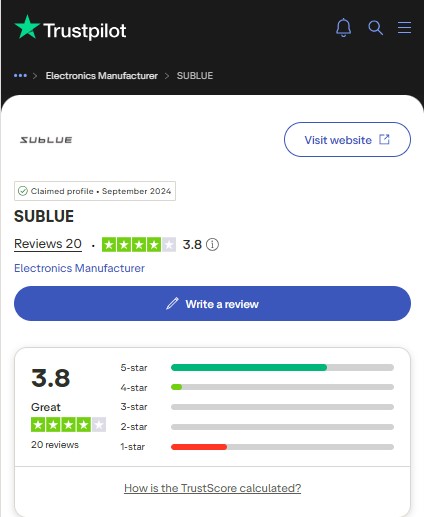
On Trustpilot, customer feedback is generally very positive regarding build quality and performance. Users praise the speed and maneuverability, especially for children and older adults who may not have the physical stamina for long fins-only swims. On the flip side, some users have noted that if you do experience a battery failure outside of the warranty period, purchasing a replacement battery pack can be relatively expensive. This highlights why following proper battery storage and charging guidelines is so important for your wallet.
Analyzing Sublue's Commercial Policies
When purchasing high-end underwater gear, you aren't just buying the physical product; you are also buying into the brand's support network. Let's look at what you can expect in terms of shipping, warranties, and payment security.
Shipping Policies
According to Sublue's official shipping policy, orders are typically processed and shipped out within 1 to 2 business days. Because lithium-ion batteries are classified as dangerous goods for shipping purposes, they must be transported via ground or specialized air cargo services. This can sometimes lead to slightly longer transit times compared to standard consumer electronics, especially if you live in a remote area or are ordering to an island destination. Be sure to plan ahead if you are purchasing the scooter for an upcoming vacation.
Warranty Coverage
Sublue offers a structured warranty to protect your purchase. As detailed in the warranty policy, the main body of the scooter is typically covered for 1 year from the date of purchase, while the battery pack and charger have a shorter 6-month warranty period. This shorter warranty on battery packs is standard across the marine industry because lithium batteries are highly sensitive to user care—leaving a battery completely discharged for months, for example, can ruin its capacity, which isn't a manufacturing defect. If you ever experience issues, you can reach out to their support team via the official customer support channel.
Secure Payment Methods
When you are ready to make a purchase, security is paramount. The official Sublue payment page utilizes industry-standard SSL encryption to secure your transaction. They accept major credit cards, PayPal, and various installment plans, allowing you to split the cost over time if desired.
The Honest Pros & Cons
No piece of dive gear is absolutely perfect. To make an informed decision, you need a balanced view of where this scooter excels and where you might run into limitations.
What We Love (The Pros)
- Highly Portable: At under 8 lbs, it fits easily into a standard backpack or carry-on suitcase.
- Zero Torque Pull: Symmetrical dual motors prevent wrist fatigue and pull completely straight.
- Dual Buoyancy: Easily switches between snorkeling (positive buoyancy) and scuba diving (negative buoyancy).
- Flight-Friendly: The 122Wh battery is designed to clear airline regulations for carry-on items.
- Integrated Camera Mount: Perfect for capturing smooth, shake-free underwater video footage.
What to Keep in Mind (The Cons)
- High-Speed Battery Drain: Continuous high-speed use will empty the battery in 20-25 minutes.
- Stiff Triggers: Squeezing both triggers continuously can cause minor finger fatigue after 30 minutes.
- Battery Cost: Replacement or spare batteries are relatively expensive due to marine sealing requirements.
- Salt Maintenance: Requires strict, immediate fresh-water rinsing to prevent salt crystallization.
How the MixPro Compares to the Competition
If you are shopping around, you might be considering other models, such as the standard Sublue WhiteShark Mix (non-pro version) or single-motor alternatives from brands like Yamaha. Here is how they stack up in the real world.
The original WhiteShark Mix was a breakthrough product, but it only offered a single speed setting. If you wanted to cruise slowly to save battery or look closely at a reef, you couldn't; you were locked into one speed. The MixPro fixes this by adding the dual-speed trigger system. This simple addition completely changes how you use the scooter, allowing you to double your runtime by staying in low-speed mode when speed isn't required.
Compared to larger, barrel-style single-motor scooters, the MixPro is significantly easier to travel with. Many of those larger scooters weigh 15 to 20 pounds and require special shipping because their batteries exceed 160Wh. While those larger units certainly offer longer run times (often 90 minutes or more), they are nearly impossible to pack for a standard family beach vacation. If travel convenience is your priority, the MixPro wins by a wide margin.
Final Verdict: Is the Sublue Whiteshark Mix Pro Worth It?
After analyzing the build quality, technical performance, real-world battery run times, and community feedback, we can confidently say that the sublue whiteshark mix pro is one of the most practical and fun underwater accessories on the market. It strikes a rare, highly successful balance between lightweight portability and genuine, usable propulsion.
It is not a professional technical diving DPV designed for deep cave penetration or 3-hour exploration dives. If you expect that, you will be disappointed by the battery life. But if you are a recreational diver who wants to conserve air during shore dives, a snorkeler who wants to explore a reef without getting exhausted, or a family looking to add some serious excitement to your next beach holiday, this scooter is an exceptional choice.
Just remember to commit to the freshwater rinsing routine, grease your battery O-ring, and carry the battery in your carry-on bag when you fly. Take care of it, and it will pull you through many memorable underwater adventures.
Frequently Asked Questions (FAQs)
Can children use the Sublue MixPro safely?
Yes, children can use the scooter, but they must always be supervised by an adult in the water. The dual-trigger safety mechanism ensures that if a child lets go of the handles, the propellers stop spinning immediately. It is highly recommended to keep the buoyancy floater attached when children are using it so the unit remains on the surface if they let go.
What happens if the scooter runs out of battery while I am underwater?
If the battery dies while you are diving, nothing dramatic happens. You simply swim back to the surface or your boat using your fins as you normally would. If you have the floater attached, the dead unit will float to the surface with you. If you have the floater removed, you should have the scooter clipped to your BCD or wrist using a safety lanyard so you do not have to carry it in your hands while swimming.
Can I use the MixPro in freshwater lakes and swimming pools?
Absolutely. The MixPro works perfectly in fresh water, lakes, and chlorinated swimming pools. The same maintenance rules apply: rinse it thoroughly with clean water after use to flush out pool chemicals or lake sediment.
How long does the battery take to charge from completely empty?
Using the included fast-charging dock, a fully depleted battery pack will take approximately 2 hours to reach a 100% charge. It is best to wait about 20 minutes after a dive before putting the battery on the charger to allow the cells to cool down to room temperature.
Can I use the MixPro without wearing fins?
Yes, you can cruise around without fins, which is incredibly relaxing. However, for safety reasons, we always recommend wearing at least a small pair of diving or snorkeling fins. If you encounter a strong current or if the battery dies, you need to be able to kick yourself back to safety without relying solely on the motor.

0 Comments