
The Ultimate Heavy-Duty Diving Regulator: A Deep-Dive Evaluation
When you are hanging sixty feet inside a cold, dark Great Lakes shipwreck or executing a slow, chilly decompression stop in a muddy quarry, your relationship with breathing changes. You stop taking gas delivery for granted. In these challenging, high-stress environments, you need gear that feels less like a delicate luxury toy and more like an indestructible industrial tool.
The Apeks MTX-RC DIN Regulator is a military-grade, environmentally sealed gas delivery system specifically built for extreme cold-water divers, technical explorers, and recreational enthusiasts who refuse to compromise on breathing safety. Featuring an over-balanced diaphragm first stage and an adjustable, freeze-resistant second stage, its strongest benefit is its absolute immunity to freeflows in sub-freezing waters, combined with an adjustable inhalation control that lets you fine-tune your breathing effort. If you dive in water colder than 50°F (10°C), or if you simply want a lifetime regulator that will never leave you gasping during a heavy current drift, this system is absolutely worth your consideration.
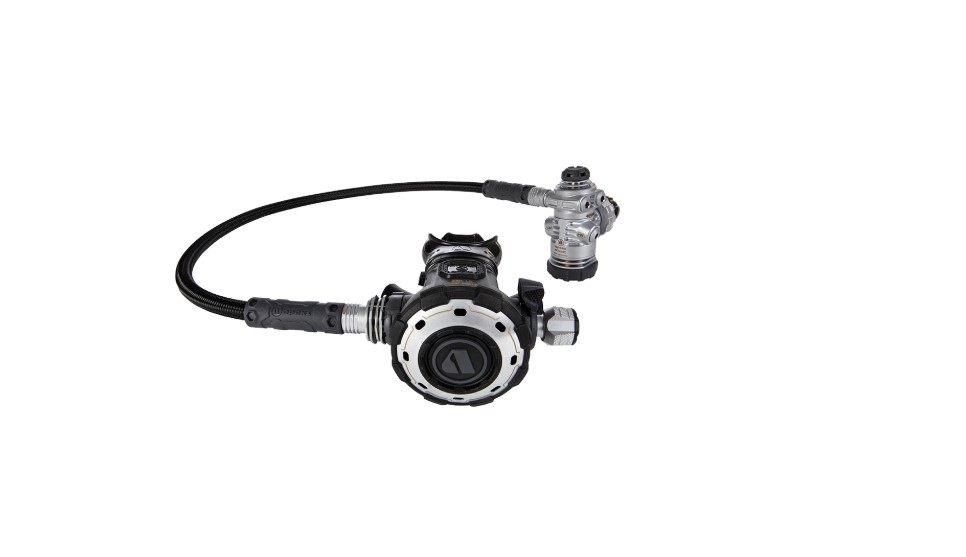
The Mechanical Heart: Inside the Forged First Stage
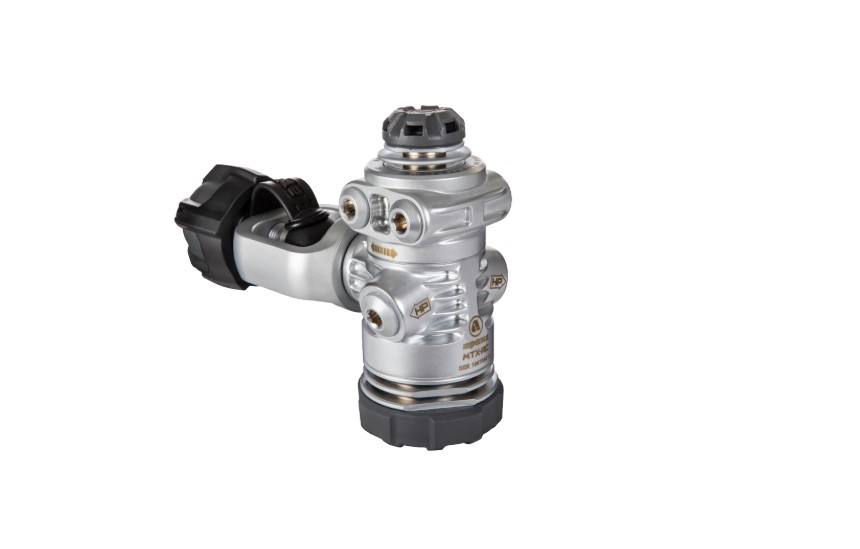
The first stage of the MTX-RC is a masterclass in heavy-metal engineering. Instead of using standard, shiny chrome-plated brass that shows every single scratch the moment it bumps against a steel cylinder or boat ladder, Apeks chose a satin-finished, forged brass body. This raw, industrial look is not just for aesthetics; it is incredibly durable, hiding cosmetic scuffs and resisting corrosion better than highly polished surfaces.
Unlike cast bodies, the forged one-piece design of the MTX-RC first stage optimizes internal gas pathways to ensure maximum gas flow to the ports. It feels heavy in the hand because it is packed with material designed to withstand physical abuse and assist in thermal management. By having more physical metal mass, the regulator acts as a thermal sink, drawing cold away from the internal mechanisms where freezing is most likely to occur.
Over-Balanced Diaphragm Design: Effortless Breathing at Depth
Most mid-range regulators are "balanced," meaning they deliver gas at a constant intermediate pressure regardless of how much gas is left in your cylinder. The MTX-RC takes this a step further with an over-balanced diaphragm design. As you descend deeper into the water column, the ambient pressure increases. An over-balanced first stage allows the intermediate pressure in the low-pressure hose to increase at a rate faster than the surrounding water pressure.
What does this mean when you are at 130 feet? It means that precisely when gas density increases and breathing naturally becomes harder, the MTX-RC compensates by delivering slightly higher intermediate pressure to your second stage. This compensates for the increased gas density, ensuring that the effort required to initiate a breath remains exceptionally low, no matter how deep you go or how low your tank pressure falls.
Dry Environmental Seal & Heat Exchanger Ribs
Water freezing inside a first stage is the primary cause of catastrophic freeflows in cold water. When high-pressure gas from your tank drops to an intermediate pressure of around 135 PSI inside the first stage, the physics of gas expansion causes the temperature of the gas and the surrounding metal to drop rapidly. If the water temperature is already near freezing, this sudden temperature drop can cause water inside the regulator to turn to ice, jamming the moving parts open.
The MTX-RC solves this problem by using a dry environmental seal. A flexible, external diaphragm sits on top of the main spring chamber, completely blocking water from entering. Instead of water contacting the internal spring and piston, a physical rod transfers the ambient water pressure through the dry seal. Because no water can enter the main spring chamber, no ice can form inside.
To further combat freezing, Apeks engineered massive, deeply grooved heat-exchanging ribs across the entire first stage body. These ribs increase the surface area of the metal exposed to the surrounding water. Even in water that is 36°F (2°C), the surrounding water is warmer than the freezing gas inside the regulator. The ribs act like a radiator in reverse, transferring heat from the surrounding water into the regulator body to prevent ice crystals from locking up your primary gas source.
Port Configuration: Sidemount and Backmount Routing Freedoms
Hose routing can make or break your comfort underwater. A stiff hose pulling on your second stage will cause agonizing jaw fatigue within thirty minutes of splashing. The MTX-RC first stage features five low-pressure (LP) ports and two high-pressure (HP) ports, all arranged to allow clean, streamlined routing for almost any gear configuration.
The five low-pressure ports are situated on a robust swiveling turret. This allows your low-pressure hoses to rotate freely as your body shifts in the water, preventing binding. The fifth port is positioned directly on the end of the turret, which is highly prized by technical divers. This axial port is perfect for running your drysuit inflation hose or for streamlining hose routing in a sidemount or twinset configuration, keeping your profile incredibly tight against your body.
The two high-pressure ports are angled downward. This positioning directs your submersible pressure gauge (SPG) hose or wireless transmitter close to your cylinder, keeping them tucked away from overhead obstructions, wreck protrusions, or kelp forests.
The Control Center: The MTX-RC Second Stage
While the first stage does the heavy lifting of dropping tank pressure, the second stage is what you actually interact with on every single breath. The second stage of the MTX-RC is designed to be tough, highly adjustable, and incredibly comfortable to breathe from.
From Military Defense (MTX-R) to Diver Control (MTX-RC)
To understand the MTX-RC, you have to understand its predecessor, the MTX-R. The MTX-R was built to meet the United States Navy Experimental Dive Unit (NEDU) military requirements for extreme cold-water diving. The military wanted a regulator that was completely foolproof. They did not want divers to have the ability to accidentally adjust the regulator into a freeflow state while wearing thick gloves in combat situations. Therefore, the MTX-R had zero external knobs or levers; it was permanently set to a high breathing resistance threshold to guarantee it would never freeflow, even if dropped face-down in freezing slush.
While great for Navy divers, many recreational and technical divers found the MTX-R slightly stiff to breathe from during warm-water excursions or relaxed, shallow dives. They wanted the legendary freeze protection of the MTX-R, but with the breathing comfort of a fully adjustable regulator.
Apeks listened and created the MTX-RC. The "C" stands for Control. By adding an inhalation resistance adjustment knob and a Venturi control lever, Apeks combined military-grade freeze resistance with the luxurious, effortless breathing characteristics that demanding divers expect.
The Magic of the Venturi Lever and Resistance Adjustment Knob
The MTX-RC second stage gives you two distinct controls to customize your breathing characteristics:
- The Venturi Lever: This lever controls the internal airflow deflector. When set to the "Pre-Dive" position, the deflector interrupts the air path, preventing the regulator from freeflowing when you first jump into the water or if your backup regulator is hanging loose around your neck. Once you are underwater and have the mouthpiece secure, flipping the lever to "Dive" opens the airway, allowing the high-velocity air flowing through the valve to create a vacuum that pulls the diaphragm in, assisting your inhalation and making breathing feel completely natural and effortless.
- The Inhalation Resistance Knob: This large, textured knob adjusts the spring tension holding the second-stage valve closed. If you are diving in extreme currents or cold water where you want to prevent a freeflow, you can screw the knob in to increase the cracking pressure (the effort required to start the airflow). If you are relaxing on a shallow, warm reef, you can back the knob all the way out to make the regulator breathe so easily it feels like it is feeding you air before you even ask for it.
Comfobite Mouthpiece and Dual Swivel Hose: Eliminating Jaw Fatigue
Nothing ruins a beautiful 60-minute dive faster than a sore jaw. Apeks addresses this with two ergonomic design choices on the MTX-RC.
First, it features the patented Comfobite mouthpiece. This unique mouthpiece has a bridge that runs across the roof of your mouth. Because of this bridge, you do not have to bite down hard on the tabs to keep the second stage securely in your mouth. It simply rests comfortably in your bite, completely eliminating the muscle tension that leads to jaw fatigue and headaches after a long dive.
Second, the regulator features a double-swivel hose design. The low-pressure hose swivels at both the first stage turret and the connection point to the second stage. This allows the second stage to rotate freely in three dimensions. No matter how much you turn your head, look up at a shipwreck keel, or look down to check your gauges, the hose never pulls or twists against your mouth, allowing you to maintain a relaxed, natural neck position.
The Reddit Consensus: "Is the MTX-RC Too Much Regulator for Me?"
When you browse online communities like the Reddit Scuba Diving Forum, you will often find divers asking if the MTX-RC is "too much regulator" for their typical dive profiles. Many recreational divers who primarily dive in warm, tropical waters wonder if buying a military-grade, cold-water tank of a regulator is overkill.
The consensus among experienced divers on Reddit is clear: while the MTX-RC is undoubtedly heavy and represents a significant initial investment, there is no such thing as "too much safety" when it comes to life support.
Some users point out that the regulator is heavier than travel-focused regulators, which can consume a bit more of your airline baggage allowance. However, they also emphasize that the peace of mind you get from knowing your regulator can handle any environmental condition—from silty lake beds to freezing currents—makes it a lifetime purchase. Divers who transitioned from lighter, plastic regulators to the MTX-RC frequently report that the absolute stability of gas delivery at depth and the complete lack of wet breathing (water mist coming through on inhalation) make the weight trade-off entirely worth it.
Technical Specifications & Engineering Data Table
To help you compare the MTX-RC with other options in your gear locker, here is a detailed breakdown of the official physical and engineering specifications. All measurements and specifications are verified directly from Apeks engineering documentation.
| Feature | Apeks MTX-RC DIN Regulator Specification |
|---|---|
| First Stage Type | Over-balanced, forged, one-piece diaphragm design |
| Environmental Protection | Dry sealed chamber with external diaphragm and heavy-duty heat-exchanging ribs |
| Body Material | Satin-chrome plated marine brass |
| High Pressure (HP) Ports | 2 ports (7/16" UNF), angled downward |
| Low Pressure (LP) Ports | 5 ports (3/8" UNF), mounted on a swiveling turret with one axial end-port |
| Second Stage Type | Pneumatically balanced, adjustable downstream demand valve |
| User Adjustments | Inhalation resistance adjustment knob, Venturi flow deflector lever |
| Hose Style | Flexible, lightweight, braided nylon hose with dual swivels |
| Mouthpiece | Patented Comfobite with roof-of-mouth bridge (orthodontic design) |
| Cold Water Certified | Yes, exceeds EN250A standards (tested below 4°C / 39°F) |
| Nitrox Compatible | Up to 40% O2 out of the box (within the EU, different local standards apply) |
Real-World Field Performance: Freezing Quarries vs. Tropical Reefs
To truly evaluate this regulator, you have to take it out of the clean, dry dive shop and drop it into the water. Having dived this regulator in both extreme conditions, its split personality—rugged beast in the cold, smooth luxury machine in the warm—is incredibly impressive.
Arctic Exploration: Ice Diving and Sub-40°F Performance
When you dive under ice, the stakes are elevated. Your first stage is exposed to sub-freezing air temperatures before you submerge, and the water directly below the ice sits at a chilly 34°F (1°C). In these environments, standard regulators are notorious for freezing open within minutes, sending a blinding rush of bubbles and ice-cold gas screaming out of the second stage.
During an ice diving trial, the MTX-RC proved to be completely unfazed. Even when doing heavy work underwater—which increases gas flow and drives temperatures down even further—the first stage heat-exchanging ribs successfully transferred enough ambient thermal energy to prevent internal icing.
The oversized, soft elastomer purge button on the second stage is another massive asset here. When you are wearing thick, clumsy 7mm neoprene mittens or dry gloves, you lose almost all your manual dexterity. Many regulators have small, stiff purge buttons that are difficult to locate or press with thick gloves. The MTX-RC purge button covers almost the entire face of the second stage and is incredibly easy to palm, allowing you to clear water or blow out sediment with absolute ease.
Warm Water Vacation: Overkill or Ultimate Luxury?
If you take the MTX-RC to a warm tropical destination like Cozumel or Hawaii, it adapts beautifully. By backing the inhalation resistance knob all the way out and setting the Venturi lever to the active "Dive" position, you get a regulator that breathes as smoothly as any high-end boutique tropical regulator on the market.
The gas delivery is silky smooth, dry, and completely quiet. The exhaust tee is wide and swept back, which directs bubbles out and away from your eyes and ears, keeping your field of view perfectly clear for taking underwater photos or spotting tiny macro life on the reef.
The only downside in warm water is the physical weight of the first stage. Because it is forged from a heavy block of marine brass for cold-water thermal mass, it weighs more than aluminum or lightweight composite travel regulators. If you are a traveling diver who is constantly struggling to keep your dive bag under the airline's 50-pound limit, you will need to pack strategically. However, many divers simply carry their regulators in their carry-on bags to protect them from damage and baggage handlers, rendering the weight issue moot.
Comprehensive Regulator Buying Guide: Finding Your Perfect Match
Choosing a regulator is one of the most important gear decisions you will ever make. Unlike fins or masks, which are mostly about personal comfort, your regulator is your primary life support system. Here is what you must consider when looking to invest in a high-quality system.
Environmental Sealing: Do You Need It?
If you only dive in pristine, warm tropical pools or extremely clean, warm ocean water, you can technically get away with an unsealed regulator. However, for almost everyone else, an environmentally sealed regulator is highly recommended.
An environmental seal prevents salt crystals, chlorine, sand, silt, and microorganisms from entering the delicate working parts of your first stage. Over time, these contaminants can erode internal O-rings, cause mineral buildup on the main piston or diaphragm, and lead to slow, dangerous intermediate pressure leaks. A sealed system like the MTX-RC keeps the internal chamber completely sterile and clean, extending the lifespan of your regulator and ensuring consistent gas delivery dive after dive.
Diaphragm vs. Piston First Stages
Regulators generally fall into two categories based on how their first stage valves operate: piston-driven or diaphragm-driven.
- Piston Regulators: These use a solid metal piston moving back and forth to control gas flow. They are known for high gas flow rates but are incredibly difficult to seal environmentally. In cold water, water must enter the spring chamber of a piston regulator to transmit ambient pressure, making them highly susceptible to freezing and freeflowing in cold or dirty water.
- Diaphragm Regulators: These use a flexible, synthetic rubber diaphragm to transfer pressure to the internal valve. Because the moving parts are isolated from the water, they are inherently better suited for cold-water diving and harsh environments. The MTX-RC uses a diaphragm design, which is why it is the gold standard for cold-water exploration.
Why Maintenance Schedules Matter (According to the Official Manual)
Even the most rugged, military-grade regulator requires regular maintenance to remain safe and reliable. According to the Official Apeks Regulator Manual, your regulator should be serviced by an authorized Apeks technician at least once every year, or every 100 hours of diving, whichever comes first.
During an authorized service, the technician will completely disassemble both stages, clean all metal parts in an ultrasonic bath to remove any mineral deposits, replace all dynamic rubber O-rings, and inspect the high-pressure seat and low-pressure seats for wear.
The manual also emphasizes the importance of immediate post-dive care. After every dive, you must rinse the regulator thoroughly with clean, fresh water. When doing this, ensure the first stage dust cap is securely tightened onto the inlet valve to prevent water from creeping into the high-pressure inlet, which can ruin the internal filter and cause corrosion inside your cylinder.
Why Buy From an Authorized Dealer? (Dive Right In Scuba Review)
When investing in a piece of gear as critical as the Apeks MTX-RC, *where* you buy it is just as important as *what* you buy. Purchasing from a reputable, authorized dealer like Dive Right In Scuba ensures that you receive a genuine product backed by full factory support.
Dive Right In Scuba has earned an incredible reputation in the diving community, supported by outstanding feedback on their Trustpilot Review Profile. Divers consistently praise their fast shipping, extensive gear knowledge, and unmatched post-purchase customer support.
Shipping, Warranties, and Flexible Payment Options
Getting your gear quickly and safely is paramount, especially when you have an upcoming dive trip. You can review the comprehensive Dive Right In Scuba Shipping Policy to find shipping options that fit your schedule, including expedited delivery for last-minute orders.
Furthermore, purchasing through an authorized dealer ensures your manufacturer warranty is fully valid. While you can check out their specific Dive Right In Scuba Warranty Policy for drysuit-specific coverage, their overall commitment to honoring product warranties and handling repairs through certified service technicians is a huge reason why they are so trusted in the industry.
If the initial cost of a premium regulator system is a concern, they also offer flexible payment options. By checking their Price Match and Payment Plan Policy, you can find competitive pricing and financing terms that let you spread the cost of your equipment over time, making it much easier to acquire the high-quality life-support gear you need.
If you ever have any questions about configuration, hose lengths, or compatible dive computers, you can reach out directly to their helpful staff through the Dive Right In Scuba Customer Support Contact Page.
Video Technical Walkthrough and Deep Dive Disassembly
If you want a visual breakdown of how this regulator operates, how the gas flows through the internal pathways, and how the environmental seal looks when disassembled, check out this excellent technical overview video:
Final Verdict: Should You Buy the Apeks MTX-RC?
The Apeks MTX-RC DIN Regulator is not a cheap piece of plastic gear designed for casual, warm-water resort diving once every few years. It is a highly engineered, exceptionally rugged, military-derived piece of life support equipment.
If you are a recreational diver who dives occasionally in warm water and strictly prioritizes ultra-lightweight gear for travel, you might find this regulator to be slightly heavy. But if you dive in cold water, explore shipwrecks, plan to advance into technical diving, or simply want the peace of mind that comes with owning one of the most reliable, freeze-resistant, and smoothest breathing regulators ever engineered, the MTX-RC is an absolute triumph. It represents a lifetime investment in your safety and comfort underwater.
Frequently Asked Questions (FAQ)
Can I use the Apeks MTX-RC in warm water?
Absolutely. While the MTX-RC was specifically designed to excel in freezing cold water, it performs beautifully in warm, tropical waters. By turning the inhalation resistance knob counter-clockwise to the softest setting and opening the Venturi lever to "Dive," you will enjoy an incredibly smooth, low-effort breathing experience identical to top-tier warm-water regulators.
What is the difference between DIN and Yoke connections for this regulator?
The DIN (Deutsches Institut für Normung) connection features a threaded male post that screws directly into the inside of the tank valve, sealing with an O-ring trapped securely inside. This is highly recommended for cold water, technical diving, and high-pressure tanks (up to 300 bar/4350 PSI) because it is incredibly secure and virtually immune to blowing out an O-ring during an impact. The Yoke connection slips over the top of the tank valve and clamps on from the outside. While common on warm-water recreational boats in North America, Yoke is limited to 232 bar (3300 PSI) and is physically more vulnerable to bumping or snagging.
How often should the Apeks MTX-RC be serviced?
According to the Apeks official guidelines, the MTX-RC must be inspected and serviced by an authorized Apeks service technician at least once every year or every 100 dive hours (whichever comes first). Regular servicing keeps your lifetime warranty active and ensures all dynamic internal O-rings and seats are in perfect working order.
Can I use the MTX-RC with Nitrox?
Yes, out of the box, the MTX-RC is compatible with enriched air nitrox mixtures up to 40% oxygen. If you plan to use it with higher concentrations of oxygen for technical decompression, the regulator must be specially cleaned and prepared for oxygen service by a certified technician using oxygen-compatible lubricants and materials.
Is the MTX-RC too heavy for airline travel?
While the MTX-RC is heavier than ultra-lightweight composite travel regulators due to its forged brass construction and extensive heat-exchanging ribs, it is still highly packable. Most traveling divers who use the MTX-RC simply pack it in their padded regulator bag and carry it as a carry-on item to protect it during transit.

0 Comments