
Real-World Overview of the Asiwo Manta Sea Scooter
The Asiwo Manta EL-SS01 is a dual-propeller underwater scooter designed for recreational snorkelers, shallow divers, and family water sports enthusiasts who want effortless propulsion without exhausting their air supply. Its strongest benefit lies in its balanced dual-motor design, which prevents the wrist strain common in single-motor alternatives while providing reliable thrust up to 50 meters deep. If you are looking to extend your dive times and explore reefs with minimal effort, this highly efficient sea scooter is absolutely worth considering as a valuable addition to your gear bag.
When you are navigating open water, fighting a mild head current can rapidly drain your energy and deplete your air cylinder. Traditional single-propeller scooters often pull unevenly, forcing your wrists and forearms to constantly make micro-corrections to keep heading in a straight line. The dual-motor configuration of the Asiwo Manta resolves this issue by distributing thrust symmetrically across both sides of your body. This balanced hydrodynamics allows you to glide smoothly over kelp forests and sandy bottoms without fighting your own equipment.
The core of this system relies heavily on the quality and maintenance of its power supply. Since your underwater runtime is directly linked to the health of your power cells, understanding how the battery behaves under different water temperatures and depth pressures is critical. In this guide, we will break down the engineering behind the scooter, how to manage its power system safely, and how to maximize your dive times using practical, field-tested techniques.
*Clicking this secure link automatically applies an exclusive reader discount on the official Asiwo store checkout.
Decoding the Asiwo Battery Specifications and Chemistry
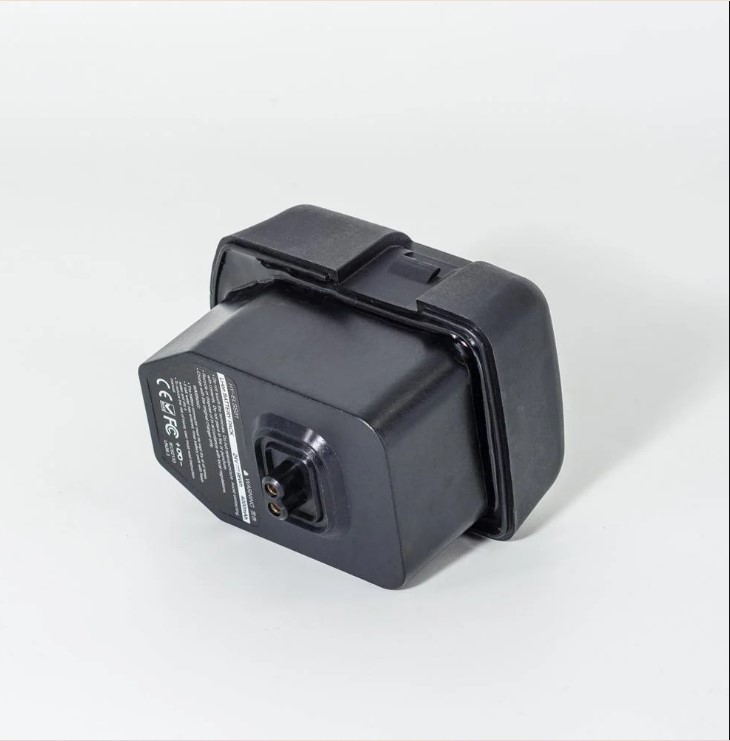
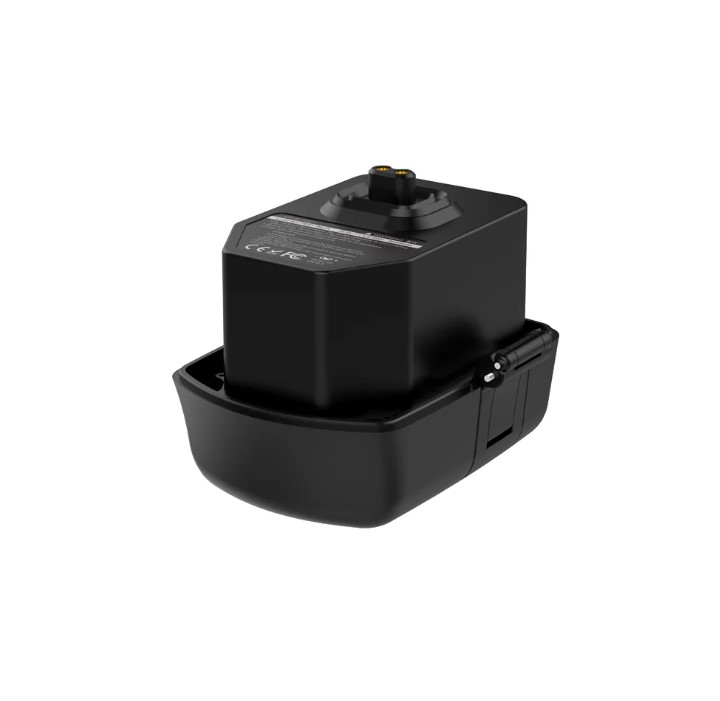
To truly understand how this watercraft operates, we have to look closely at the power container itself. The Asiwo Manta utilizes a rechargeable lithium-ion battery system operating at a nominal voltage of 25.2 Volts. With a total capacity rating of 126 Watt-hours (Wh), the battery pack is optimized to balance physical weight against electrical output. It slips directly into the center dry-well of the scooter chassis, serving as a structural component that keeps the machine's center of gravity perfectly balanced under your chest.
Lithium-ion chemistry is highly favored in underwater equipment because of its high energy density relative to its weight. Heavy lead-acid batteries of the past made scooters incredibly heavy on land and difficult to handle on a rocky entry. This 126Wh pack keeps the entire scooter light enough to carry with one hand while walking down a boat ramp or a slippery dock. However, lithium-ion packs behave differently depending on the water temperature. If you are diving in cold quarry waters or during a winter ocean swell, the lower temperature slows down the chemical reaction inside the cells, which can temporarily reduce your total output capacity by up to 15% to 20% compared to warm tropical waters.
Because safety is paramount when working with high-capacity electrical systems underwater, the battery casing is constructed with thick, impact-resistant polycarbonate. It features double silicone sealing gaskets that block water from reaching the terminal pins. The positive and negative gold-plated brass connectors on the bottom of the battery pack are designed to handle high current draw without overheating, ensuring stable power delivery even when running the motors at their maximum speed setting.
Understanding the Flight Transport Limitations
One of the most common questions divers ask is whether they can pack their dive scooter for a trip to Cozumel or Hawaii. Under international aviation guidelines set by the International Air Transport Association (IATA) and enforced by the TSA, lithium-ion batteries over 100Wh are subject to specific restrictions. Because the Asiwo battery is rated at 126Wh, it sits in a middle zone. You cannot pack this battery in your checked luggage under any circumstances, as a thermal runaway event in the cargo hold cannot be easily contained.
However, you are generally permitted to carry batteries rated between 100Wh and 160Wh in your carry-on baggage, provided you obtain prior approval from the operating airline. We highly recommend contacting your airline's customer service desk at least 48 hours before your flight to obtain written confirmation. When clearing airport security, place the battery in its own tray, keep the contact pins covered with non-conductive electrical tape, and store it in a protective case to prevent accidental short circuits during transit.
The Real-World Thermal Dynamics of Charging
Charging a high-capacity lithium battery requires patience and adherence to safety rules. When you plug the charger into a standard household wall outlet, it converts the alternating current (AC) into direct current (DC) to slowly fill the lithium cells. A standard recharge cycle takes about 2 to 3 hours to complete. During this process, the battery will naturally warm up. This is why you must never charge the battery inside a closed carrying bag, in direct sunlight on a hot boat deck, or immediately after a long dive.
Letting the battery cool down to ambient air temperature for at least 30 minutes before plugging it in is one of the most effective ways to preserve the long-term health of the cells. If you plug a hot battery straight into a charger, you risk accelerating the degradation of the internal anode and cathode materials. Over time, this poor habit leads to swollen battery cells, a permanent loss of runtime, and a higher risk of internal short-circuiting.
Step-by-Step Setup and Pre-Dive Prep
Proper preparation is the difference between a flawless drift dive and a frustrating afternoon spent looking at a waterlogged motor. Before you even think about putting the scooter in the water, you need to conduct a thorough physical inspection of your gear. Start by reviewing the maintenance guidelines in the Official Manual to familiarize yourself with the structural components of the chassis.
The most critical point of failure on any underwater device is the sealing system. The Asiwo Manta relies on precision-fit O-rings to keep the battery chamber bone dry. Even a single grain of sand, a microscopic hair, or a tiny salt crystal sitting on the rubber seal can break the vacuum barrier, allowing high-pressure water to seep in once you descend past a few feet. Under depth pressure, even a minor leak will quickly flood the battery compartment, causing immediate galvanic corrosion and ruining the internal electronics.
To prepare your seals properly, follow this checklist before every single dive:
- Remove and Inspect: Gently pull the rubber O-rings out of their grooves using a soft plastic card or your fingers. Never use sharp metal tools like screwdrivers, which can scratch the plastic groove or slice the rubber.
- Clean Thoroughly: Wipe down the O-rings and the receiving grooves with a clean, lint-free microfiber cloth. Inspect the rubber closely for any signs of cracking, dry rot, or flattening. If you notice any wear, replace the seal immediately.
- Apply Silicone Grease: Put a small, pea-sized drop of high-grade marine silicone lubricant on your fingertips. Run the O-ring through your fingers until it has a thin, glossy sheen. The grease is not the sealant itself; its purpose is to keep the rubber pliable and help it seat perfectly into the groove without twisting.
- Seat and Lock: Press the O-ring back into its channel, ensuring it lies flat with no twists. Insert the battery straight down into the compartment, applying even downward pressure until the locking tabs snap firmly into place.
The Importance of Clean Contact Pins
Electrical current does not travel well through salt crust or mineral buildup. The contact pins on the bottom of the battery and inside the scooter's receiving dock are gold-plated to help resist oxidation. However, when you open the compartment after a dive, tiny droplets of saltwater can easily drop onto the metal surface. When that water evaporates, it leaves behind a thin layer of highly resistive salt minerals.
If you attempt to run the scooter with dirty contacts, the electrical resistance at the connection point will spike. This resistance generates localized heat, which can warp the surrounding plastic housing and lead to intermittent power loss while underwater. To prevent this, always rinse the closed scooter chassis with fresh water after every dive, dry the exterior completely before opening the battery door, and clean the gold pins occasionally with a cotton swab dipped in isopropyl alcohol.
Operational Dynamics: Speed settings and Battery Depletion
The Asiwo Manta features three distinct speed gear levels that allow you to adapt your speed to your diving environment. However, many new divers make the mistake of assuming that the battery runtime scales linearly with speed. In reality, aerodynamic and hydrodynamic drag increases exponentially with speed. This means running the scooter at full speed requires vastly more energy than running it at a relaxed cruising pace.
Let's look at how the speed settings affect your real-world dive plan:
| Speed Gear | Average Velocity | Estimated Runtime | Best Real-World Use Case |
|---|---|---|---|
| Gear 1 (Low) | 1.6 mph / 0.7 m/s | 35 - 45 Minutes | Reef exploration, marine photography, and maximizing air efficiency. |
| Gear 2 (Mid) | 2.4 mph / 1.1 m/s | 25 - 30 Minutes | Cruising across open sand flats or tracking along a drift reef wall. |
| Gear 3 (High) | 3.2 mph / 1.5 m/s | 12 - 18 Minutes | Pushing through a sudden tidal rip, quick surface transits, or fun bursts. |
As you can see, keeping the scooter in Gear 1 is your best bet if your goal is a long, relaxed dive. When you shift up to Gear 3, the motors draw maximum current from the battery. This high current draw heats the cells rapidly. If the battery's internal temperature management sensors detect excessive heat, the system may automatically throttle the power down to protect the lithium cells from damage.
To get the absolute most out of your battery, practice progressive throttle management. Use the lower speed setting as your baseline cruise speed. If you spot something interesting in the distance or need to cross a patch of barren sand quickly, bump the throttle up to Gear 2 or 3 for a brief period, then return to Gear 1 once you arrive. This rhythmic pulsing prevents the cells from overheating and helps you squeeze several extra minutes of operation out of a single charge.
Reviewing the Community Feedback
As an experienced gear reviewer, I never rely solely on factory test specs. Real-world divers operating in different climates provide the most accurate picture of how a piece of equipment actually holds up. To understand how the Asiwo Manta performs over years of regular use, we closely analyzed user reports from active online diving communities.
On the popular Reddit Discussion, real-world owners shared valuable insights about their experiences with the EL-SS01 battery and motor housing. Many users expressed satisfaction with the build quality, noting that the dual-trigger design is highly intuitive. However, experienced divers on the thread also pointed out some critical operational nuances that you should keep in mind:
"The Manta has been great for pulling my kids around the shallow reef, but you have to be incredibly careful when changing the battery. If you let even a few drops of water sit on the rubber gasket before putting in a fresh battery, it will trap that humidity inside, causing condensation to form on the LED indicator screen during your next cold-water dive."
This is an excellent point that highlights the importance of keeping a clean, dry towel nearby whenever you open the battery chamber. Other users on the forum discussed the necessity of applying high-quality silicone grease to the main seal before every trip to prevent dry cracking.
In addition to community forums, analyzing customer reviews on platforms like Trustpilot offers valuable insight into the company's long-term reliability and assembly standards. You can view user reviews and ratings on the official Asiwo Trustpilot Page to see how other water sports enthusiasts rate their purchases. Many positive reviews praise the fast response time of the company's support team when troubleshooting charger issues, while others note that buying a spare battery is practically mandatory if you plan to spend a full day out on a dive boat.

The screenshot above highlights the overall positive brand sentiment, showing that the company maintains a solid footing in the recreational sea scooter market. However, like any technical equipment, a small percentage of users encountered issues, primarily arising from improper post-dive rinsing or storing the battery in a completely discharged state for months at a time. This highlights the reality that underwater gear is only as reliable as the user's maintenance routine.
Deep Dive: Video Walkthrough and Propulsion Analysis
To help you visualize how the scooter maneuvers through the water and how the battery assembly fits into the main frame, we have included an educational video review. Watching the dual-propeller system in action illustrates why this symmetrical layout is so effective at reducing operator fatigue compared to traditional single-motor scooters.
As demonstrated in the footage, the dual propellers spin in opposite directions. This counter-rotation is a clever piece of engineering that cancels out torque steer. In single-propeller designs, the rotational force of the single blade creates a twisting motion that constantly tries to roll the scooter to one side. By utilizing two identical propellers spinning in opposite directions, the rotational forces neutralize each other, allowing you to guide the machine with a light, comfortable grip.
The video also highlights the scooter's physical buoyancy. When you release your hands from the handles, the Manta is designed to float slowly back toward the surface rather than sinking like a stone into the abyss. This positive-to-neutral buoyancy is a crucial safety feature, especially if you happen to drop the unit while adjusting your mask, clearing your ears, or checking your pressure gauge.
Water Safety, Buoyancy, and Emergency Management
Using a sea scooter is incredibly fun, but it introduces new variables to your safety profile that you must manage carefully. The most critical safety concept is simple: never rely on a motorized scooter to get you back to safety. An underwater scooter is a convenience tool, not a survival device. If you use the motor to travel far upcurrent or deep into an area where you lack the physical energy or air reserves to swim back manually, you are putting yourself in a highly dangerous situation.
Always plan your dive as if you have no scooter at all. If you are doing a beach dive, swim out against the current using your own power, and use the scooter to help you glide back with the current. This conservative approach ensures that if the battery fails or a seal leaks halfway through your dive, you will have plenty of physical energy and air left in your tank to complete your ascent and swim safely back to shore.
Handling Mid-Dive Low Battery Signals
The Asiwo Manta is equipped with a clear, multi-segment LED battery status display positioned right on the top bridge of the housing, directly in your line of sight. As the battery drains, the power bars will drop. When the capacity falls below 20%, the system will typically sound an alert or flash the remaining LED indicator to warn you that it is time to wrap up your dive and head to the surface.
When this low-power warning activates, you should immediately switch the scooter to its lowest speed setting (Gear 1). Do not try to push the speed back up to Gear 3 to "hurry home." The high current draw of the maximum speed setting can cause the battery voltage to sag dramatically, which may trigger the battery management system's low-voltage cutoff, causing the motor to shut down instantly. Cruising slowly at low speed draws minimal current, allowing you to milk the remaining power for a gentle, controlled return transit.
Emergency Ascent Protocols with a Dead Scooter
If your battery dies completely while you are exploring at depth, there is no need to panic. Because the Asiwo Manta is engineered to be slightly positive or neutral in the water, you do not have to struggle against a heavy dead weight pulling you down. Simply clip the scooter's lanyard to your BCD D-ring or hold it securely against your chest with one arm, and begin your normal ascent sequence.
Never inflate your BCD excessively to offset the weight of a scooter. Doing so can cause an uncontrolled, rapid ascent as the air in your BCD expands as you get closer to the surface. Instead, maintain your neutral buoyancy by venting air as you climb, and use slow, steady fin kicks. If you find yourself in an absolute emergency where you must dump weight to perform a safe, controlled ascent, be prepared to unclip and release the scooter. A piece of dive equipment can always be replaced; your lungs and life cannot.
Off-Season Storage and Long-Term Durability
A high-capacity lithium-ion battery is an investment, and how you treat it during the cold winter months when you are out of the water will dictate whether it survives to the next season. The worst thing you can do to a lithium-ion battery is to toss it in a garage corner completely flat after your last dive of the summer. When left at 0% charge, the chemistry inside the cells will continue to slowly self-discharge. Within a few months, the voltage can drop below a critical threshold, permanently damaging the internal safety circuits and rendering the battery incapable of holding a charge ever again.
To keep your battery healthy during extended periods of storage, follow these guidelines:
- Target a 50% to 60% Charge: Never store a battery fully empty (0%) or fully charged (100%). Storing a battery at 100% puts high tension on the internal components, which accelerates capacity loss over time. Aiming for roughly half-capacity balances the chemical state of the cells.
- Choose a Cool, Dry Location: Store the battery in a climate-controlled space between 50°F and 70°F (10°C to 21°C). High humidity can cause condensation on the gold contacts, while freezing temperatures can fracture the internal lithium matrix. Avoid uninsulated garages, damp basements, or hot attics.
- Check the Voltage Every 3 Months: Set a recurring reminder on your phone to check the battery level every 90 days. If the capacity has drifted down significantly, plug it into the charger for 30 to 45 minutes to bring it back up to the 50% storage zone.
- Keep Contacts Greased: Apply a microscopic film of dielectric grease to the gold connector pins before storage to act as a barrier against moisture in the air, preventing oxidation.
Buying Logistics: Shipping, Support, and Payments
When you are ready to make a purchase, ensuring a secure and reliable transaction is just as important as choosing the right gear. Because this sea scooter and its corresponding replacement battery are specialized, heavy-duty electronics, buying directly through official channels is the smartest way to guarantee you receive an authentic product covered by full factory protections.
When ordering your replacement battery or main unit, the transaction should be processed through a secure platform. You can complete your transaction safely on the official Official Secure Checkout Page. This encrypted system protects your personal and financial details during checkout, shielding your credit card and shipping info from security vulnerabilities.
Before finalizing your order, take a moment to review the brand's logistics policies. Shipping heavy lithium batteries requires specialized courier handling due to hazardous materials regulations. You can find detailed timelines and regional restrictions on the official Shipping Policy Page. Generally, because lithium batteries cannot be shipped via rapid air transport, standard ground shipping is utilized, which may take a few additional days to arrive depending on your distance from the distribution hub.
Additionally, it is wise to protect your investment with a solid understanding of the brand's coverage limits. Check out the Limited Warranty Guidelines to understand what is covered in the event of a manufacturing defect. While the electronics and motors are protected against factory flaws, keep in mind that water damage resulting from user error—such as forgetting to clean a sandy O-ring or failing to lock the battery compartment securely—is typically excluded from warranty coverage. If you have technical questions regarding setup or need help troubleshooting a charging issue, you can reach out directly via the Customer Support Contact Page.
Final Verdict: Is the Asiwo Scooter Battery Worth It?
If you want to get the absolute most out of your Asiwo Manta EL-SS01 underwater scooter, investing in a high-quality battery system and keeping it in top-tier physical condition is non-negotiable. The dual-motor setup of this sea scooter offers some of the most comfortable, balanced, and strain-free propulsion available in the recreational class. However, because the motors pull a significant amount of current when running at higher speeds, managing your battery usage and post-dive maintenance is critical to avoiding mid-dive failures.
By following a strict pre-dive O-ring inspection checklist, keeping the gold contact terminals completely free of salt crust, and managing your speed settings intelligently underwater, you can reliably extend your runtimes and enjoy years of reliable performance. If you are planning long dive trips or back-to-back snorkeling excursions with family, we highly recommend picking up a spare battery to keep charging in rotation. This simple addition ensures that while one pack is cooling and recharging on deck, you can slip in a fresh one and head straight back into the water without missing a single moment of your dive window.

0 Comments