
Understanding the Sublue Vapor: High-Velocity Propulsion for Serious Divers
As divers, we constantly look for ways to extend our bottom time, decrease our gas consumption, and cover more distance without exhausting ourselves. The Sublue Vapor is a dual-motor underwater scooter—technically classified as a Diver Propulsion Vehicle (DPV)—specifically designed for technical divers, demanding recreational enthusiasts, and professional underwater photographers who need significant thrust and highly reliable depth capabilities. Its primary benefit lies in its ability to deliver high-velocity propulsion through a hydrodynamic, dual-propeller chassis, allowing you to fight strong tidal currents and carry heavy camera rigs with minimal effort. If you need a robust marine tool to explore expansive wrecks, traverse deep reefs, or simply conserve your energy during long drift dives, this model represents a substantial leap in performance that is highly worth your consideration.
Your purchase is backed by secure processing and full manufacturer warranty coverage.
The Mechanical Architecture of the Sublue Vapor
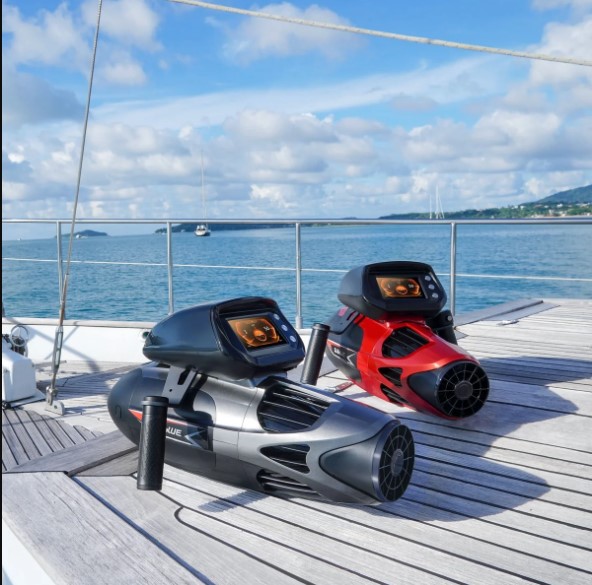
To understand why this unit performs differently from entry-level single-motor plastics, we have to look closely at its physical engineering. The chassis is built around a symmetry-driven, dual-motor configuration. Instead of a single central propeller that creates rotational torque—forcing the diver to constantly make wrist corrections to stay on course—the twin counter-rotating propellers cancel out this torque entirely. The result is a perfectly straight glide path that relieves wrist fatigue during long runtimes.
The exterior housing uses highly impact-resistant composites engineered to withstand hydrostatic pressures down to its rated depth of 40 meters (131 feet). This is not just a nominal rating; the sealing integrity relies on heavy-duty, dual-ring silicone gaskets that must be maintained according to the Sublue Official Manual to ensure long-term reliability. The prop guards are tightly meshed to protect fingers, marine life, and low-lying seaweed from getting drawn into the blades, yet they are hydrodynamically shaped to maintain water flow velocity without generating excessive drag.
Hydrodynamics, Weight, and Buoyancy in the Field
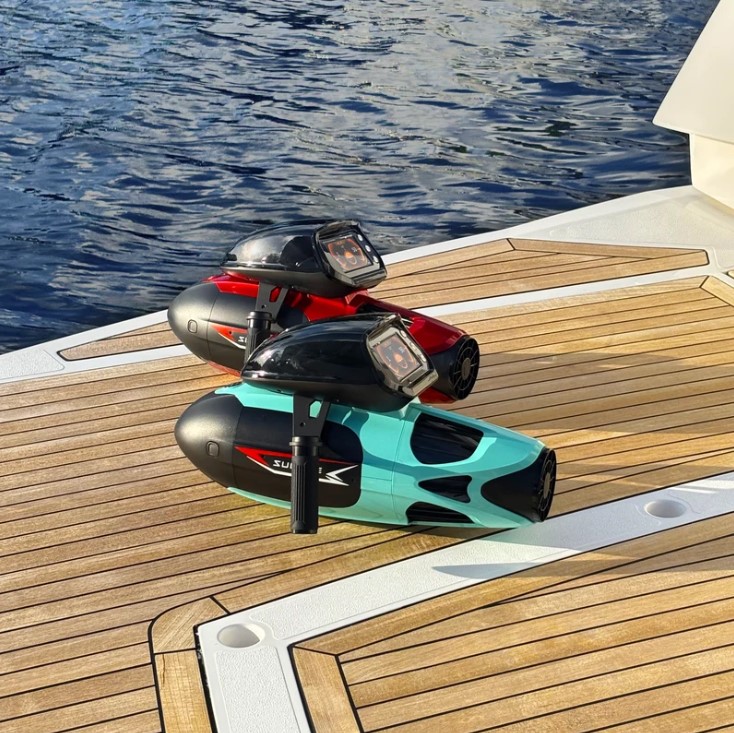
Out of the water, the Vapor has a solid weight that tells you it is built with high-density materials and a heavy battery pack. This weight requires careful handling on boat decks or rocky shore entries. Once submerged, however, managing the physical weight becomes a matter of mastering its buoyancy profile.
The unit features integrated ballast compartments that allow you to fine-tune its buoyancy. For scuba diving, setting the unit to be slightly positive or completely neutral is ideal; if you need to let go of the handles to adjust your mask, check your dive computer, or deploy a surface marker buoy, the scooter will not sink rapidly into the abyss. Conversely, freedivers often prefer a marginally positive trim so that the device naturally floats toward the surface if released during a deep ascent. Achieving this balance takes a few practice sessions in a calm, shallow environment, but once configured, it glides through the water column with minimal resistance.
Propulsion Dynamics and Speed Selection
The Sublue Vapor is built around a multi-speed electronic transmission that gives the user immediate control over thrust levels. Operating the scooter is intuitive but requires a firm grip on the dual trigger controls. For safety, the unit utilizes a dual-switch activation system; both triggers must be depressed simultaneously to spin the propellers, preventing accidental lunges on boat decks or during entry.
- Eco Mode (Low Speed): This setting is designed for maximum efficiency. It operates at a gentle pace that matches a relaxed fin-kick speed. It is ideal for close-up photography, navigating tight reef structures, or simply conserving your battery over a long multi-dive day.
- Sport Mode (Medium Speed): The workhorse setting of the Vapor. It provides a noticeable step up in thrust, allowing you to make headway against mild headcurrents or traverse sandy flats between dive sites without depleting the battery instantly.
- Turbo Mode (High Speed): Unleashing the full power of the dual motors. This setting generates impressive thrust, pushing you through strong currents and moving you across the water at speeds up to 10 km/h (6.2 mph). While exhilarating, it draws massive amperage from the battery pack, meaning you should reserve it for short bursts, safety maneuvers, or getting home against unexpected tides.
Battery Tech: Power, Thermals, and Charging Protocols
The heart of any underwater scooter is its battery pack. The Vapor utilizes a high-capacity lithium-ion battery designed to handle continuous high-current discharge. This battery chemistry provides a very flat discharge curve, meaning you get almost consistent speed and power throughout the run, rather than a slow, frustrating decline as the battery depletes.
However, lithium-ion packs are highly sensitive to temperature and moisture. In cold water conditions—such as diving in Northern California, the Great Lakes, or during deep thermoclines—the chemical reaction inside the cells slows down, which can result in a shorter overall runtime. It is critical to store the battery at room temperature before a dive to maintain its thermal efficiency. To check your battery status during a dive, the Vapor features an integrated display that provides real-time power levels, ensuring you never run out of juice far from your exit point.
When it comes to recharging, always use the dedicated charger provided by the manufacturer to avoid overcharging or thermal runaway. The charging port must be completely dry before connecting. Based on the guidelines in the Sublue Official Manual, even a microscopic drop of salt water in the charging terminals can cause galvanic corrosion, which can ruin the charging contacts and compromise the battery’s safety circuits.
Airline Travel Considerations
One common question among destination divers is whether they can pack the Vapor for a flight. The standard battery pack for the Vapor is highly powerful and exceeds the 100Wh to 160Wh limits set by most commercial airlines for carry-on items under FAA and IATA regulations. If you plan to travel internationally, you must verify the battery capacity against current transport regulations. In some cases, you may need to ship the battery separately via certified ground/sea cargo services or look into purchasing lower-capacity travel-safe batteries if offered by the brand.
Real-World Diving Applications: Who is this for?
A DPV is not just a toy for speeding around; it is a highly functional tool that changes how you dive. Let’s look at how the Vapor performs across different underwater disciplines.
Recreational Scuba Diving
In recreational scuba, your air consumption is directly tied to your heart rate and physical exertion. Swimming against a current increases your breathing rate, causing you to burn through your tank rapidly. By using the Vapor, you delegate the physical work to the motors. Your heart rate remains at a resting level, which can significantly lower your air consumption and extend your bottom time. It also opens up dive sites that were previously inaccessible due to long swims or challenging currents.
Advanced and Technical Diving
For technical divers carrying multiple decompression cylinders, the added drag makes swimming highly inefficient. The Vapor provides the necessary thrust to move heavy gear configurations through the water column. However, technical divers must remember that a DPV should never be a primary means of survival; you must always have a backup plan (such as manual finning capability or a buddy with a tow line) in the event of a mechanical failure when deep inside a wreck or far from the shore.
Freediving and Apnea
Freedivers rely entirely on a single breath of air. The Vapor can assist with both descents and ascents, allowing the freediver to conserve oxygen by eliminating the physical effort of finning down to depth. This conservation of energy can lead to longer, more relaxed hang times at depth. However, using a DPV for freediving requires strict discipline regarding pressure equalization and ascent rates to avoid barotrauma or decompression sickness if diving repeatedly to significant depths.
Underwater Photography and Videography
Camera housings, strobe arms, and video lights create a massive amount of drag. Trying to swim while holding a camera rig often leads to shaky footage and quick exhaustion. The Vapor features mounting points on the top of the chassis where you can attach action cameras or lighting brackets. This allows you to capture smooth, sweeping tracking shots that look incredibly professional, all while keeping your hands free to adjust camera settings when paused.
What the Diving Community Says: Reddit & Trustpilot Analysis
Before purchasing high-end dive gear, it is always wise to look at what actual owners and the broader community have to say. Let’s analyze the feedback from active divers on public forums and review platforms.
Insights from the Reddit Scuba Community
In the Reddit discussion on sea scooter comparisons, experienced divers frequently debate the utility of recreational-class vs. technical-class DPVs. Redditors highlight several key points when comparing units like the Vapor to other models:
- Build Quality vs. Entry-Level Plastics: Users point out that cheap, single-motor "pool toy" scooters often fail after a few saltwater sessions due to poor shaft seal design. The double-motor, sealed-compartment construction of Sublue units is recognized as a necessary step up for anyone diving in genuine ocean conditions.
- The Weight/Power Trade-off: Several technical divers on Reddit emphasize that while lightweight scooters are great for travel, they often lack the thrust to fight real tidal currents. The consensus is that the dual-motor design of the Vapor strikes a solid middle ground, providing real thrust without the massive bulk of a 50-pound professional technical tow-behind scooter.
- Battery Management: Experienced DPV users on Reddit warn newbies about proper lithium maintenance, reminding everyone that leaving a battery completely discharged over the winter will permanently ruin its capacity—a rule that applies strictly to the Vapor as well.
Analysis of Sublue's Brand Trust
To evaluate customer service and overall product satisfaction, we can look at the brand's performance on Trustpilot. You can view the direct rating data on the Sublue Trustpilot Review Page.
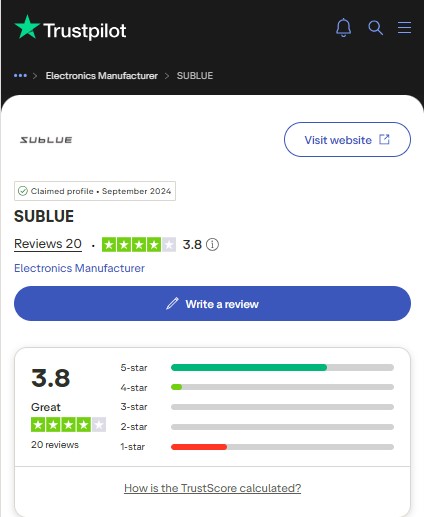
The feedback generally shows that buyers appreciate the responsiveness of their customer support team, especially when dealing with post-purchase inquiries or battery replacement questions. However, like any technical marine equipment manufacturer, a small percentage of negative reviews highlight issues stemming from user error—such as failing to clean the sealing rings or charging the unit while wet, which voids the warranty. This emphasizes the absolute necessity of reading the documentation before your first dive.
Video Walkthrough: Seeing the Tech in Action
To truly appreciate how the dual-motor propulsion translates to underwater stability, watch this comprehensive breakdown and field test of Sublue's core technology:
Buying with Confidence: Shipping, Warranties, and Secure Checkout
When investing in high-quality dive gear, the purchasing experience and post-purchase protection are just as important as the physical specifications. Let's look at what Sublue offers when you buy directly from their official channels.
Shipping Logistics and Battery Transport
Shipping high-capacity lithium batteries requires strict adherence to international safety standards. Sublue’s Official Shipping Policy details how they handle these logistics. Because of the battery classification, delivery times may vary slightly compared to standard electronic goods, as they must go through specialized courier networks certified to handle class 9 hazardous materials. This ensures your scooter arrives safely and legally at your doorstep without customs delays.
Warranty Protection: What is Covered?
The Vapor is a significant investment, making a clear warranty essential. Under the Sublue Warranty Policy, the main body of the scooter, the motors, and the battery pack are covered against manufacturing defects for a specified period. However, it is critical to know what is not covered:
- Water Ingress due to Neglect: If you fail to clean the O-rings or close the battery compartment latch properly, any resulting water damage is classified as user neglect and is not covered.
- Accidental Impact: Cracking the outer composite shell against a coral head or dropping it on a concrete dock is not covered under the standard warranty.
- Battery Deep Discharge: If you store the battery for months without charging it, causing the cells to fall below their recovery voltage threshold, the battery warranty will not apply.
Secure Checkout and Payment Methods
Purchasing directly through the official store ensures that your transaction is encrypted and secure. When you head to the checkout, Sublue accepts a wide array of trusted Official Payment Methods, including major credit cards, PayPal, and modern encrypted payment gateways. This protects your financial data and ensures you are covered by buyer protection policies.
Accessing Customer Support
If you ever experience an issue with your scooter—whether you need to order replacement O-rings, require diagnostic help with an error code, or need to initiate a warranty claim—you can reach out directly via the Sublue Contact and Support Portal. Their technical staff can assist in identifying whether an issue can be fixed at home or if the unit needs to be sent to an authorized service center.
Sublue Vapor vs. Navbow+ vs. Generic Scooters
| Feature / Spec | Sublue Vapor | Sublue Navbow+ | Generic DPVs |
|---|---|---|---|
| Motor Setup | Dual-Motor (High Thrust) | Dual-Motor (Compact) | Single Motor |
| Max Speed | Up to 10 km/h (6.2 mph) | Up to 7.2 km/h (4.47 mph) | 3 to 5 km/h (1.8 to 3.1 mph) |
| Max Depth Rating | 40 meters (131 feet) | 40 meters (131 feet) | 15 to 30 meters |
| Chassis Design | Streamlined Technical Hydrodynamic | Ergonomic Recreational Handheld | Bulky, high-drag plastic hulls |
| Best Suited For | Current fighting, tech diving, heavy camera rigs | Recreational reef diving, casual photography | Pools, calm lakes, entry-level snorkeling |
Pros and Cons: A Balanced Assessment
No piece of dive equipment is perfect for every scenario. To help you make an informed decision, here is an honest assessment of the strengths and limitations of the Sublue Vapor:
What We Like (Pros)
- Massive Thrust: The dual-motor setup delivers genuine power that allows you to make measurable progress against ocean currents.
- Zero Torque Roll: Counter-rotating propellers prevent wrist strain, making extended runtimes incredibly comfortable.
- Excellent Depth Rating: Built to handle the limits of advanced recreational and deep dive profiles safely.
- Integrated Accessory Mounts: Perfect for photographers wanting to mount action cameras or heavy continuous video lights directly to the scooter.
Things to Consider (Cons)
- Airline Restrictions: The high-capacity battery is too large for standard commercial flight carry-on allowances.
- Physical Weight: Out of the water, the unit is heavy and requires effort to transport on shore entries or boat ladders.
- Strict Maintenance Regime: Saltwater environments require meticulous rinsing and O-ring care to prevent dynamic seal failures.
Essential Post-Dive Maintenance: Protecting Your Investment
If you want your Sublue Vapor to last for years, you must treat it like the precision marine instrument it is. Saltwater is incredibly corrosive; when it evaporates, it leaves behind microscopic salt crystals that can act like sandpaper on rubber O-rings and dynamic shaft seals. Follow this post-dive routine after every single dive:
- Freshwater Soak: Submerge the entire unit in a clean tub of warm freshwater for at least 15 to 20 minutes. While submerged, depress the triggers a few times to flush any trapped saltwater out of the switch mechanisms.
- Check the Seals: Open the battery compartment only when the exterior of the scooter is completely dry. Inspect the primary silicone O-rings for any signs of sand, hair, or salt build-up. Clean them with a lint-free micro-fiber cloth.
- Apply Silicone Grease: Lightly coat the O-rings with high-grade marine silicone grease (never petroleun-based lubricants like Vaseline, which dissolve rubber) to keep them pliable and prevent cracking.
- Store Dry and Cool: Never store the scooter or its battery in direct sunlight, hot car trunks, or damp dive bags. Charge the battery to approximately 50-60% capacity if you plan to store it for more than a month without use.
Frequently Asked Questions
Is the Sublue Vapor suitable for beginners?
While the physical operation of the Vapor is highly intuitive, its power and thrust are designed with serious divers in mind. Beginners can certainly use it safely, provided they start in calm, shallow waters to master their buoyancy and get used to how the dual triggers respond before taking it into deeper or current-heavy environments.
How does water temperature affect the battery life?
All lithium batteries experience a decrease in efficiency as water temperatures drop. In warm tropical waters (75°F to 85°F), you will get the maximum rated runtime. In cold temperate or quarry waters (below 55°F), the battery’s internal resistance increases, which can reduce your overall operating time by 15% to 25%. Always plan your dive profiles with this thermal margin in mind.
What happens if I release the triggers underwater?
The Vapor features an instant-kill safety switch system. The moment you release one or both of the hand triggers, power to the twin motors is cut instantly, and the propellers stop spinning. This prevents the scooter from running away from you if you lose your grip or need to let go in an emergency.
Can the buoyancy of the Vapor be adjusted?
Yes. The unit features built-in ballast slots. By adding or removing the provided ballast weights, you can customize the buoyancy to match your gear configuration, ensuring the scooter remains neutrally buoyant whether you are in high-salinity seawater or freshwater lakes.
Can I use the Sublue Vapor for pool diving?
Yes, you can use it in a pool, but its high-thrust capability means you will reach the end of most residential pools in a matter of seconds. It is much better suited for open water environments where you have the space to utilize its full speed and range.
Final Verdict: A Reliable Powerhouse for Discerning Explorers
The Sublue Vapor is a highly capable, exceptionally stable DPV designed for divers who refuse to let currents, drag, or physical exhaustion limit their underwater exploration. By utilizing twin counter-rotating propellers, it delivers smooth, straight-line thrust that eliminates wrist fatigue and lets you glide effortlessly through the water column. While the battery transport restrictions and physical weight require careful planning and logistical consideration, its performance in the water is undeniable.
If you are looking to take your underwater photography to the next level, extend your deep wreck penetration limits, or simply enjoy the freedom of flying over pristine reefs without gasping for air, the Sublue Vapor is one of the most mechanically robust and rewarding marine tools available today.
Ensure authentic warranty protection and secure checkout by purchasing through the Official Sublue Online Store.

0 Comments