
Navigating Deep Waters: In-Depth Review of the AKUANA PILOT 1 Dive Compass
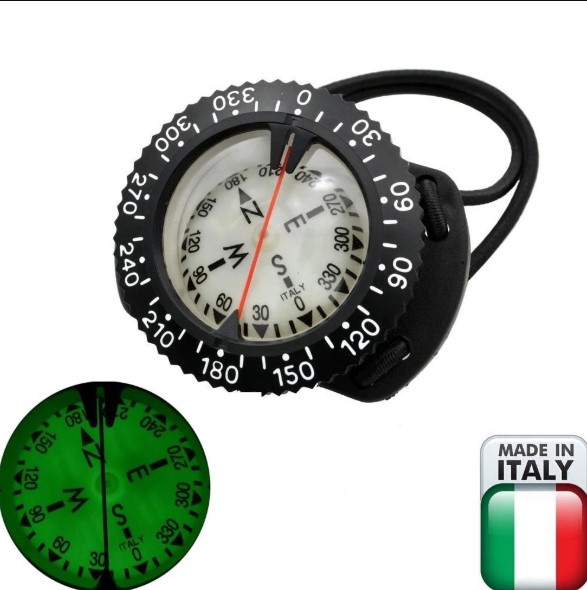
The AKUANA PILOT 1 Dive Compass is an analog liquid-filled underwater navigation instrument designed for recreational divers, technical operators, and underwater photographers who need precise directional tracking in low-visibility environments. Engineered with a high-tilt card tolerances and a high-contrast phosphorescent dial, this unit prevents compass card lockup even when your wrist isn't held perfectly level. If you're looking for a dependable physical backup to an electronic dive computer or want a primary navigation tool that never runs out of batteries during a trip, the PILOT 1 is well worth adding to your kit.
When you're swimming through zero-visibility silt in a quarry or managing a long drift dive along a wall in the Florida Keys, relying solely on an electronic compass built into your dive computer can be risky. Digital sensors require calibration, drain main battery power, and often freeze up if you tilt your arm slightly out of parallel. That's why seasoned divers still keep an analog magnetic compass mounted on their wrist or console. In this hands-on breakdown, we examine how the PILOT 1 performs in actual water conditions, review its structural manual specs, examine video demonstrations, and explore community feedback to help you decide if it fits your rig setup.
Why Analog Navigation Remains Essential for Underwater Safety
Modern dive computers have changed how we track non-decompression limits, but electronic magnetic sensors integrated into wrist units still have notable points of failure. Cold water can cause sudden voltage drops in lithium batteries, and passing near iron-hulled shipwrecks or heavy steel tanks can throw off digital calibration. A fluid-filled analog magnetic compass operates independently of electrical circuits, making it immune to power loss.
The PILOT 1 utilizes a magnetized card suspended in dampening fluid within a sealed acrylic housing. This fluid cushions the card against sudden movements and neutralizes underwater pressure differences as you descend. Whether you're at 20 feet practicing navigation drills or pushing depth limits on a deep wall, the card remains stable, settling onto magnetic north quickly after turns.
Real-World Navigation Tip from Experience:
Always hold your compass arm extended across your chest, grabbing the elbow of your tracking arm with your free hand. This forms a stable frame with your body, aligning the compass body straight ahead along your center sight line. The high tilt tolerance of the PILOT 1 card makes this posture much more forgiving if your forearm dips slightly during heavy fin kicks.
Key Mechanical Features of the PILOT 1
Understanding how an analog compass behaves under water requires looking closely at its mechanical components: the card tilt margin, dial phosphorescence, bezel ratcheting, and side-view sight window.
1. Card Stability and Tilt Tolerance
One of the most frustrating issues with cheaper dive compasses is card tilt lockup. If you tip your wrist more than 10 to 15 degrees off horizontal, the internal card scrapes against the top lens or bottom casing, freezing the needle in place and giving a false reading. The PILOT 1 features an expanded internal tilt envelope (up to roughly 30 degrees of pitch angle), allowing the card to float freely even when your swimming posture isn't perfectly horizontal. This tilt clearance is especially helpful during active finning or when maneuvering through surge.
2. Phosphorescent Dial Readability
Navigating at night or inside overhead environments requires clear dial markings. The surface of the PILOT 1 dial uses a thick application of phosphorescent pigment. When hit with a primary dive light beam for five to ten seconds, the dial charges up, emitting a bright green glow that remains visible in pitch-black conditions for over twenty minutes. The heading numbers and index marks are printed in large, high-contrast dark block text over the luminous face, making them easy to read through a low-volume dive mask.
3. Tactile Ratcheting Bezel
Setting a course heading underwater requires rotating the top bezel ring to align the double lubber marks over the north needle. The PILOT 1 bezel is constructed with defined notches along its outer rim, giving your fingers a firm grip even when wearing thick 5mm or 7mm neoprene cold-water gloves. The internal spring ratchets with clear, firm clicks that hold the bezel locked in place once set, preventing accidental movement if the bezel rubs against your BCD, drysuit material, or a wreck frame.
4. Side-Reading Sight Window
For accurate linear navigation, looking down at your wrist isn't always practical. The PILOT 1 includes a side-view sight window built directly into the side of the housing. This window features a vertical lubber line that lets you bring the compass up to eye level, target an underwater landmark like a coral head or anchor chain in the distance, and take a direct heading reading straight through the side port without changing your swimming posture.
Video Analysis & Demonstrations
For a detailed visual look at how this unit looks and handles out of the box, check out this video demonstration detailing the physical build, bezel motion, and dial visibility of the PILOT 1:
Watching real-world handling video clips helps highlight key design details: the bezel turns smoothly without gritty resistance, and the dampening fluid keeps the dial from swinging wildly when you change headings quickly. As seen in video reviews, the side window aligns clearly with eye-level sightlines, simplifying heading tracking during mid-water safety stops.
Mounting Configurations: Wrist Strap vs. Bungee Setup
How you mount your compass directly affects your ease of use and gear streamlined profile underwater. The PILOT 1 design offers mounting versatility based on your diving discipline:
- Standard Rubber Wrist Strap: Ideal for warm-water recreational divers using thin 3mm wet suits. It fastens securely around the forearm and provides a reliable setup for basic shore and boat diving.
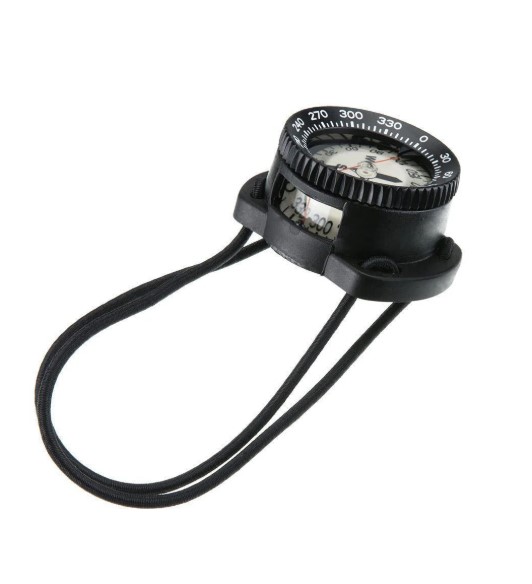
- Bungee Mount Mount Modification: Highly favored by technical divers and cold-water drysuit users. Replacing standard rubber straps with shock cord bungee loops pulls the compass tight against your forearm, automatically compensating for suit compression as depth increases. This stops the compass from spinning around your arm at deep depths.
- Retractor Mount Options: Some divers prefer attaching the compass boot to an extendable clip lanyard on their BCD pocket. While convenient for quick storage, keep in mind that holding a retractor unit far out in front of you can introduce small alignment shifts compared to fixing it securely to your forearm.
Community Insights from Reddit Scuba Discussions:
In active underwater navigation threads across r/scuba discussions on dive compasses, experienced divers consistently emphasize two critical factors: card tilt tolerance and mounting security. Many divers highlight that swapping standard wrist straps for high-grade marine shock cord bungees prevents gear loss caused by failing plastic strap buckles during deep suit compression cycles.
Specification Overview
| Feature / Spec | PILOT 1 Compass Specifications |
|---|---|
| Primary Category | Underwater Navigation Instrument / Submersible Magnetic Compass |
| Internal Housing | Liquid-filled acrylic capsule with pressure equalization cushion |
| Dial Type | High-contrast, phosphorescent luminous face with cardinal direction markings |
| Heading Display | Top-down degree scale + side-view reading sight window with alignment line |
| Bezel System | Ratcheted rotating ring with dual index heading markers |
| Tilt Margin | High tolerance card tilt clearance (up to ~30° operating envelope) |
| Documentation Reference | Verified via Official Equipment Manual Specs |
Practical Underwater Navigation Exercises with the PILOT 1
To get the best performance out of your PILOT 1 compass on dive trips, practice these standard navigation drills in calm water conditions before using it in poor visibility:
1. Reciprocating (Out and Back) Course
A reciprocating course is the fundamental baseline for underwater navigation. Pick an underwater start point, such as a buoy line mooring block. Hold the compass level, rotate the bezel until the double index marks frame the north pointer, and read your heading degree off the lubber line (for example, 90 degrees East). Swim 30 kick cycles along that line. To return to your starting point, add 180 degrees to your heading (giving you 270 degrees West), rotate your body until the north pointer sits between the single mark on the opposite side of the bezel, and swim back 30 kick cycles. If your buoyancy and kick cadence stay consistent, you'll surface right back at the mooring line.
2. Executing a Square Search Pattern
Square search patterns are useful for finding lost drop items or surveying underwater reefs. Start at heading 0 degrees North, swimming for 20 kick cycles. Turn 90 degrees right to 90 degrees East, swimming another 20 kick cycles. Turn 90 degrees right again to 180 degrees South for 20 kick cycles, and make a final 90-degree right turn to 270 degrees West for 20 kick cycles. Practicing this drill builds confidence relying on your wrist compass rather than visual cues, helping you stay oriented when low visibility strikes unexpectedly.
Manufacturer Standing and Customer Support Options
When purchasing personal dive safety gear, having transparent access to clear customer service channels, solid product warranties, and reliable shipping terms provides important peace of mind.
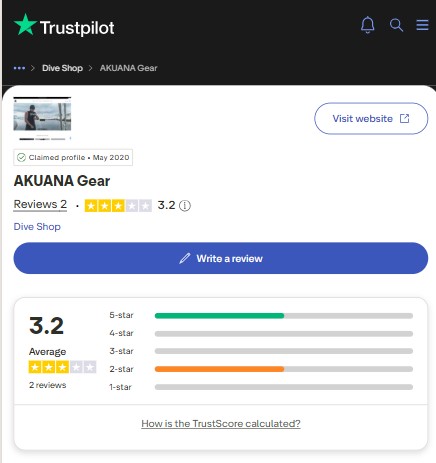
AKUANA has developed a strong reputation within the diving community, maintaining high operational scores as tracked on their Trustpilot Review Profile. Diver feedback consistently highlights fast order processing times, attentive support teams, and durable equipment builds across their navigation and rigging lines.
Shipping Options & Delivery Logistics
According to the official AKUANA Shipping Policy, gear orders are processed through international distribution hubs with tracked transit times. Products are carefully packed in shock-resistant packaging to ensure delicate liquid-filled internal modules arrive intact and bubble-free.
Warranty Terms & Store Protection Policies
Your equipment purchase is backed by comprehensive customer coverage detailed in the AKUANA Warranty & Service Terms. This policy protects buyers against factory structural defects, fluid leaks, or bezel retention mechanism flaws. If your item arrives damaged or experiences issues under normal diving conditions, warranty support provides replacement options.
Checkout Security & Order Payment Options
Ordering directly through the AKUANA Payment Portal is secured using 256-bit SSL encryption standards. The system accepts major payment options, including Visa, MasterCard, American Express, PayPal, and Apple Pay, making international ordering safe and simple.
Reaching Customer Support Services
If you have specific product setup questions or need tracking details for an existing order, you can contact the technical support team directly through the AKUANA Customer Support Page.
Pros & Cons of the PILOT 1
What Works Well:
- High card tilt clearance minimizes annoying needle lockup under heavy wrist angles.
- High-contrast phosphorescent face charges quickly under dive lights for easy night reading.
- Firm ratcheting bezel clicks cleanly even when wearing thick neoprene gloves.
- Integrated side-view sight window allows accurate eye-level heading tracking.
- Robust housing easily converts from standard wrist straps to tech bungee mounts.
Points to Keep in Mind:
- Like any liquid-filled analog compass, storing it near extreme high-heat environments (such as a car trunk exposed to hot summer sun) can create internal micro-bubbles.
- It lacks digital track-logging features, operating strictly as a reliable physical directional instrument.
Frequently Asked Questions
How do I remove air bubbles from a liquid-filled dive compass?
Tiny air bubbles can sometimes form inside fluid housings due to temporary atmospheric pressure changes during air travel. In most cases, these bubbles shrink or vanish once down at ambient underwater dive pressure. However, if a large bubble permanently appears at surface level, it may point to a compromised capsule seal requiring warranty service.
Can the PILOT 1 be used in both Northern and Southern Hemispheres?
Standard magnetic dive compasses are balanced specifically for magnetic dip zones. The PILOT 1 features strong magnetic card dampening suitable for popular northern latitude dive locations, but if you regularly dive near extreme southern polar zones, keep in mind that card dip angles can vary.
How should I store my dive compass between trips?
Rinse the entire housing with clean, fresh water after every ocean dive to prevent salt crystals from building up under the rotating bezel ring. Store the unit flat in a cool, shaded place away from direct sunlight, high heat sources, and heavy electric motors or speakers that generate strong localized magnetic fields.
Final Assessment & Conclusion
The AKUANA PILOT 1 Dive Compass is a well-built, dependable underwater navigation tool that delivers excellent performance where it matters most: under water. Its forgiving tilt margin prevents frustrating card freeze, the high-phosphorescence dial face provides crisp night visibility, and the firm, ratcheted bezel holds set headings securely against accidental bumps. Whether you're configuring your initial gear set or upgrading your current backup setup, this unit delivers solid directional reliability on every dive.

0 Comments