
Understanding the BARE Reactive 5mm Wetsuit: Thermal Protection and Real-World Performance
Finding a reliable 5mm wetsuit that balances thermal protection with unrestricted arm mobility is often a frustrating search for temperate-water divers. The BARE Reactive 5mm is a mid-weight exposure suit engineered specifically for recreational and technical divers dropping into water temperatures between 58°F and 72°F (14°C to 22°C). Its key advantage is its mineral-infused lining, which converts radiated body heat into far-infrared thermal energy to slow core temperature drop over repetitive dives. If you want a suit that offers flexibility near a 3mm while providing heat retention closer to traditional 7mm neoprene, this model is worth serious consideration.
When diving in coastal waters, thermoclines can drop temperatures unexpectedly within seconds. A mediocre wetsuit allows cold water to flush straight down your neck zipper, robbing core warmth and shortening bottom time. Thermal protection isn't just about neoprene thickness; it's about water movement control, seam integrity, and inner lining efficiency. In this detailed review, we'll examine the materials, physical construction, field test observations, and long-term durability of the BARE Reactive 5mm to help you decide if it fits your diving needs.
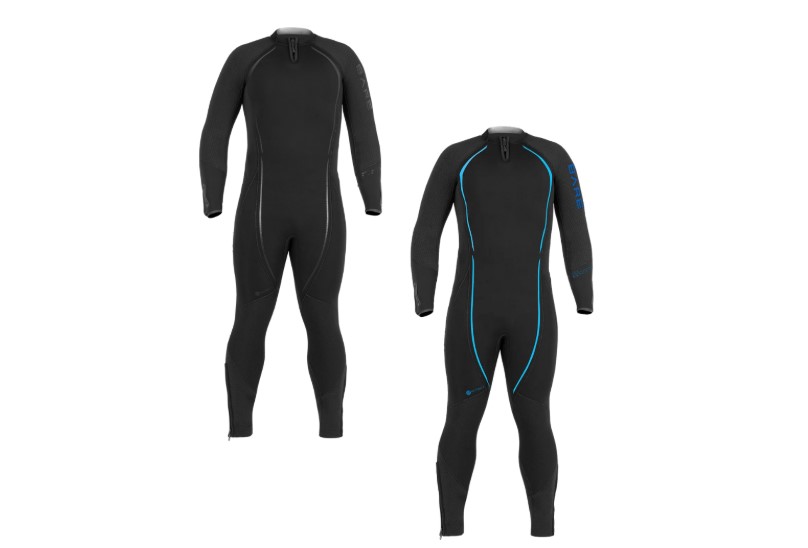
An automatic discount is applied through our link. Secure purchase processed directly through Dive Right In Scuba.
The Science of Thermal Insulation: How Neoprene and Omnired Work Together
To understand why a 5mm wetsuit performs well in temperate environments, it helps to examine how neoprene traps heat. Standard neoprene relies on sealed nitrogen bubbles trapped inside rubber foam. When water enters the suit, your body warms that thin film of water. The neoprene prevents that warmed water from mixing with the cold ocean. However, neoprene alone continuously bleeds thermal energy into surrounding waters, especially at depth where ambient pressure compresses the nitrogen bubbles, making the suit thinner and less insulating.
BARE tackles depth compression and body heat loss by embedding Omnired (formerly known as Celliant) technology directly into the suit's interior weave. This technology incorporates 13 thermo-reactive minerals woven into the fabric fibers. These minerals absorb the thermal radiation naturally emitted by human skin and re-emit it back into the body as far-infrared radiation.
How Far-Infrared Heat Retention Benefits Divers:
- Reduces Core Heat Losses: Returns radiated thermal energy back toward your torso, slowing core cooling during long surface intervals or back-to-back dives.
- Enhances Local Circulation: Far-infrared radiation stimulates microvascular blood flow in superficial tissue layers, helping keep extremities warmer.
- Complements Neoprene Thickness: Works continuously regardless of water pressure depth, offsetting heat loss caused by neoprene bubble compression.
During a 50-minute dive at 60 feet, standard 5mm neoprene compresses down to roughly 2.5mm to 3mm of actual thickness depending on rubber density. As a result, thermal insulation drops right when you need it most. By integrating Omnired throughout the torso, back, and upper legs, the Reactive model maintains thermal performance even when gas bubbles inside the neoprene squeeze down under pressure.
Anatomical Construction and Patterning: Why Fit Drives Warmth
Even the highest-grade neoprene won't keep you warm if cold water flushes through loose suit pockets. Suit fit is the most critical factor in staying warm underwater. BARE designs the Reactive 5mm using a 3D anatomical patterning process. Rather than stitching flat panels together, the suit is pre-shaped to mimic the natural forward bend of a diver's body in a neutral buoyancy trim position.
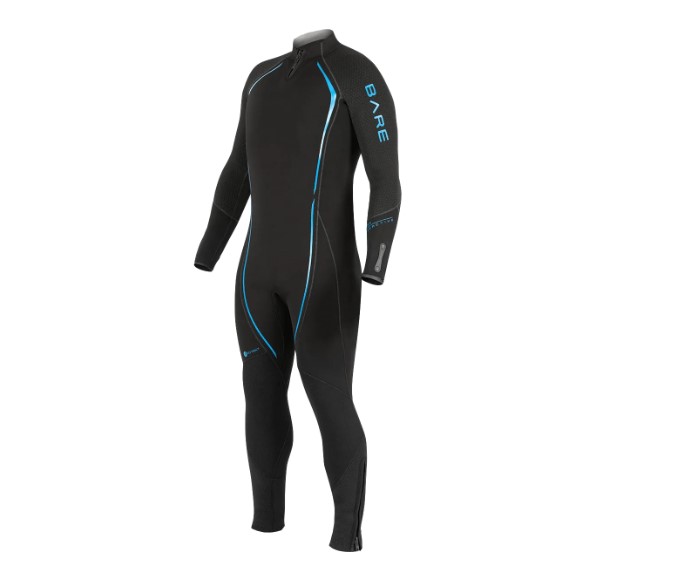
When you stand on a dive boat deck wearing the suit, you'll notice a slight natural curve at the lower back, knees, and elbows. This shape prevents fabric bunching behind the knees and reduces stretching across the lower back during fin kicks. Eliminating air pockets and material gaps prevents cold water from pooling inside the suit.
Neck, Wrist, and Ankle Seals: Controlling Flushing
Water entering through suit openings—known as "flushing"—is the main cause of chilling during active dives. BARE addresses each entry point with specific seal designs:
- Adjustable Glideskin Collar: The neck collar uses a smooth-skin interior panel that lays flat against your skin. It features a low-profile Velcro adjustment flap with a book-fold design that prevents the hook-tape from snagging suit fabric.
- Internal Skin-to-Skin Flip Seals: Located inside the mid-forearms and mid-calves, these thin Glideskin seals flip inward against your skin. They act as dams, blocking water driven up sleeves or pant legs during swimming movements or water entry.
- Heavy-Duty Zipper Systems: The main back zipper features an internal sealing flap with a built-in water gutter. Any water creeping past the teeth gets channeled down and out without touching your back.
| Suit Component | Material / Construction | Practical Advantage Underwater |
|---|---|---|
| Outer Fabric | ElasteK Full-Stretch Fabric | Provides maximum flexibility, making gear donning and valve reaches easier. |
| Inner Lining | Omnired Mineral Infrared Weave | Reflects body heat to maintain core temperature over long exposures. |
| Knee Protection | Armor Flex 3D Kneepads | Resists abrasion on rocks or boat ladders without stiffening lower-leg flex. |
| Seams | Double-Glued & SECURE-LOCK Stitching | Prevents water seepage along seam lines and eliminates internal thread rub. |
Field Performance: Testing in Temperate Ocean Conditions
Evaluating a 5mm wetsuit requires testing in conditions that demand sustained thermal protection. During multiple field tests in ocean conditions averaging 62°F (16.5°C) at surface and dropping to 57°F (14°C) below the thermocline, the suit demonstrated clear strengths in mobility and insulation.
Standard 5mm suits often feel stiff around shoulder joints, making reach-behind movements—like turning a tank valve or adjusting a backplate harness—tiring over time. The combination of limestone-based neoprene and ElasteK outer lining gives the Reactive model supple movement. Arm rotations feel natural, and don/doff effort is significantly lower than older, rigid neoprene designs.
Thermal Endurance Over Multiple Dives
On single 45-minute dives, many suits perform acceptably. The true test comes on dive two and dive three of a charter trip, where latent heat loss sets in. During field testing, the suit performed notably well during second entries:
- First Entry (Fresh Suit): Initial water entry created only a minor trickling feel along the lower back zipper flap. Within two minutes, skin contact warmed the trapped water layer, establishing a dry, comfortable internal microclimate.
- Bottom Time Endurance: At 50 feet, suit compression was smooth and uniform. Mobility while frog-kicking remained flexible with no tightness behind the knees.
- Surface Interval Drying: The inner Omnired lining dries quicker than standard plush loops. Putting the suit back on for dive two did not produce that cold, soggy feeling typical of traditional neoprene.
In-Depth Video Analysis
To see how the suit fits and bends on an actual diver, take a look at this detailed review video highlighting construction details, seam flexibility, and seal placement:
What Divers in the Community Are Saying
Independent real-world feedback offers valuable context beyond lab testing. Diver forums like Reddit and public platforms show consistent themes regarding the BARE Reactive 5mm:
In community discussions on Reddit's r/scuba community, experienced divers regularly mention its warmth retention. Multiple users note that they replaced older 7mm suits with this 5mm model without losing thermal comfort, highlighting improved shoulder flexibility as a main benefit. Some users note that sizing runs slightly snug, suggesting careful review of measurement charts before selecting a size.
Summary of Community Observations:
Key Strengths Highlighted:
- Warmth matches thicker standard 7mm suits.
- Excellent stretch across arms, chest, and knees.
- Durable knee protection withstands rocky entries.
- Dries rapidly between surface intervals.
Practical Considerations:
- Premium price point compared to entry-level neoprene.
- Requires precise sizing to prevent underarm water pockets.
- Back-zipper cord requires basic arm flexibility to reach solo.
Buying Guide: Sizing, Layering, and Fit Best Practices
Choosing the correct size in a 5mm wetsuit is critical to thermal efficiency. A suit that is too loose will flush constantly with cold water, rendering advanced linings ineffective. Conversely, a suit that is too small stretches the neoprene thin, reducing its insulation capacity and restricting breathing.
Read verified customer ratings on Trustpilot regarding fulfillment speed and support.
Step-by-Step Sizing Instructions:
- Measure Chest at Deepest Inhale: Place a soft tape measure around the widest part of your chest under your armpits. Take the measurement while inhaling deeply to ensure comfortable chest expansion under gear.
- Measure Natural Waist and Hips: Wrap the tape around your narrowest waistline point and the widest part of your hips/glutes.
- Check Torso Length: If you have a long torso relative to your height, pay close attention to length specs. A suit pulled too short vertically pulls down on your neck and shoulders, causing fatigue.
If you fit between standard sizes, prioritize chest and torso dimensions over length. A slightly longer sleeve can roll back, but a tight chest restricted during breathing will spoil a dive faster than any other fitting issue.
Thermal Layering Strategies for Cold Water
When temperatures dip toward 55°F (13°C), you can extend the thermal capabilities of your 5mm suit without stepping up to a heavy, rigid 7mm:
- Add a Hooded Vest: A 2mm or 3mm hooded vest worn underneath locks down heat retention. Sealing the head and neck reduces overall heat loss by up to 30%.
- Pair with High-Quality Boots and Gloves: Ensure your boots slip underneath the leg Glideskin flip-seals to prevent water creeping up your calves during kicking.
Retailer Logistics, Warranty, and Purchasing Advice
When investing in high-tier dive equipment like the BARE Reactive 5mm, retailer reliability matters as much as suit specs. Purchasing through authorized dealers like Dive Right In Scuba ensures valid factory warranty coverage, proper sizing support, and smooth order handling.
Review these official policies before completing your order:
- Review terms for domestic and international deliveries on the official Shipping Policy.
- Understand manufacturer coverage details via the official Warranty Policy.
- Explore flexible payment structures and price guarantees through Payment Methods & Price Matching.
- Need fit guidance from certified divers? Contact staff directly via Customer Support.
- For general gear maintenance guidelines, review the Official Documentation Guide.
Care, Maintenance, and Suit Longevity Protocols
Proper care directly affects how long a 5mm wetsuit retains its flexibility and insulating properties. Salt crystals, UV exposure, and improper hanging degrade neoprene over time. Following a simple post-dive routine keeps your investment in top shape:
Essential Wetsuit Care Routine:
- Rinse Fresh Water Immediately: Soak the suit in clean, cold fresh water after every ocean day. Squeeze water gently through zipper teeth and seams to remove salt crystals.
- Use Specialized Cleaner: Wash with dedicated wetsuit conditioner every 10–15 dives to eliminate residual body oils and keep neoprene soft.
- Dry Away from Direct Sun: UV rays break down neoprene rubber bonds and fade fabric color. Hang the suit folded inside-out over a wide bar hanger in a shaded area with good airflow.
- Avoid Narrow Wire Hangers: Thin hangers place localized pressure on shoulder seams, permanently stretching out structural neoprene. Use a heavy-duty wide-shoulder hanger instead.
- Lubricate Zipper Teeth: Treat zipper sliders and teeth regularly with wax or silicone spray to prevent corrosion and binding.
Frequently Asked Questions
What water temperature range is a 5mm wetsuit suitable for?
A standard 5mm wetsuit typically fits water temperatures between 58°F and 72°F (14°C to 22°C). However, because the BARE Reactive 5mm uses Omnired infrared lining, many divers use it comfortably down to 55°F (13°C) when paired with a quality hood and boots.
How does Omnired Celliant technology work inside the wetsuit?
Omnired technology uses 13 thermo-reactive minerals embedded directly into the interior lining fibers. These minerals capture body heat you naturally radiate, re-emitting it back as far-infrared thermal energy. This process supports local blood flow and helps slow core temperature drop during cold-water dives.
How should the BARE Reactive 5mm fit compared to standard wetsuits?
It should fit snug like a second skin without gaps around your lower back, underarms, or chest. The 3D anatomical shaping and high-stretch ElasteK neoprene allow it to fit closer than rigid traditional suits without binding your shoulders or restricting breathing.
Can I wear a thermal base layer under the BARE Reactive 5mm?
Yes. Adding a thin hooded vest or a 2mm thermal top under the suit works very well for colder conditions. Ensure the base layer fits smoothly without folding to avoid trapping cold water pockets.
How do I clean and care for the internal Omnired lining?
Rinse the wetsuit inside and out with fresh, cool water after every dive day. Clean it periodically with dedicated wetsuit shampoo to remove salt deposits and oils. Avoid hot water, washing machines, and direct sunlight, as high heat degrades neoprene and elastane components.
Does the back zipper allow self-zipping without assistance?
Yes. The heavy-duty rear zipper features a long leash tape that allows easy self-zipping. To prevent zipper flap jamming, keep the leash pulled straight back and upward during closing.
Is a 5mm wetsuit thick enough for night dives in temperate regions?
For most temperate locations where surface water hovers around 62°F to 68°F, a 5mm suit with infrared lining works great for night dives. If water drops below 58°F, adding a hooded vest ensures you stay comfortable throughout the dive.
Final Verdict: Should You Invest in the BARE Reactive 5mm Wetsuit?
The BARE Reactive 5mm stands out in the 5mm wetsuit category by combining high-stretch materials with effective thermal technology. Instead of relying solely on heavy neoprene thickness, its mineral-infused lining retains body heat while preserving full shoulder and leg flexibility. While it costs more than basic entry-level suits, its low water flushing, anatomical comfort, and high-depth insulation deliver real value for active divers.
If you dive primarily in temperate waters and want a flexible suit that holds warmth on back-to-back dives, this suit is an excellent choice for your equipment bag.
Purchases are processed securely on the official product website with verified discount pricing applied at checkout.

0 Comments