
Understanding the Sea Scooter: A Complete Hands-On Review of the Navbow-Plus
When you're fighting a strong head current at eighty feet, watching your gas pressure gauge drop faster than you'd like, you quickly realize that diving isn't just about floating around—it's about managing your energy, your air, and your safety. That is where a reliable sea scooter comes into play. The Sublue Navbow-Plus is a dual-motor underwater scooter designed specifically for recreational divers, tech divers, and freedivers who want to extend their bottom time, save their lungs, and explore larger underwater areas. Its strongest benefit is its smart-tech integration—featuring built-in depth sensors, an electronic compass, and haptic safety alerts—paired with a solid top speed of two meters per second. If you want a highly maneuverable, intelligent vehicle that reduces your air consumption and lets you dive smarter, this unit is absolutely worth your consideration.
Why You Need a Smart Underwater Scooter in Your Gear Bag
If you have spent any significant time in the water, you know that the traditional way of swimming against the ocean current is a recipe for a short dive. Your thighs start burning, your heart rate spikes, and you find yourself sucking down your Nitrox or air mix twice as fast as your dive buddy. An underwater propulsion vehicle changes the entire dynamic of a dive. Instead of constantly monitoring your physical exertion, you let the dual motors do the heavy lifting. This keeps your respiratory rate low, drastically reduces your carbon dioxide buildup (which is a primary trigger for panic and headache underwater), and allows your cylinder of air to last significantly longer.
But the market is flooded with cheap plastic water toys that claim to be professional dive gear. Many of those budget models lack the depth rating, build quality, and battery safety features required for real open-water environments. If a scooter floods at sixty feet, it doesn't just stop working—it becomes a heavy, negative-buoyancy anchor that you have to drag or drop. The Navbow-Plus is engineered to address these real-world dive risks by using dual-motor symmetry, hard-anodized critical components, and an advanced electronic monitoring system that communicates directly with your wrist or your eyes via a bright display.
Analyzing the Core Technical Specifications
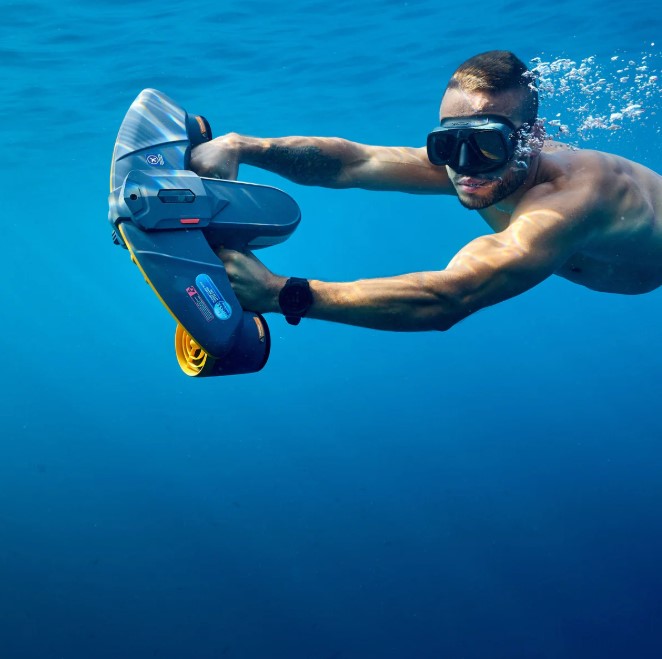
To understand why this machine behaves the way it does under pressure, we have to look closely at its physical engineering. According to the official manual, the unit features dual thrusters capable of producing three distinct speed steps. Let's break down what those speeds actually mean when you are wearing a standard 5mm wetsuit, a BCD, and a steel cylinder:
| Speed Mode | Velocity (m/s) | Velocity (mph) | Estimated Battery Run Time |
|---|---|---|---|
| Free Mode | 1.0 m/s | 2.24 mph | Up to 60 minutes |
| Sport Mode | 1.5 m/s | 3.36 mph | Approximately 35-40 minutes |
| Turbo Mode | 2.0 m/s | 4.47 mph | Approximately 15-20 minutes |
In "Free" mode, you are cruising at a comfortable walking pace underwater. This is the sweet spot for scanning reefs, looking for macro life, and general cruising. It maximizes battery efficiency and keeps your momentum steady without causing your mask to press hard against your face. Moving up to "Sport" mode gives you the extra kick needed to traverse open sandy flats quickly or push back against mild currents. "Turbo" mode is a burst of power. At two meters per second, you are moving faster than Olympic swimmers. It is incredibly fun, but it draws heavily on the lithium battery. In real-world conditions, you don't run in Turbo for your entire dive; you use it to cross high-current channels or outrun a sudden current shift, then drop back down to Free or Sport to conserve your energy reserves.
Safety Features and Sensors: Moving Beyond a Basic Thruster
What sets the Navbow-Plus apart from its predecessors—and from standard underwater thrusters—is its sensor array. Many divers are rightfully cautious about using scooters because it's easy to lose track of your depth or direction when you're moving fast. This device addresses those concerns directly through its integrated digital instruments:
- Electronic Compass: Maintaining a straight heading over a featureless bottom can be incredibly tough. The onboard compass displays your heading directly on the OLED screen. You don't have to keep stopping to check your wrist-mounted compass, which can be thrown off by the metal components of your scooter anyway. The internal compass is calibrated to account for the motors, giving you a far more accurate reading while on the move.
- Depth Sensor and Alarms: Rapid depth changes are a quick way to get ear barotrauma or, worse, decompression sickness. The built-in depth sensor displays your current depth in real-time. Even better, you can configure maximum depth alarms via the companion app. If you drift past your target depth, the scooter will vibrate in your hands. This haptic feedback is a massive safety improvement because you can feel it even if you are wearing thick neoprene gloves or if your eyes are focused on a camera screen.
- Water Temperature Gauge: Crucial for planning decompression profiles and tracking thermoclines. Having this data right on the screen alongside your speed makes it easy to monitor changing ocean conditions.
- Water Leakage Sensor: The worst nightmare for any underwater electronics owner is a slow, unnoticed leak that ruins a battery pack. The Navbow-Plus contains internal sensors that detect moisture in the electronics chamber before it leads to a catastrophic failure, allowing you to end the dive safely and protect your investment.
The Importance of Single-Handed Operation
Most traditional underwater scooters require you to hold on with both hands to maintain control and keep the safety triggers depressed. While this is fine for simple snorkeling, it's highly impractical for scuba divers, technical divers, and underwater photographers. If both of your hands are glued to a scooter, how are you supposed to adjust your buoyancy, clear your mask, check your pressure gauge, or adjust your camera settings?
The Navbow-Plus solves this by supporting single-handed operation. The controls are designed so that you can lock the throttle and steer the unit using just your right or left hand. This frees up your other hand completely. If you're a photographer, you can hold the scooter with your right hand to position yourself in the current, and use your left hand to steady your lighting arms or camera housing. If you're a technical diver, you can keep one hand free to manage your stage tanks, deploy a surface marker buoy (SMB), or monitor your backup dive computers.
Battery Performance, Battery Chemistry, and Travel Realities
The unit is powered by a high-capacity 158Wh lithium-ion battery pack. This chemistry provides excellent energy density, which is why the scooter can push a fully geared diver through the water at high speeds. However, lithium batteries of this size require careful handling, particularly when it comes to travel and maintenance.
According to the official shipping policy and international aviation guidelines, lithium batteries over 100Wh but under 160Wh require airline approval before you can bring them on a passenger aircraft. Since the battery is rated at 158Wh, it sits right under that critical 160Wh limit. This means you can typically take it on your travels as carry-on baggage, but you must contact your airline in advance to get clearance. Never pack this battery in your checked luggage—doing so is a violation of international transport safety regulations. The battery must be removed from the scooter body during transit, with the contacts taped over to prevent short circuits.
When it comes to charging, the dedicated charger brings the battery from dead to full in approximately two hours. For divers planning back-to-back boat dives, having a fast charger is invaluable. You can easily top off the battery between your morning and afternoon dives while sitting on the boat deck, provided the vessel has a clean AC power supply.
Real-World Feedback: What the Diving Community Says
As a professional reviewer, I don't just rely on laboratory specs; I pay close attention to what everyday divers are experiencing in the field. When we look at discussions on platforms like the Reddit DivingGearReview community, several key points consistently stand out. Divers praise the physical balance of the machine. Because of the dual thrusters, there is no rotational torque. When you pull the triggers, the scooter pulls you perfectly straight. Single-motor scooters often want to twist your wrists as the propeller spins; the dual-motor setup cancels out this rotational force, making long runs much less tiring on your forearms.
However, users also emphasize the need for strict post-dive maintenance. This is not a "throw it in the closet and forget about it" piece of gear. If you use it in salt water, you must soak the entire unit in fresh water for at least ten to fifteen minutes, running the thrusters briefly while submerged to flush out salt crystals and sand from the motor shafts. Neglecting this routine can lead to calcium buildup and premature motor wear, a point frequently made by experienced owners in online forums.
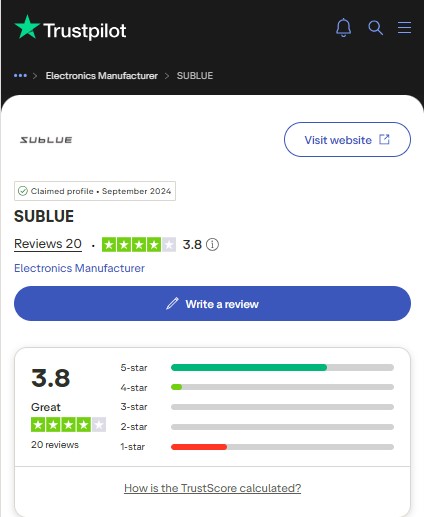
To see how the brand performs as a whole, we can look at their Trustpilot reviews. The brand holds solid feedback, but like any premium underwater equipment company, maintaining clear communication with customer support is essential for resolving technical issues or purchasing spare battery packs.
To help you see the scooter in action and understand how it handles water flow and maneuverability, watch this detailed video review:
Physical Ergonomics and Construction Quality
The physical layout of the Navbow-Plus is compact and streamlined. It features an impact-resistant composite chassis that can take the inevitable bumps against boat ladders or rocky ledges. The handgrips are coated with a textured, non-slip rubber compound that provides excellent traction even when wearing wet, soapy neoprene gloves.
At the center of the crossbar sits the bright, full-color OLED display. Unlike monochrome LCD screens which can wash out under direct sunlight or look dim at depth, the OLED display is highly readable even in turbid, low-visibility water or under bright surface glare. It clearly displays your remaining battery percentage as a simple graphic and a precise number, which helps eliminate "battery anxiety" when you're swimming away from your exit point.
On top of the unit, you'll find built-in mounting points. Sublue has included standard 1/4-inch threaded holes that allow you to attach action cameras, underwater light arms, or even a smartphone housing (if you are using their app features near the surface). There's also a bottom ring attachment point where you can clip a secure lanyard or a tow-behind harness line. Using a tow harness is a highly recommended practice for long dives because it transfers the pull of the scooter from your arms to your BCD waist strap, turning your ride into an effortless, hands-free glide.
App Connectivity: Customizing Your Dive Profile
One of the more unique aspects of the "Plus" version is its integration with the SublueGo smartphone app. By connecting the scooter to your phone via Bluetooth before a dive, you can customize several operational settings:
- LED Screen Brightness: Adjust the display brightness to conserve battery or increase visibility depending on whether you are diving in dark lakes or bright tropical waters.
- Depth Alarm Thresholds: Set a custom depth warning. If your planned dive limit is 100 feet (30 meters), you can set the alarm to trigger at 95 feet, giving you a physical warning vibration before you cross your target line.
- Safety Speed Lock: If you are lending the scooter to a younger family member or a less experienced snorkeler, you can lock out the "Turbo" and "Sport" modes entirely, keeping the unit restricted to "Free" mode for safety and maximum battery life.
- Log Book Integration: The app can sync and record your water temperature, depth profiles, and total run times, creating a digital log of your scooter-assisted dives.
Warranty, Returns, and Secure Purchase Support
When purchasing a high-end marine electronics device, understanding the post-purchase support structure is critical. Sublue offers a dedicated warranty policy that covers manufacturing defects in the motor, battery, and main motherboard. The exact length of coverage can vary by component, with the battery pack and main body having separate coverage terms due to the wear-and-tear nature of lithium cells. It's highly recommended to register your product immediately upon receipt to ensure any warranty claims are processed quickly.
If you have questions about shipping speed, transit insurance, or international customs duties, you can review the shipping policy page. Because the battery is categorized as a Class 9 hazardous material for shipping purposes, land-based or specialized air-freight logistics are used, which can occasionally affect delivery times depending on your location. For any specific pre-sale questions, technical support issues, or spare parts sourcing, you can contact their support staff directly through their customer support channel.
When you are ready to make a purchase, you can complete your transaction securely on the official Sublue portal. They support multiple payment methods, including standard credit cards, digital wallets, and secure online payment systems, ensuring your financial information is fully encrypted and protected.
Practical Maintenance: Keeping Your Scooter Flooding-Free
As a senior reviewer, I cannot stress this enough: O-ring maintenance is the single most important factor in the lifespan of your sea scooter. The battery compartment on the Navbow-Plus relies on high-quality silicone O-rings to keep water out of the high-voltage connections. Here is the exact maintenance routine you should follow after every single dive day:
- Inspect: Before inserting the battery, inspect the O-ring channel for any stray hairs, sand grains, or salt crystals. Even a single human hair can create a micro-channel that allows high-pressure water to seep in at depth.
- Clean: If the O-ring looks dirty, remove it gently using a plastic O-ring tool (never use a metal knife or screwdriver, which can scratch the plastic groove). Wash it in warm fresh water and dry it with a lint-free cloth.
- Lubricate: Apply a very light coat of high-quality silicone grease to the O-ring. It should look shiny, not globby. Too much grease will actually attract sand and debris, increasing the risk of a leak.
- Post-Dive Rinse: After diving, submerge the entire unit in fresh water. Spin the propellers by hand and run the motors for a few seconds while submerged to wash away salt crusts from the dynamic shaft seals.
Pros and Cons: An Honest Breakdown
No piece of dive gear is absolutely perfect. To make an informed decision, you need to weigh the strengths of this underwater scooter against its practical limitations.
What We Like
- Excellent thrust-to-weight ratio with dual-motor symmetry.
- Single-handed control allows great freedom for camera work and buoyancy adjustments.
- Vibration depth and battery alerts you can actually feel through thick gloves.
- OLED display provides crystal-clear readability in low-visibility water.
- At 158Wh, the battery sits just under the maximum airline limit for carry-on items.
Points to Consider
- Requires strict post-dive fresh-water rinsing to prevent salt/sand buildup.
- Running continuously in Turbo mode drains the battery within 15-20 minutes.
- Airline travel requires prior approval due to the 158Wh lithium battery size.
- Premium smart features come at a higher price point than simple recreational pool toys.
Frequently Asked Questions About the Navbow-Plus
Can I use this sea scooter for deep technical diving?
Yes, the Navbow-Plus is rated to a maximum depth of 40 meters (131 feet). This makes it suitable for recreational deep dives and light technical diving. However, if your dive plan requires extended decompression stops or entering overhead environments like caves or deep shipwrecks, always carry a reliable manual backup plan in case of gear failure.
What happens if I let go of the scooter while underwater?
The scooter features a safety trigger release system. If you let go of the handles, the motors instantly stop spinning to prevent the scooter from runaway swimming. Regarding buoyancy, the unit is designed to be slightly positively buoyant in salt water. This means if you let go of it, it will slowly float toward the surface rather than sinking into the deep, making it much easier to retrieve.
How do I calibrate the built-in digital compass?
Compass calibration is managed easily through the companion smartphone app before your dive, or by performing a simple figure-eight rotation sequence in the water. Calibrating the compass away from large metal boat hulls or magnetic dive weights will ensure the highest tracking accuracy during your run.
Is the battery compatible with other Sublue models?
The battery pack is specifically engineered for the Navbow and Navbow-Plus chassis. It is not interchangeable with smaller models like the WhiteShark Mix or Mix Pro due to differences in voltage, physical dimensions, and latch mechanisms.
The Final Verdict
If you are tired of fighting currents, exhausting your lungs, and cutting your dives short, adding a professional-grade propulsion unit to your gear kit is a logical step. The Sublue Navbow-Plus stands out because it doesn't just offer raw thrust; it offers intelligent safety systems. By giving you real-time depth monitoring, haptic alarms, an integrated compass, and the ability to operate the unit with a single hand, it addresses the actual, practical challenges that divers face in the ocean. While it requires disciplined maintenance and careful battery travel planning, the reward is an unparalleled sense of freedom underwater. You'll glide effortlessly over reefs, explore dive sites you never could have reached on foot or fins alone, and return to the boat with plenty of gas left in your tank.

0 Comments