
Unbiased Analysis of the Sublue Navbow+ Underwater Scooter
The sublue navbow underwater scooter is a dual-motor underwater propulsion vehicle designed for recreational divers, technical divers, freedivers, and underwater photographers who need reliable propulsion, smart depth tracking, and hands-free stability. The navbow-plus solves a major pain point in diving: high air consumption caused by physical exertion against strong currents. By pulling you effortlessly through the water, it lowers your heart rate, reduces your breathing rate, and significantly extends your bottom time. If you want a dependable, travel-friendly scooter that helps you explore deeper reefs without exhausting your physical limits, this model is one of the most capable tools on the market today.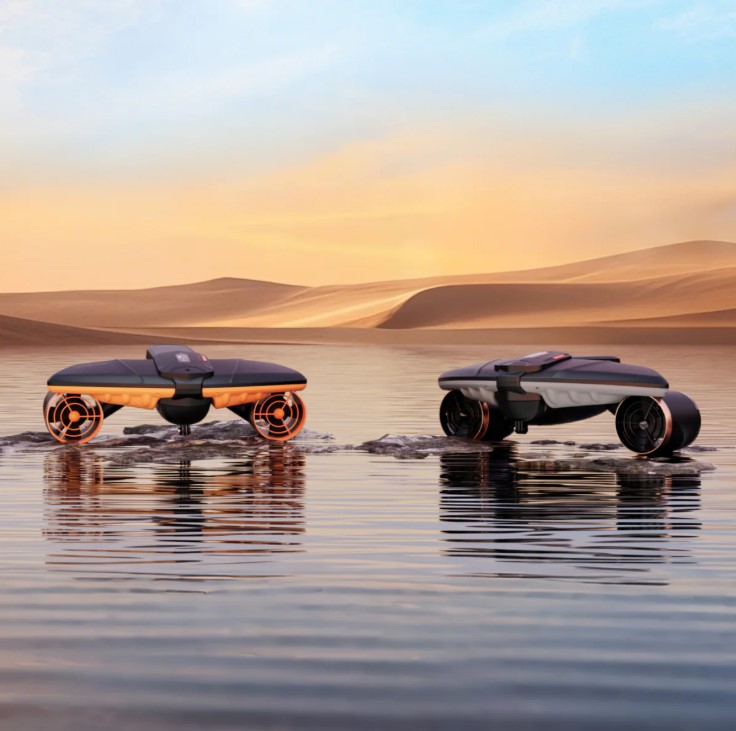
Clicking this link automatically applies your promotional discount. Transactions are processed securely directly through Sublue's official checkout.
The Engineering Behind the Propulsion: Dual Motors and Three Speed Settings
The core of the sublue navbow underwater scooter lies in its proprietary dual-propeller system. Traditional single-motor scooters often suffer from torque-steer, requiring continuous wrist corrections to maintain a straight line. The dual-motor configuration of the navbow-plus balances physical forces, providing symmetrical thrust that keeps you perfectly straight without wrist fatigue.
The scooter features three distinct speed gears, which you can cycle through using a thumb-trigger interface:
- Free Mode (1.0 m/s or 2.24 mph): This is your baseline cruising speed. It matches the swimming speed of an active diver but requires zero physical effort. Free mode is ideal for navigating delicate coral reefs where fast maneuvers could damage marine life, and it maximizes your battery efficiency.
- Sport Mode (1.5 m/s or 3.36 mph): This mid-tier setting is useful when you encounter mild headcurrents or need to keep pace with fast-moving marine life like sea turtles or manta rays. It balances battery drain with effective forward speed.
- Turbo Mode (2.0 m/s or 4.47 mph): The maximum speed setting. It allows you to cover large distances quickly or push through intense rip currents. At this speed, water resistance against your body and mask is highly noticeable, making a low-profile body position essential.
The Intelligence Suite: Built-in Depth, Temperature, and Compass Sensors
The primary difference between the standard Navbow and the updated navbow-plus is the integration of an on-board sensor suite. It acts as an auxiliary dive computer, displaying critical environmental metrics directly on the high-contrast OLED screen.
The integrated depth sensor tracks your position in the water column in real-time. If you descend past your pre-set target depth, the scooter vibrates against your hands to warn you. This haptic feedback is incredibly helpful for freedivers who focus on stream-lining and relaxation rather than looking at their wrist computer, as well as underwater photographers who easily lose track of their depth while tracking a subject through a viewfinder.
An electronic compass is integrated directly into the dashboard. Underwater navigation is notoriously difficult due to low visibility and lack of geographical markers. By providing a clear heading directly in your line of sight as you hold the handles, the scooter allows you to maintain precise search patterns or return directly to your entry point without constantly stopping to check a wrist-mounted compass.
The water temperature sensor is another excellent safety feature. Rapid temperature drops (thermoclines) can drain both your physical energy and your battery capacity. Having this data visible on your dashboard allows you to make informed decisions about your thermal exposure and exposure suit limits on the fly.
Data Logging and Customization via the Sublue Go App
The navbow-plus connects to your smartphone using Bluetooth through the Sublue Go App. This application transforms your underwater scooter into a smart device, allowing you to customize performance and download detailed logs of your dives.
Through the app, you can adjust the LED display brightness, configure haptic depth alerts, and toggle the speed lock settings. After you exit the water, the app syncs your dive log, showing a graphic representation of your depth profile, water temperature variations, and the exact speed modes you used during each segment of the dive. This is highly beneficial for freedivers tracking their descent speeds and bottom times, or recreational divers wanting a detailed digital record of their underwater excursions.
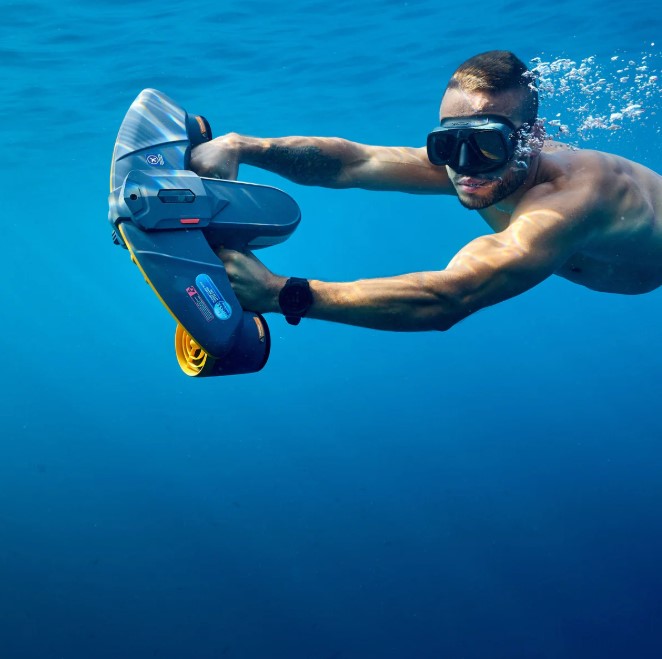
Physical Design, Build Quality, and Ergonomic Configuration
Sublue constructed the navbow-plus with high-impact, corrosion-resistant polymers designed to withstand the harsh physical demands of saltwater and UV exposure. The physical layout feels balanced and robust, with comfortable handles that naturally align your wrists to reduce joint stress during long operations.
One of the design advantages is the capacity for one-handed operation. By utilizing the speed-lock setting on the app, you can set the scooter to run at a consistent speed, allowing you to release one hand. This is incredibly useful for:
- Clearing your ears (equalizing) during rapid descents.
- Adjusting your dive mask or regulator without stopping.
- Holding a separate camera tray, dive light, or writing slate.
- Deploying a surface marker buoy (SMB) during safety stops.
The physical chassis is equipped with a standard D-ring attachment point underneath. This allows you to secure the scooter to your buoyancy compensator device (BCD) using a tow leash. When tow-tethered, the thrust is transferred directly to your BCD harness rather than pulling on your arms, which makes long-distance travel completely effortless.
Buoyancy Dynamics and Ballast Settings
Understanding the buoyancy of your underwater scooter is crucial for safety. The navbow-plus has a dry weight of approximately 4.5 kilograms (9.9 lbs) with the battery installed. Out of the box, with the included float bar attached, the unit has slightly positive buoyancy in saltwater. This is a safety feature: if you accidentally drop the scooter, it will float slowly toward the surface rather than sinking into the deep, where high pressure could crush it or make recovery impossible.
However, if you are diving in freshwater (which is less dense than saltwater) or prefer a completely neutral profile, you can remove the float bar or add lead weights to the accessory tracks. A neutrally buoyant scooter is ideal for technical diving because it stays exactly where you leave it when hovering, preventing it from floating up and tangling your lines or hitting overhead cave walls.
Camera Rig and Accessory Mounting Capability
For underwater videographers and photographers, the sublue navbow underwater scooter serves as a highly stable shooting platform. It features a universal 1/4-20 UNC threaded mount on the top and bottom of the main chassis.
This mount allows you to attach action cameras, high-output video lights, or external monitors. Because the scooter has substantial mass and dual-motor stability, it dampens the shaky, high-frequency hand movements that typically ruin underwater video. Using the scooter, you can capture smooth, sweep-style tracking shots that look highly professional, all while maintaining complete control over your depth and direction.
Deep Dive into Battery Performance, Charging, and Airline Travel Policies
The navbow-plus is powered by a high-capacity lithium-ion battery. Under real-world conditions, battery life is determined entirely by how you manage your speed modes:
- Continuous Turbo Mode: You can expect roughly 15 to 20 minutes of runtime. Turbo mode draws maximum current, heating the battery pack and draining cells rapidly.
- Continuous Free Mode: You can easily achieve 50 to 60 minutes of runtime. This is standard for normal recreational reef dives with mixed throttle use.
To prevent unexpected power loss, the scooter’s OLED display shows a real-world battery percentage indicator. Furthermore, the navbow-plus features a low-battery haptic alarm: when the charge drops below a certain threshold, the handle grips vibrate, giving you a clear warning to head back to your exit point.
The battery system charges in approximately 2 hours when using the included fast-charging dock. This dock monitors thermal levels during charging to prevent degradation of the lithium cells, preserving the long-term lifespan of your battery.
Traveling Internationally with Your Scooter
A common concern for divers is traveling with large lithium batteries. According to International Air Transport Association (IATA) and Federal Aviation Administration (FAA) guidelines, lithium-ion batteries with a capacity between 100Wh and 160Wh require airline approval prior to boarding, and they must be packed in your carry-on luggage. The navbow-plus battery is rated at exactly 158Wh.
Because it is just under the 160Wh maximum limit, you can legally take it on commercial flights. However, you must remove the battery from the scooter body, place it in a protective lipo-safe bag, and present it to security agents at the airport. It is highly recommended to print out the official battery specification sheet from the Sublue Official Manual to show airport staff if they raise any questions.
Analysis of Community Feedback, Reddit Discussions, and Trustpilot Reviews
To provide a thoroughly objective assessment, we analyzed extensive user feedback from independent platforms, including the active Reddit Diving Gear Review thread and verified buyer profiles on Trustpilot.
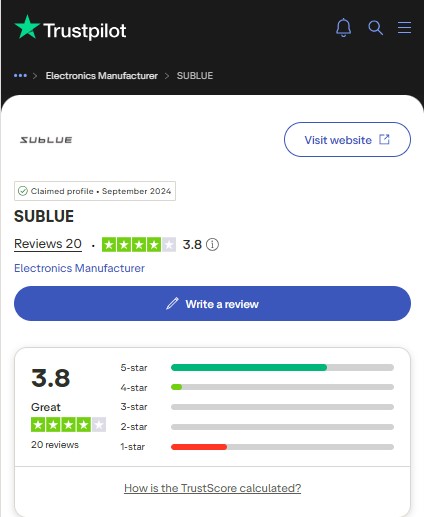
On Trustpilot, Sublue holds a highly positive reputation for product quality and design. Users frequently praise the sheer thrust power and stability of the dual motors, noting that it outperforms cheaper single-motor options. Reviewers also mention the helpfulness of the local distribution centers in resolving questions quickly.
The discussions in the Reddit community offer a deeper look at the long-term performance:
- Thrust Performance: Multiple users confirm that Turbo Mode has enough power to pull a fully loaded diver wearing a thick 7mm wetsuit and heavy steel tanks through noticeable current.
- Build Quality and Maintenance: Redditors emphasize the importance of thorough maintenance. A common point of discussion is that if you neglect to rinse the scooter with fresh water after saltwater dives, salt crystals will crystallize inside the propeller hubs, leading to motor-friction errors. Users who rinse their gear diligently report years of trouble-free operation.
- Real-World Battery Life: Experienced divers on Reddit advise against using Turbo mode continuously, recommending it instead for short sprints. They confirm that moderate, pulsated trigger use yields about 50 to 55 minutes of active reef exploration.
Video Walkthrough and Operational Demonstration
To see the unit in action, watch this detailed video demonstrating the speed transitions, dashboard layout, and real-world underwater maneuverability of the Sublue system:
Direct Comparison: Navbow+ vs. MixPro vs. Competitors
To help you make an informed decision, the table below compares the key specifications of the navbow-plus with other popular choices in the recreational and professional market:
| Feature / Metric | Sublue Navbow+ | Sublue WhiteShark MixPro | Standard Recreational DPVs |
|---|---|---|---|
| Maximum Speed | 2.0 m/s (4.47 mph) | 1.8 m/s (4.02 mph) | 1.2 m/s (2.68 mph) |
| Depth Rating | 40 meters (131 ft) | 40 meters (131 ft) | 15 to 30 meters |
| Battery Capacity | 158 Wh (Airline Compliant) | 122 Wh (Airline Compliant) | Varies (Often Sealed Lead Acid) |
| Smart Sensors | Depth, Temperature, Compass, Haptic Alerts | None (Basic battery LEDs) | None |
| Operation Modes | One-handed or Two-handed | Two-handed only | Two-handed only |
| Weight with Battery | 4.5 kg (9.9 lbs) | 3.55 kg (7.8 lbs) | 7 to 10 kg (Heavy) |
Purchasing Policies: Shipping, Warranty, and Payments
When making a significant investment in dive gear, understanding post-purchase support and buyer protections is critical. Based on Sublue's official policy documentation:
- Shipping Policy: According to the Sublue Shipping Policy, orders are dispatched from regional warehouses to reduce delivery times and import duties. They provide free standard shipping to many major international markets, with tracking details sent to your email immediately upon shipment.
- Warranty Policy: The Sublue Warranty Policy offers solid peace of mind. The main scooter body is covered by a limited warranty against manufacturing defects. The specialized lithium battery and the charger carry their own dedicated warranty periods. Be sure to register your product online within the specified timeframe to activate full coverage.
- Secure Payment Methods: To secure your transaction, the official Sublue Checkout Portal accepts industry-standard payment processors. You can complete your purchase securely using Shop Pay, PayPal, Google Pay, or major international credit cards.
- Direct Customer Support: If you have technical questions or need troubleshooting help, you can contact their team directly via the Sublue Customer Support page, which coordinates with local service centers.
Step-by-Step Maintenance Protocol: Protecting Your Investment
To ensure the brushless motors and seals on your sublue navbow underwater scooter perform flawlessly over hundreds of dives, you must follow a strict post-dive maintenance protocol. Saltwater is highly corrosive, and microscopic sand grains can easily damage high-speed moving parts if left unchecked.
- Freshwater Soak: Never let saltwater dry on your scooter. Immediately after exiting the ocean, submerge the entire unit in a clean tub of fresh water for at least 10 to 15 minutes. This dissolves salt deposits that have built up inside the motor housing.
- Run the Motors in Fresh Water: While the unit is fully submerged in the freshwater rinse tank, run the motors at low speed for 10 seconds. This flushes out any debris or salt crystals trapped between the propeller blades and the motor shafts.
- Dry and Disassemble: Dry the exterior of the scooter with a clean, lint-free towel. Remove the battery pack only after the outer casing is completely dry. Inspect the battery compartment sealing O-rings for dust, sand, or hair.
- O-Ring Maintenance: Clean the sealing O-rings with a soft cloth and apply a very thin layer of high-quality silicone grease. This keeps the rubber pliable and prevents water intrusion at depth. Never use petroleum-based lubricants, as they will degrade the rubber compound.
- Storage Conditions: Store the scooter and the battery in a cool, dry place out of direct sunlight. For long-term storage, charge the lithium battery to approximately 50% to 60% capacity. Storing a lithium battery completely empty or at 100% full capacity over several months degrades the overall battery health.
Final Verdict: Is the Sublue Navbow+ Worth It?
The sublue navbow underwater scooter is not a basic water toy; it is a well-engineered, highly reliable diving tool. The symmetrical thrust from its dual motors, combined with its advanced safety features like depth tracking and haptic vibration alerts, makes it an incredibly useful addition to any diver's gear bag.
Whether you are an underwater photographer looking to capture smooth, stable tracking shots, a freediver wanting to save energy on deep descents, or a recreational diver who wants to comfortably push through tough currents, the navbow-plus delivers excellent, predictable, and safe performance.
Purchase directly from Sublue to ensure full manufacturer warranty coverage and dedicated customer support.
Frequently Asked Questions about the Navbow+
1. Can I use the Navbow+ in extreme cold water?
Yes, the scooter operates perfectly in cold water. However, keep in mind that low water temperatures reduce the chemical efficiency of lithium-ion batteries. You can expect your battery life to drop by 15% to 25% when diving in water temperatures below 10°C (50°F).
2. What happens if the battery runs out while I am deep underwater?
The navbow-plus features a haptic vibration warning in the handles that alerts you when the battery drops below 30%. If the battery drains completely, the unit is slightly positively buoyant with the float bar attached, allowing you to easily swim it back to the surface. It does not drag you down.
3. Can I mount a heavy DSLR camera rig to the scooter?
Yes, the 1/4-20 UNC standard mount can handle heavy underwater camera trays. However, a large camera setup adds significant hydrodynamic drag, which will increase power consumption and reduce your total battery runtime.
4. Is the charger compatible with international electrical outlets?
Yes, the fast-charging power supply accepts input voltages from 100V to 240V AC at 50/60Hz. This means you only need a simple physical plug adapter to charge your scooter batteries anywhere in the world.
5. How long does the battery last on a single charge in real-world conditions?
Under typical, mixed-recreational use (mostly using Free and Sport modes with occasional sprints in Turbo), you can expect between 45 and 60 minutes of operational runtime.
6. Can children safely use the Navbow+?
Because of the intense thrust generated in Sport and Turbo modes, the navbow-plus is designed primarily for adults and experienced divers. For safety, the app allows parents or instructors to lock the scooter in Free Mode to limit its maximum speed.
7. How deep can I safely dive with the Navbow+?
The unit is depth-rated and pressure-tested down to 40 meters (131 feet). This matches the standard limit for recreational scuba diving.
8. Is the battery compartment completely waterproof?
Yes, the battery uses a double-sealed compartment design with heavy-duty silicone O-rings. As long as you keep these O-rings clean and lightly greased, the compartment remains completely dry at maximum depth.
9. Where can I find replacement parts or user manuals?
You can download detailed instruction guides, safety documents, and maintenance tips directly from the Sublue Download Center.
10. Can I use the scooter in swimming pools?
Absolutely. However, make sure to rinse it with fresh water afterward to remove chlorine residue, which can cause premature wear on the rubber seals and outer plastic shell over time.

0 Comments