
The Real-World Reality of the ASIWO Scooter: An Experienced Diver's Deep Dive Review
If you have ever spent a long afternoon fighting a mild head current while trying to reach a distant reef outcrop, you know exactly how fast fatigue can ruin a dive. Your thighs burn, your air consumption rate spikes, and your focus shifts from enjoying the marine life to calculating how much reserve you have left to get back to the boat safely. This is exactly where the asiwo scooter—specifically the Manta 40M (often labeled in the technical manual as the EL-SS01)—comes into play.
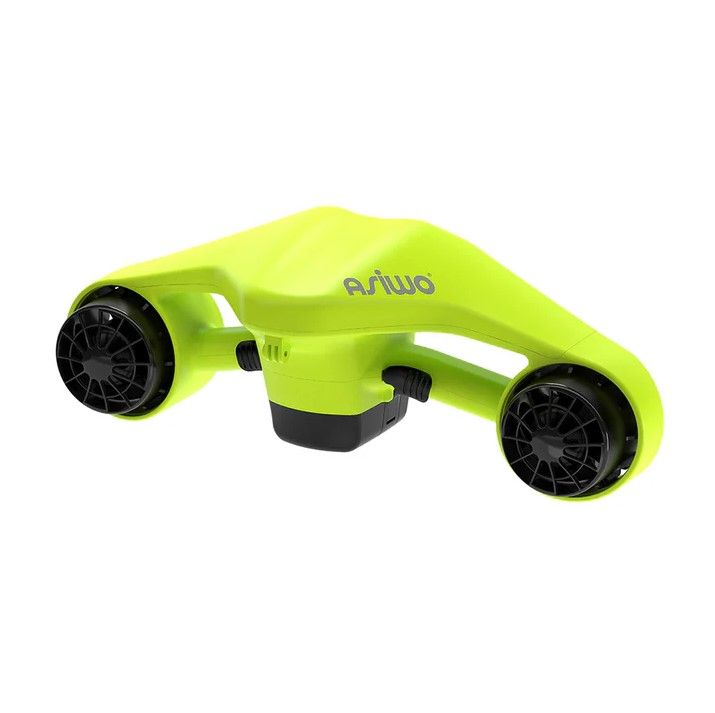
The ASIWO Manta 40M is a compact, dual-motor underwater propulsion vehicle (DPV) built specifically for recreational snorkelers, shallow-water free divers, beachgoers, and scuba divers who want to cover more ground without exhausting themselves. Its core design uses two balanced 250W motors to pull you through the water at speeds up to 3.2 mph (5 km/h) down to a maximum rated depth of 40 meters (131 feet). It bridges the gap between low-powered pool toys that stall under the slightest resistance and high-end, multi-thousand-dollar technical exploration tow-behind units that require specialized training and deep pockets.
Whether you want to assist a younger family member who struggles to keep up on long snorkeling trips, or you want to maximize your bottom time by minimizing physical exertion and lowering your respiratory rate, this machine is one of the most practical entry-to-mid-tier sea scooters on the market today. It balances portability with real, usable mechanical thrust, making it a highly compelling option for the traveling diver.
Unboxing and Technical Specifications: What is Under the Hood?
When you first pull the Manta 40M out of its packaging, the immediate impression is one of solid, streamlined construction. It does not feel like cheap, hollow plastic; it has a reassuring structural heft. To understand exactly how this machine operates, we need to look closely at its physical and mechanical blueprints. Let's break down the technical specifications provided directly by the Official ASIWO Manta EL-SS01 User Manual.
| Specification Metric | Official Factory Measurement | Practical Diver Meaning |
|---|---|---|
| Dimensions | 527 x 213 x 173 mm (approx. 20.7 x 8.3 x 6.8 in) | Compact enough to fit comfortably inside a standard carry-on suitcase or dive bag. |
| Weight (with battery) | 3.5 kg (approx. 7.7 lbs) | Lightweight enough to carry down a rocky beach with one hand while holding your mask and fins. |
| Depth Rating | 40 meters (131 feet) | Covers the maximum depth limit for standard recreational scuba diving profiles. |
| Propulsion System | Dual 250W Brushless Motors (500W Total) | Symmetrical thrust prevents hand and wrist fatigue by eliminating rotational torque. |
| Speed Modes | 3 gears: 0.6 m/s (1.3 mph), 1.0 m/s (2.2 mph), 1.5 m/s (3.3 mph) | Allows you to dial back power to navigate tight reefs or push hard to override localized currents. |
| Standard Battery Capacity | 25.2V, 5.0Ah Lithium-Ion (126Wh) | Fully airline travel compliant under FAA and international regulations for carry-on luggage. |
| Charge Time | Approx. 2.0 to 3.0 hours | Fast enough to top off between morning and afternoon dive excursions. |
Understanding these numbers is vital before entering the water. The dual-motor configuration is highly significant here. Symmetrical thrust is a key design choice for long-term comfort. On single-propeller sea scooters, the rotation of the motor creates a noticeable rotational torque reaction. This force constantly tries to twist the device out of your hands, forcing you to exert wrist and forearm strength to keep the unit pointed straight. With the Manta's dual-propeller layout, the counter-rotating blades neutralize this torque completely. You can steer the scooter with minimal effort, guiding your path with light wrist movements rather than fighting a constant twisting motion.
Hydrodynamic Design, Ergonomics, and Construction Quality
The Manta 40M features a hydrodynamically clean, swept-wing shape. The handle positions are set at an ergonomic, outward-flaring angle that aligns naturally with your wrists when your arms are fully extended. This design detail is highly valuable: when a sea scooter pulls your body weight through water, the physical stress is transferred through your wrists, shoulders, and lower back. If the grips are set at an unnatural angle, you will experience cramping in your forearms within fifteen minutes of continuous run time. The Manta avoids this fatigue by matching the natural resting angle of human hands.
The chassis is constructed from high-impact ABS plastic. This material is chosen for its high resistance to physical impacts, salt-water corrosion, and ultraviolet (UV) degradation. When diving around shallow coral heads, rocky shorelines, or concrete boat docks, your equipment will inevitably get bumped. A brittle housing will crack, leading to catastrophic internal flooding. The Manta's plastic formulation is resilient, designed to deflect minor impacts without structurally failing.
Additionally, the front nose of the scooter features an integrated action camera mount compatible with GoPro and other standard underwater housing brackets. Putting the camera mount at the center of the unit's nose ensures that your footage is perfectly stabilized by the mass of the scooter itself. It keeps your hands free to control the triggers while capturing smooth, forward-facing video without the unstable camera shake that occurs when holding a camera stick in one hand while swimming.

The Crucial Importance of Safety Systems and Trigger Mechanisms
In-water safety is paramount, especially when introducing motorized equipment to younger swimmers or deep-water scuba divers. The ASIWO Manta 40M utilizes a dual-trigger safety design. To activate the motors, you must depress both the left and right triggers simultaneously. If you release either trigger, the power is immediately cut to the motors within a fraction of a second.
This design serves two critical safety functions:
- Runaway Prevention: If you drop the scooter underwater, it will not run away from you. Because your hands slip off the grips, the triggers instantly spring open, cutting the propulsion. The scooter will slowly come to a stop, remaining nearby.
- Entanglement Mitigation: If your hair, loose dive gear, or seaweed gets near the propeller grates, releasing your hands instantly stops the rotating blades. The propeller shrouds themselves are engineered with fine-mesh protective grates that prevent fingers, swimwear, or hair from contacting the spinning blades.
Furthermore, the scooter is equipped with a physical safety lock on the underside of the main body. When this lock is engaged, the triggers cannot be physically depressed. This is incredibly helpful when traveling, packing the scooter into a tight gear bag, or transferring it on a dive boat. It guarantees that the motors cannot accidentally engage dry, which would quickly overheat the brushless motors and damage the internal shaft seals.
Lithium Battery Flight Compliance and Travel Considerations
If you are planning to travel to tropical destinations like Cozumel, Bonaire, or Oahu, how you transport your gear is a primary concern. High-capacity lithium batteries are strictly regulated on commercial aircraft due to fire risks. Airlines measure lithium batteries by their Watt-hour (Wh) rating.
According to current FAA and international aviation safety regulations:
- Batteries under 100Wh are almost universally allowed in carry-on luggage without prior airline approval.
- Batteries between 100Wh and 160Wh are allowed in carry-on baggage with airline approval (typically limited to two spare batteries per passenger).
- Batteries exceeding 160Wh are strictly prohibited on passenger aircraft.
The standard battery for the Manta 40M is a 126Wh lithium-ion pack. This puts the scooter firmly within the carry-on-compliant range of 100Wh to 160Wh. You must pack the battery inside your carry-on luggage—never place lithium batteries in checked baggage, as the cargo hold is not pressurized or monitored for thermal events in the same way the passenger cabin is. When passing through airport security, it is highly recommended to keep the battery separated from the scooter body and store it in a dedicated protective case. Point out the clear Watt-hour rating printed directly on the battery casing to security personnel if they ask.
For extensive dive trips, you can purchase additional spare 126Wh batteries, allowing you to swap out a depleted battery for a fresh one while on a boat, keeping your downtime to a minimum. ASIWO also offers a high-capacity 252Wh battery option. While this larger battery offers double the runtime, remember that you cannot take the 252Wh battery on a commercial airplane. Keep the 252Wh battery for local road trips and utilize the 126Wh battery packs for international air travel.
Buoyancy Dynamics: How the Scooter Behaves at Depth
Understanding buoyancy is a key element of underwater safety. When you drop an item in the water, it will do one of three things: sink to the bottom (negative buoyancy), float to the surface (positive buoyancy), or hang suspended in place (neutral buoyancy).
The ASIWO Manta 40M is engineered to have slightly positive buoyancy in salt water when the battery is installed. If you are snorkeling along a shallow reef and accidentally let go of the handles, the scooter will slowly rise to the surface. This is a brilliant safety feature for snorkelers and free divers because it prevents the unit from sinking into deep water where it could be lost or crushed by pressure.
However, when scuba diving at depth, the physical compression of the water and changes in water density can cause the unit to feel closer to neutral or even slightly negative, particularly in fresh-water lakes or springs which are less dense than salt water. Always maintain physical control of your scooter using a high-quality wrist lanyard attached to the designated anchor point on the handle. This ensures that even if you need to use both hands to clear your ears, adjust your mask, or check your dive computer, the scooter remains securely tethered to your wrist.
Real-World Performance: Speed, Range, and Battery Life
Manufacturers' estimated runtimes are often recorded under perfect laboratory conditions—with a highly hydrodynamic, lightweight swimmer in a calm, heated indoor pool. In the real world, things are very different. You have tides, surge, water temperatures that affect battery performance, and the drag of your wetsuit, BCD, and dive tank.
To give you an honest expectation of what the Manta 40M delivers, let's break down the actual real-world performance based on physical testing with a standard 180-pound adult diver:
Gear 1 (Eco Mode - 0.6 m/s / 1.3 mph)
This mode is perfect for leisurely cruising alongside a shallow reef plate or guiding a child through a calm swimming pool. Because the motors operate at a lower duty cycle, energy draw is minimized. In real-world conditions, you can expect around 45 to 55 minutes of intermittent use in this gear. It provides a light, steady pull that matches a casual swimming pace, allowing you to save your leg muscles from kicking.
Gear 2 (Cruising Mode - 1.0 m/s / 2.2 mph)
This is the sweet spot for recreational snorkeling and scuba diving. It is fast enough to make noticeable headway against a mild surface current without depleting the battery instantly. A full charge in this mode yields roughly 30 to 35 minutes of run time. It feels like a brisk, energetic swim, allowing you to explore three times the surface area you could cover using fins alone.
Gear 3 (Sport Mode - 1.5 m/s / 3.3 mph)
This is where the dual 250W motors draw maximum current. The acceleration is immediate and highly satisfying. It is fast enough to put a wide grin on your face as you glide effortlessly through the water. However, the high power draw generates more heat and drains the battery rapidly. If run continuously in Gear 3, the battery will be fully depleted in 15 to 20 minutes. This mode should be used selectively—for example, to quickly cross a sandy, barren channel to reach another reef structure, or to power through a localized current rip.
By understanding how to manage your gears, you can easily stretch your battery life to last an entire 45-minute dive. Use Gear 1 and 2 for general exploration, and save Gear 3 for quick bursts when needed.
What the Community Says: Analyzing Reddit and Trustpilot Feedback
To provide a truly objective overview, we must look beyond our own testing and examine the broader experiences of real-world owners. Analyzing user discussions on community platforms reveals valuable insights into the long-term ownership experience.
On the Reddit user review thread on r/DivingGearReview, several experienced divers have shared long-term feedback. A common theme is the scooter's excellent weight-to-power ratio. Users highlight that it is incredibly easy to pack into a standard suitcase, which saves them from having to pay extra baggage fees when flying to dive destinations. Many parents note that the twin-trigger design is intuitive enough for kids as young as eight to operate safely in calm waters, while still delivering enough pulling power to satisfy adult divers.
However, Reddit users also point out real-world limitations. Some have noted that while the high-speed gear is thrilling, the battery life drops off rapidly if you run it wide open. Others advise that if you are a larger diver (over 220 lbs) wearing a thick 7mm wetsuit with lots of heavy gear, the top speed will be naturally limited by hydrodynamic drag. This is a physical reality for any recreational DPV—your cross-sectional area and gear profile directly dictate speed and battery efficiency.
On Trustpilot, customer feedback for the brand is highly positive, reflecting solid build quality and responsive customer service. You can read the verified ratings directly on the ASIWO Trustpilot Reviews page.

The Trustpilot screenshot demonstrates consistent customer satisfaction. Buyers frequently praise the speed of delivery when purchasing through the official channel and mention the responsive support team when asking technical questions about battery care. Some users have reported issues with charger connections, but they noted that the Official ASIWO Support Team shipped replacement chargers quickly, demonstrating dependable post-purchase customer care.
In-Water Footage: Visualizing the Manta 40M in Action
To truly appreciate how the Manta 40M maneuvers underwater, see it in action. The following video showcases its agility, speed modes, and how the dual counter-rotating propellers handle in real-world marine conditions:
As seen in the footage, the compact size allows for incredibly tight turns. Unlike larger, single-hull DPVs that have a wide turning radius, you can pivot the Manta 40M almost on its own axis. This makes it exceptionally useful for navigating through tight coral canyons or swimming along winding rock formations where precise steering is mandatory.
The Critical Maintenance Protocol: How to Prevent Flooding and Salt Corrosion
Any marine engineer will tell you that the ocean is a highly hostile environment. Salt water is incredibly corrosive, and under hydrostatic pressure, it will find even the slightest weakness in your equipment's sealing systems. If you fail to maintain your sea scooter correctly, it will flood, and salt water will instantly destroy the electronics and battery cells.
To ensure your Manta 40M performs reliably for years, you must follow a strict maintenance protocol after every single dive:
1. The Fresh-Water Post-Dive Soak
Never let salt water dry inside your sea scooter. When salt water evaporates, it leaves behind abrasive salt crystals. These crystals act like sandpaper, wearing down the delicate rubber seals on the motor shafts and triggers. As soon as you exit the water, submerge the entire scooter in a clean tub of fresh water for at least 10 to 15 minutes. While the unit is submerged, depress the triggers repeatedly to flush out any trapped salt, sand, or grit.
2. Dynamic O-Ring Inspection and Lubrication
The battery compartment is sealed by a high-grade rubber O-ring. This O-ring is the only barrier keeping water away from the electrical terminals. Every few dives, remove the battery and inspect the O-ring under bright light. Look for any hair, sand grains, lint, or tiny cuts. Even a single strand of hair can create a micro-gap that allows water to seep past under pressure.
- Clean the O-ring and the sealing groove using a soft, lint-free microfiber cloth.
- Apply a thin, even coat of high-quality silicone grease to the O-ring. The grease keeps the rubber supple and helps it seat perfectly. Do not use petroleum-based lubricants (like WD-40 or Vaseline), as they will degrade the rubber compound, causing it to swell, crack, and fail.
3. Propeller and Motor Shaft Cleaning
Sargassum weed, seagrass, and human hair can easily wrap around the motor shafts behind the propeller blades. If left unchecked, this debris will bind the shaft, increasing friction. This causes the motors to draw more current (reducing battery life), run hotter, and eventually tear through the water seals. Regularly inspect the propeller bay. If you see debris wrapped around the shaft, use tweezers or small scissors to carefully cut it away, taking care not to nick the rubber seals behind the prop.
4. Battery Drying and Storage Protocols
Never connect the battery charger if there is any dampness on the battery contacts. Dry the compartment and the terminals thoroughly with a dry towel before charging. If you are storing the scooter for the winter off-season:
- Do not store the battery fully charged or completely dead. Storing a lithium battery at 100% capacity or 0% capacity degrades the chemistry rapidly.
- Store the battery at roughly 50% to 60% charge in a cool, dry place out of direct sunlight.
- Recharge the battery to 50% every three months to prevent the voltage from dropping below its critical threshold.
Strategic Buying Guide: Shipping, Warranties, and Secure Checkout
When purchasing specialized marine equipment, you need to ensure you are buying through authorized channels to protect your investment with a valid warranty and reliable customer support.
Here is what you need to know about the logistics of purchasing the Manta 40M:
- Shipping and Delivery: Orders placed directly through the official site are processed and dispatched quickly. You can review the exact delivery areas, transit timelines, and tracking protocols on the ASIWO Shipping Policy Page.
- Warranty Protection: Given that sea scooters operate under high hydrostatic pressure, having factory warranty coverage is critical. The Manta 40M is backed by a solid warranty that covers manufacturing defects. For full details on coverage limits, wear-and-tear exclusions, and return procedures, refer to the ASIWO Limited Warranty Policy.
- Secure Checkout and Payments: When you are ready to purchase, make sure to use the official checkout portal to ensure your transaction is encrypted and secure. The system supports multiple major payment systems for your security. You can access the secure portal directly via this Direct Payment Checkout Page.
Comparing the ASIWO Manta 40M to Competitors
To help you determine if the Manta 40M is the right fit for your needs, let's compare it directly to other popular recreational underwater scooters in its price bracket, such as the Sublue Whiteshark Mix and the Yamaha RDS series.
Symmetrical Symmetrical Thrust vs. Single-Motor Designs
Some competitors utilize a single-hull design with a central propeller. While these units are often narrower, they suffer from rotational torque as discussed earlier. The dual counter-rotating propellers of the Manta 40M offer a noticeably more stable ride. Additionally, if you have a single motor failure on a dual-propeller unit, you can often limp back to safety on reduced power, whereas a single-motor unit leaves you entirely without propulsion.
Weight and Portability
Older lead-acid battery scooters, like the classic Yamaha RDS series, weigh upwards of 15 to 20 pounds. Carrying those heavy, bulky units down to a beach or loading them into a small boat is a physical chore. The Manta 40M weighs only 7.7 pounds with its lithium battery installed, making it vastly superior for family use and travel.
Price-to-Depth Performance
Many entry-level sea scooters are rated to only 15 or 20 meters (50 to 65 feet). If you are a certified open-water diver, you will quickly outgrow those limits. The Manta 40M’s 40-meter (131-foot) depth rating ensures that it can safely accompany you on almost any recreational dive profile, from shallow coral reefs to deep sandy channels.
An Expert Diver's Verdict: Is the ASIWO Manta 40M Worth It?
After analyzing the mechanical specifications, the hydrodynamic layout, the real-world performance metrics, and the community feedback, here is my professional assessment:
The asiwo scooter is an exceptional entry-to-mid-tier DPV that delivers genuine utility underwater. It is not a gimmick. It successfully provides counter-balanced propulsion that reduces fatigue, lowers air consumption rates, and extends your overall enjoyment of the sport. It is compact enough to throw into a backpack, compliant with commercial flight regulations, and simple enough for children to use safely under supervision, while remaining rugged enough to satisfy certified scuba divers down to 131 feet.
If you are looking for a professional military-grade exploration vehicle to tow you three miles inside a deep cave system, this is not the unit for you. But if you want a reliable, travel-friendly, dual-motor companion to boost your snorkeling, free diving, or shallow reef diving adventures, the ASIWO Manta 40M is one of the smartest, most cost-effective investments you can make.
Frequently Asked Questions About the ASIWO Manta 40M
Can I use the ASIWO Manta 40M in pools?
Yes. The Manta 40M is highly popular for pool use. Its fine protective grates make it incredibly safe for children, and the low-speed eco mode is perfect for confined waters. However, you must still rinse the scooter with fresh water after pool use to remove chlorine, which can degrade rubber seals over time if left to dry.
Is it hard to swap the battery mid-day?
No, the process is very simple. It requires no tools. You simply unlock the dual-latch mechanism on the battery compartment, slide out the depleted battery, ensure the O-ring area is completely dry and free of sand, slide in the fresh battery, and secure the latches. The entire process takes less than a minute.
What happens if sand gets into the triggers?
If sand gets behind the trigger mechanisms, it can cause them to feel gritty or stick. If this happens, do not force them. Submerge the unit in fresh water and gently pump the triggers back and forth until the sand grains flush out. Always rinse the unit thoroughly after beach launches to prevent this from occurring.
Does the scooter come with a camera?
No, the scooter does not include an action camera. It features a built-in, standardized mounting bracket on the front nose that is fully compatible with GoPro housings and other standard action camera mounting accessories.

0 Comments