
BARE Reactive 5mm Wetsuit Hands-On Review: Thermal Performance, Fit, and Field Testing
The BARE Reactive 5mm wetsuit is a cold-to-temperate water thermal suit built for recreational and technical divers who need maximum warmth without sacrificing mobility. Designed specifically for water temperatures ranging from 60°F to 72°F (15°C to 22°C), its main strength lies in its mineral-infused lining that reflects waste body heat back into your muscular structure. If you're tired of shivering during your second dive of the day or struggling against stiff neoprene while trying to reach your valve handles, this suit is one of the most capable choices on the market today.
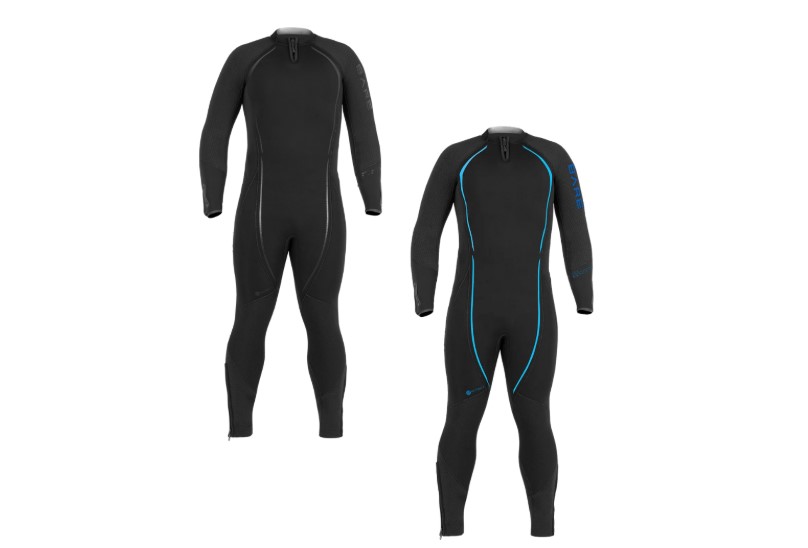
When you spend hours underwater, thermal protection isn't just about comfort—it's directly linked to your gas consumption, fatigue levels, and dive safety. The 5mm suit category sits in a critical sweet spot. It needs to be thick enough to prevent thermal loss in cooler thermoclines, yet supple enough that donning and doffing don't feel like a wrestling match on a crowded boat deck. In this deep-dive review, we'll examine every seam, seal, and structural component of the Reactive 5mm, drawing on field testing, engineering specs, and community feedback to see if it delivers on its promises.
---Thermal Insulation Mechanics: Celliant Infrared Technology Explained
Most exposure suits rely solely on trapped, stagnant water and closed-cell neoprene bubbles to impede heat transfer. The Reactive 5mm takes a fundamentally different approach by combining traditional foam insulation with smart fabric technology. The interior lining is woven with 13 thermo-reactive minerals embedded directly into the fabric fibers. These minerals absorb thermal energy emitted by your body, convert it into far-infrared radiation (FIR), and reflect it back into your muscle tissue.
Why does far-infrared energy matter underwater? Far-infrared exposure promotes microvascular circulation. When your capillary beds stay dilated rather than constricting prematurely due to cold exposure, oxygenated blood continues to flow efficiently through your extremities. During extended bottom times at 70 feet, this thermal bounce-back reduces the sensation of cold creep—that slow, insidious chill that usually begins in your lower back and thighs after 30 minutes in temperate waters.
Key Thermal Science Takeaways
- Far-Infrared Reflection: Converts body heat into FIR radiation, directing thermal energy deeper into muscle tissue.
- Vasodilatory Support: Encourages steady blood flow to reduce extremity stiffness and muscle cramping during long fins.
- Reduced Core Cooling: Delays the onset of shivering, helping maintain steady respiration rates and lowering total gas consumption.
Based on the available technical documentation from the manufacturer, the Celliant fabric isn't a surface coating that washes out over time. Because the mineral compound is integrated directly into the polymer resin during thread extrusion, the thermal reflection capabilities last for the lifetime of the suit. This is a crucial distinction compared to chemically treated thermal linings that lose their effectiveness after a season of salt water immersion and washing.
---Material Composition and Neoprene Physics at Depth
Neoprene is inherently vulnerable to pressure. As you descend, ambient water pressure increases by 1 atmosphere every 33 feet (10 meters). At a depth of 66 feet (3 atmospheres absolute), the microscopic nitrogen gas bubbles enclosed within standard neoprene compress significantly, causing a loss in suit thickness, insulation value, and positive buoyancy.
BARE mitigates this depth compression by using high-density, full-stretch Elastek limestone-based neoprene. Unlike petroleum-derived neoprene, limestone neoprene features a higher closed-cell content (often exceeding 95%). These smaller, more uniform nitrogen pockets resist physical compression more effectively under hydrostatic load.
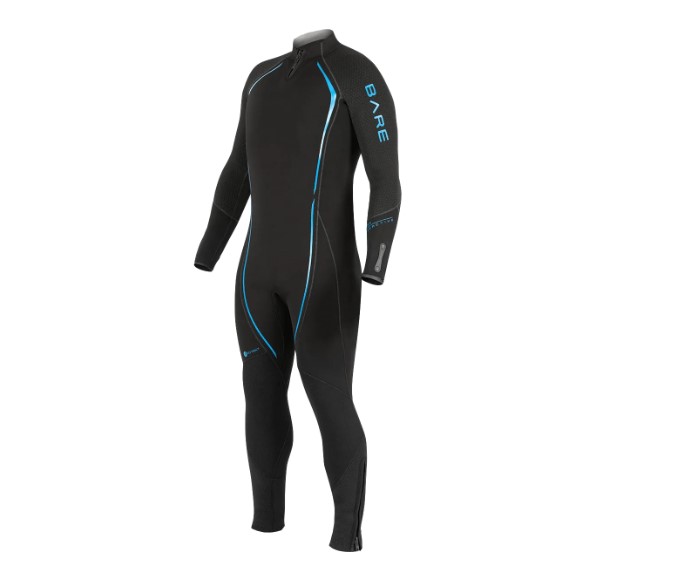
The practical result at depth is two-fold. First, you experience less of a buoyancy shift as you cross the thermocline into deeper water. You won't need to add as many air pulses to your BCD to offset suit collapse. Second, the suit maintains more of its nominal 5mm thickness at 80 feet than standard petroleum-based suits, keeping you warm when water temperatures drop at depth.
---Anatomical Patterning and Ergonomic Articulation
A wetsuit can feature the most advanced thermal technology available, but if it doesn't fit your body structure properly, cold water will constantly flush through the interior, rendering the insulation useless. BARE uses an advanced pattern design process called "Ultrawide Stretch," shaping suit panels to reflect the natural resting posture of a diver in the water.
Pre-Curved Limbs and Joint Flex Points
Notice the pre-bent orientation of the elbows and knees. When you swim underwater, your arms are generally folded across your chest or holding a camera rig, while your legs maintain a slight bend for efficient frog-kicking. Flat-patterned suits force your muscles to work constantly against stiff neoprene to keep joints bent. The Reactive 5mm comes pre-shaped into these natural aquatic angles, minimizing muscular strain across your shoulders, lower back, and calf muscles.
Underarm Gussets and Shoulder Mobility
The underarm paneling eliminates central seams under the armpits. This detail prevents chafing during repetitive surface swims and makes it substantially easier to execute valve drills or reach behind your neck to turn on a cylinder valve. Diver discussions on Reddit's r/scuba community highlight how the stretchiness of the upper torso pattern allows divers with broader shoulders to move freely without pulling the collar down or breaking the neck seal.
---Water Intrusion Prevention: Seam Sealing and Wrist/Ankle Gaskets
Water movement inside a suit is the main cause of thermal loss. Cold water enters, absorbs your heat, and exits, forcing your body to continuously warm up a fresh layer of incoming water. The Reactive 5mm uses a multi-tiered sealing system designed to prevent this flush effect entirely.
| Sealing Feature | Construction Method | Practical Advantage Under Water |
|---|---|---|
| Main Seams | Double-blind stitched & glued | No needle holes pass completely through the neoprene, preventing seam-line leakage. |
| Internal Liquid Tape | Seamless polymer application | Locks out water infiltration across high-stress junctions while expanding with the fabric. |
| Wrist & Ankle Seals | Internal Glideskin gaskets | Forms a tight, smooth seal against the skin that slides easily over dive boots and gloves. |
| Neck Collar | Adjustable micro-teeth hook & loop | Allows custom tension adjustment without snagging or ruining surrounding suit fabric. |
The interior wrist and ankle gaskets are made of smooth Glideskin. When donned properly, these gaskets fold flush against your skin. When paired with high-cut booties or semi-dry gloves, they create an effective barrier that virtually eliminates water exchange through your extremities.
---Zipper System, Back Flap, and Ease of Donning
Putting on a tight 5mm wetsuit can leave you flushed and tired before you even enter the water. BARE tackles this by pairing extra-long zipper tracks with high-stretch arm and leg panels.
Back Zipper Construction and Insulation Guard
The rear zipper features a heavy-duty brass slider that glides smoothly along low-profile plastic teeth. To prevent cold water from entering through the zipper teeth, an internal neoprene sealing flap runs behind the zipper track. This spine-pad flap performs two jobs: it acts as a water deflector, redirecting any tiny drips into the suit's drainage paths, and acts as a cushion that prevents the zipper track from pressing directly into your spine under the weight of a heavy tank and backplate.
An extra-long zipper leash with a reinforced thumb loop allows you to pull up your own zipper without needing a buddy to assist. The collar closure uses a micro-hook-and-loop design that fastens securely without catching on the suit's outer fabric and causing pilling.
---In-Depth Video Review and Mechanical Walkthrough
For a detailed visual look at the suit's interior lining, stitch density, and overall flexibility, watch the comprehensive video walkthrough below:
Durability, Abrasion Resistance, and Knee Protection
A high-performance wetsuit is a real investment, and it needs to withstand tough marine environments. Rocks, wreck edges, boat ladders, and heavy gear harnesses can quickly wear down lower-grade neoprene.
3D Armor Flex Knee Pads
The knee area takes more abuse than almost any other part of a suit. BARE uses 3D Armor Flex knee pads that provide high abrasion resistance without restricting leg movement. Rather than applying a stiff, rubberized slab over the knee, these flexible pads are bonded directly to the outer fabric. They flex easily during finning while protecting against sharp rocks, rusted metal, or rough boat decks.
Sizing Mechanics: How to Select the Ideal Fit
Getting the right size in the Reactive 5mm is critical. Because of the suit's high elasticity, a suit that feels slightly snug on land will feel remarkably natural once submerged. However, if you buy a size too large, excess water will gather in the lower back and behind the knees, undermining the Celliant thermal lining.
Understanding the BARE Sizing Chart
BARE offers one of the most comprehensive sizing ladders in the diving industry, featuring standard, tall, short, and intermediate sizes (like Medium-Large). When taking measurements, prioritize these key dimensions in order:
- Chest Circumference: Measured across the fullest part of your chest with lungs half-full. This ensures the chest panel sits flush against your heart and lungs without restricting breathing.
- Torso Length: Measured from the base of your neck (cervical vertebra) down to your crotch line. A torso that is too short will pull down on your neck; a torso that is too long will bunch at the waist and trap excess water.
- Waist and Hips: Measured around your natural belt line and wide hip points to ensure the suit forms a snug seal around your lower core.
If your measurements fall between two sizes, the extra stretch of the Elastek neoprene allows most divers to comfortably choose the smaller size for a snug, stream-lined fit. Refer to the manufacturer's user guidelines and manual documentation via the Official Equipment Documentation for proper donning procedures and suit care guidelines.
---Field Comparisons: BARE Reactive 5mm vs. Standard 5mm & 7mm Suits
To help you decide if a 5mm suit with active thermal reflection is right for your target dive destinations, let's compare the Reactive 5mm against standard 5mm wetsuits and conventional 7mm cold-water suits.
| Performance Variable | Standard 5mm Wetsuit | BARE Reactive 5mm | Standard 7mm Wetsuit |
|---|---|---|---|
| Effective Temp Range | 66°F - 75°F (19°C - 24°C) | 58°F - 72°F (14°C - 22°C) | 50°F - 62°F (10°C - 16°C) |
| Flexibility & Agility | Moderate | High (Elastek Outer Fabric) | Low to Moderate (Stiff) |
| Ballast / Weight Required | Standard Lead Weight | Standard Lead Weight | Requires 4-8 lbs Additional Lead |
| Donning Difficulty | Moderate | Easy (Glideskin + High Stretch) | Challenging |
As shown above, the Reactive 5mm provides thermal insulation comparable to some entry-level 7mm suits without adding the extra weight and buoyancy issues. This makes it an ideal option for divers who get cold easily but hate the bulk and restriction of a thick 7mm suit.
---Authorized Retailer Verification, Shipping, & Guarantee Details
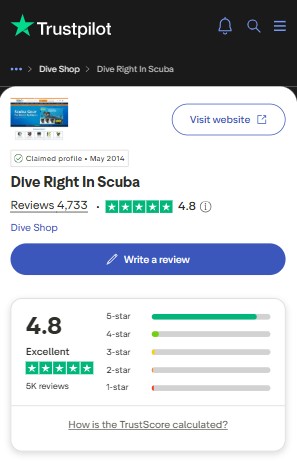
Purchasing dive gear online requires confidence in the seller's authenticity, shipping speeds, and return handling. Dive Right In Scuba is an authorized dealer for BARE exposure suits, ensuring you receive genuine products covered by the full manufacturer warranty.
Retailer Performance & Buyer Trust
Dive Right In Scuba holds an outstanding reputation across the diving community, backed by verified user reviews on Trustpilot. They offer flexible purchasing options, straightforward exchanges, and reliable customer service support.
Store Policies and Order Details:
- Shipping Logistics: Fast regional order processing with free domestic shipping on qualifying orders. Details are outlined on their Shipping Policy Page.
- Warranty Coverage: BARE backs structural seams and manufacturing defects. You can review full terms on the Warranty Coverage Policy.
- Price Matching & Financing: Flexible payment choices and price matching guarantees are detailed on the Payment Plan and Price Match Policy.
- Direct Support: Need help picking the right size or suit? Contact trained staff via the Customer Support Portal.
Suit Care, Maintenance, and Storage Protocol
To keep your Reactive 5mm performing at its best for years to come, follow a proper maintenance routine. Salt crystals, chlorine, and UV rays can break down neoprene and compromise internal glue lines if left unchecked.
Post-Dive Rinsing and Washing
Soak your suit in fresh, lukewarm water for at least 20–30 minutes after every dive day to dissolve salt deposits trapped within the zipper teeth and Celliant lining. For deeper cleaning, use a specialized suit wash formulated to eliminate bacteria without degrading the neoprene bond.
Drying and Storage Requirements
Drying your suit properly prevents mildew growth and preserves its elasticity:
- Drape the suit in half over a broad, smooth hanger bar rather than hanging it by the neck. Narrow hangers put heavy stress on the shoulder seams when the neoprene is wet.
- Always dry the suit in a shaded, well-ventilated area away from direct sunlight. UV exposure damages the outer fabric and hardens internal neoprene cells.
- Turn the suit inside out first so the interior thermal lining dries completely before you dry the outer surface.
- Store the suit flat or hung loosely in a climate-controlled closet. Avoid folding or placing heavy gear on top of it for long periods to prevent permanent creases in the neoprene.
Frequently Asked Questions (FAQ)
1. Is the BARE Reactive 5mm suitable for 55°F (13°C) water?
For most divers, 55°F is pushing the lower limits of a 5mm suit. While the Celliant lining significantly improves thermal retention, water below 60°F usually calls for a hood, vest, or stepping up to a 7mm suit or drysuit—especially on multi-dive days. However, if you tolerate cold well and pair this suit with a hooded vest, it can handle short dives in the upper 50s.
2. How does Celliant technology compare to fleece-lined wetsuits?
Fleece linings keep you warm by trapping a thick layer of water against your skin. While comfortable, fleece adds bulk and stays wet longer on surface intervals. Celliant works on an atomic level by reflecting far-infrared energy back into your body tissues. This allows the Reactive 5mm to provide excellent warmth without adding extra thickness or taking hours to dry.
3. How should I care for the internal Glideskin wrist and ankle seals?
Glideskin gaskets form a fantastic seal against water, but they require a little care when putting the suit on. Avoid pulling on the seals with long fingernails. Sliding your hands and feet through plastic sandwich bags can help your limbs glide through the gaskets easily without stretching or tearing the smooth skin material.
4. Does the suit run true to size according to the sizing chart?
Yes, BARE sizing charts are very reliable. The high-stretch Elastek fabric makes the suit somewhat forgiving in the shoulders and legs. If your measurements fall right between two sizes, choose the smaller size to ensure a snug seal and prevent water from flushing through the suit.
---Final Verdict: Is the BARE Reactive 5mm Worth It?
The BARE Reactive 5mm wetsuit stands out in the 5mm market by combining advanced infrared thermal tech with outstanding stretch and durability. It eliminates the traditional trade-off between flexible movement and solid warmth, making it a top choice for temperate dives across Florida springs, Southern California kelp beds, or winter waters in the Caribbean.
Its double-blind stitched seams, internal liquid taping, and smooth Glideskin seals work together to virtually eliminate water flushing. Combined with BARE's comprehensive sizing options and solid warranty coverage, this suit is a smart, long-term investment for any diver looking to stay warm and comfortable underwater.

0 Comments