
Atomic Scuba Regulator: Comprehensive Hands-On Review of the Atomic Aquatics T3 Titanium
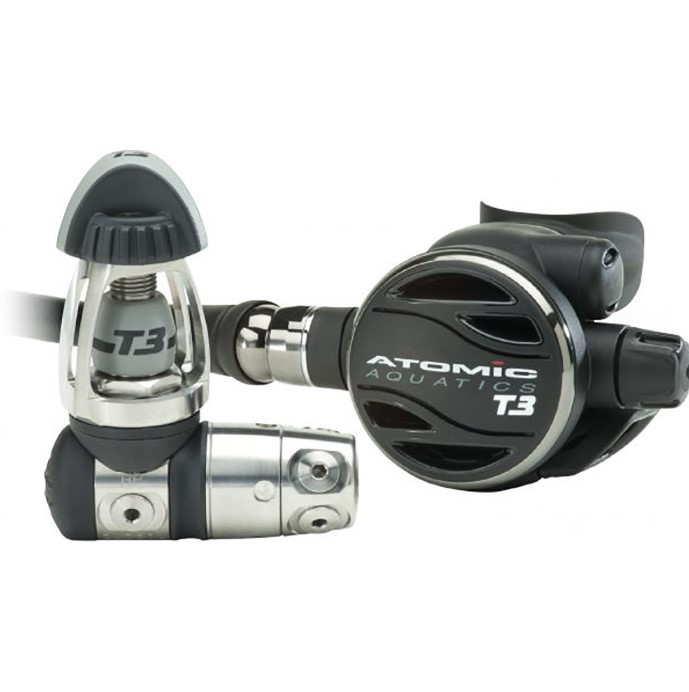
If you're searching for the ultimate lightweight dive rig, the atomic scuba regulator T3 stands out as a top-tier titanium breathing system designed specifically for traveling divers and demanding recreational enthusiasts. Machined almost entirely from exotic titanium alloys, this regulator eliminates saltwater corrosion while cutting weight nearly in half compared to conventional brass models. Its main advantage is an effortless breathing delivery regardless of depth or cylinder pressure, paired with an industry-leading 2-year or 300-dive service interval. While it carries a premium price tag, its long-term durability, jaw-fatigue reduction, and lower routine maintenance costs make it one of the absolute best long-term investments in scuba diving gear today.
In this exhaustive buying guide and technical review, we're taking a deep dive into every single aspect of the Atomic Aquatics T3 Regulator. We'll explore its internal engineering, real-world underwater breathing characteristics, cold-water performance, packing convenience for international trips, long-term ownership costs, and how it compares directly to other popular choices on the market.
Your purchase is completed securely on the official retail platform with exclusive discounts automatically applied through our link.
Why Titanium Matters in Scuba Engineering
Most scuba regulators on the market are constructed from forged brass that is subsequently plated with chrome. While chrome-plated brass works well enough for general diving, saltwater inevitably finds its way through micro-fissures in the plating over time. This leads to internal oxidation, green verdigris buildup, and corrosion on critical sealing threads. Titanium, by contrast, is completely immune to saltwater corrosion. You could drop a titanium first stage into the ocean, leave it there for a decade, pull it out, rinse the barnacles off, and the metal underneath would remain untouched.
Beyond raw corrosion resistance, titanium provides a remarkable strength-to-weight ratio. The T3 first stage and second stage combined weigh roughly 1.7 pounds (790 grams) in Yoke configuration, making it one of the lightest full-sized high-performance regulators on Earth. For divers who travel constantly and fight airline baggage weight limits, dropping a pound or two out of your regulator bag is a major practical advantage.
Key Technical Highlights of the T3 Material Choices
- First Stage Body & Components: Precision machined from solid titanium billet, completely immune to ocean oxidation.
- Second Stage Metals: All metal components inside the second stage (poppet, seat orifice, lever, adjustment nut, and swivel) are titanium.
- Weight Reduction: Cuts up to 40% of physical weight compared to standard chrome-plated brass regulators.
- Biocompatibility: Titanium produces zero metallic taste and does not leach trace metals into your breathing gas.
First Stage Engineering: The Flow-Through Balanced Piston Design
At the heart of the T3 first stage is Atomic's signature high-flow balanced piston design. While many manufacturers rely on balanced diaphragm systems for sealed environmental protection, Atomic has refined the balanced piston to deliver incredible airflow stability across all cylinder pressures and operating depths.
The first stage incorporates Atomic’s patented "Jet Seat" high-pressure piston technology. Traditional piston regulators use a sharp brass edge pressing into a soft seat material, which gradually cuts a deep groove into the seat, leading to intermediate pressure (IP) creep over time. The Jet Seat design utilizes an extremely smooth, highly polished seat surface combined with a specialized high-density seat matrix that prevents groove formation. This maintains stable intermediate pressure even after hundreds of dive cycles.
Port Configuration and Hose Routing
Hose management on the T3 is extraordinarily clean due to its intelligent port layout. The first stage features a low-pressure swivel cap that rotates 360 degrees, allowing your hoses to move naturally with your head and torso movements without binding against your back or BCD.
| Port Type | Quantity | Location & Function |
|---|---|---|
| High Pressure (HP) | 2 Ports (7/16"-20) | Angled parallel on the main body; ideal for submerged pressure gauges (SPG) and wireless transmitters. |
| Low Pressure (LP) | 5 Ports (3/8"-24) | Mounted on an end-cap swivel tower, including an axial top port for optimal drysuit or primary routing. |
Having five LP ports on a swivel cap means you can configure back-mount single tank rigs, sidemount systems, or dual-outlet configurations without putting sharp bends into your rubber or braided flex hoses. For detailed technical specs on pressure ratings, you can inspect the official manual provided directly by the manufacturer.
Second Stage Mechanics: Seat-Saving Orifice & Automatic Flow Control
The T3 second stage contains two brilliant engineering innovations that elevate it above standard pneumatically balanced regulators: the Seat-Saving Orifice and Automatic Flow Control (AFC).
1. The Seat-Saving Orifice
In standard second stages, the soft rubber orifice seat is pressed firmly against a sharp metallic edge 24 hours a day, 7 days a week—even when the regulator is packed away in your dive bag for months between vacations. Constant pressure causes the metal edge to bite into the soft seat, creating deep depressions that cause air leaks, free-flows, and require frequent bench tuning.
Atomic solves this with a floating dynamic orifice. When the system is unpressurized (no tank pressure attached), an internal spring pushes the dynamic orifice away from the rubber seat. The moment you pressurize the cylinder, intermediate air pressure automatically pushes the orifice back into contact with the seat. This simple mechanical design drastically extends the life of internal components and prevents the annoying free-flows common in older regulators that sit in storage.
2. Automatic Flow Control (AFC)
Most second stages have a manual Venturi switch (often labeled "Pre-Dive / Dive") that you must remember to flip to prevent free-flows when jumping into the water. The T3 eliminates this manual hassle using a depth-compensating automatic Venturi blade.
Inside the second stage, a temperature-stable computer-designed foil automatically adjusts its position based on depth and airflow velocity. At the surface, the foil restricts internal turbulence to prevent free-flows when striding off a boat deck or walking into surf. Once you submerge and begin breathing, the foil automatically opens to decrease breathing effort dynamically as water density increases. You never have to reach up and flip a plastic lever with thick gloves on.
Rapid Adjustment Knob for Extreme Conditions
For unusual situations—such as swimming into strong currents, scootering with a DPV, or dealing with heavy surf—the T3 still includes a titanium manual adjustment knob on the side of the second stage. This allows you to manually desensitize the breathing effort if strong external water currents are pushing directly against the front purge cover.
In-Water Performance: Real-World Dive Testing
Specs on paper are great, but how does the Atomic T3 perform when you're breathing hard at 110 feet in 52°F water? We evaluated breathing response across multiple water conditions, tank pressures, and physical orientations.
Work of Breathing (WOB) and Airflow Delivery
Breathing through the T3 feels remarkably fluid. There is virtually zero crack pressure required to initiate gas flow. When you inhale, air arrives smoothly without a sudden harsh burst or a lag in delivery. As you descend past the recreational limit, gas density increases naturally, making air thicker and harder to draw through narrow valve passages. The T3's high-flow balanced piston and streamlined second-stage air paths compensate for this seamlessly, ensuring your breathing effort at 130 feet feels almost identical to your breathing effort at 15 feet.
Jaw Fatigue and Comfort Swivel
Jaw fatigue is a common issue on long liveaboard trips where you're completing 4 to 5 dives a day. Standard regulators exert continuous lateral tension on your mouth as the thick stiff LP hose tugs against your jaw whenever you turn your head.
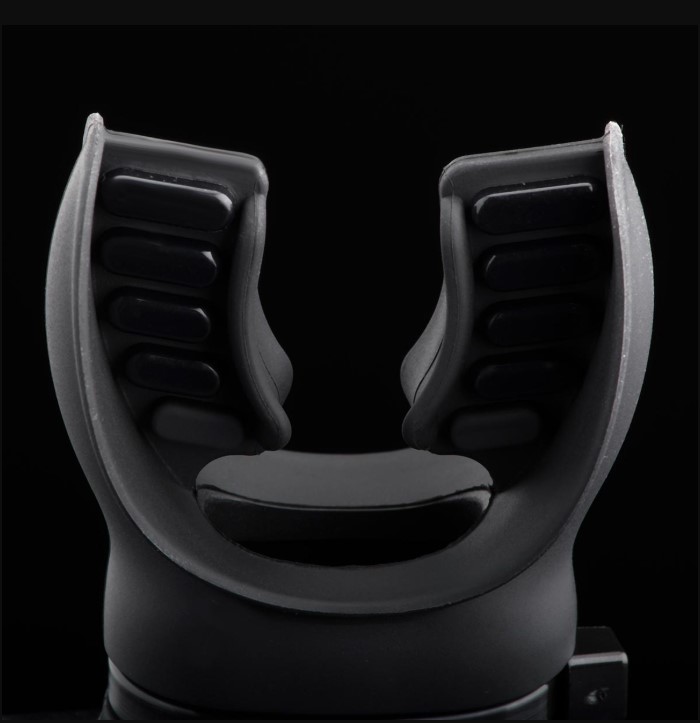
The T3 second stage weighs a mere 5.9 ounces (167 grams) inside your mouth. Furthermore, it features Atomic's patented Titanium Comfort Swivel at the second-stage connection point. This omni-directional ball swivel rotates 30 degrees in any direction without binding or leaking air. You can turn your head completely to look at a reef shark behind you without the regulator hose pulling the mouthpiece out of your teeth. The mouth bit itself is made from dual-silicone with soft tear-resistant bite tabs that cushion your molars.
Cold Water vs. Warm Water Capability
While the T3 was initially developed as the ultimate luxury warm-water travel regulator, it is fully capable of handling temperate and cold-water environments when equipped properly.
Titanium conducts temperature quickly, which can assist in warming incoming cold breathing gas through heat exchange with surrounding ocean water. However, for true freezing or near-freezing water (below 50°F / 10°C), Atomic offers a factory sealed ambient chamber option. The ambient seal kit fills the first stage spring chamber with a clear freeze-resistant gel, isolating internal moving parts from ambient water to completely prevent ice crystal formation on the main spring and piston.
If your diving consists primarily of tropical reefs, Caribbean drift dives, and warm-water travel, the standard unsealed T3 performs flawlessly and requires slightly less cleaning during post-dive rinse routines.
Long-Term Servicing and Cost of Ownership Breakdown
A major consideration when purchasing any high-end scuba regulator is the recurring cost of annual servicing. Most traditional regulator brands require mandatory annual servicing (every 12 months or 100 dives) to maintain warranty coverage. Service kit parts and labor typically cost between $120 and $180 every single year.
Atomic Aquatics changed this model by engineering the T3 with a 2-Year or 300-Dive Service Interval. Because the dynamic seat-saving orifice prevents rubber seat degradation and titanium eliminates internal metal corrosion, the regulator holds its factory calibration drastically longer than brass competitors.
5-Year Ownership Cost Analysis
Let's look at how service schedules impact your total wallet outlay over a 5-year period of active diving:
| Regulator Brand / Model | Service Interval | Service Rebuilds (5 Yrs) | Est. Maintenance Cost |
|---|---|---|---|
| Standard Brass Regulator | 1 Year / 100 Dives | 5 Service Visits | ~$750.00 |
| Atomic Aquatics T3 | 2 Years / 300 Dives | 2 Service Visits | ~$320.00 |
Over five years, you save over $400 in service labor and parts kits, effectively offsetting a major portion of the higher initial purchase price.
Model Comparison: Atomic T3 vs. B2 vs. ST1 vs. T25
Atomic offers several regulators in their lineup, and understanding where the T3 fits helps clarify if it's the right choice for your specific budget and diving goals.
| Model | First Stage Material | Second Stage Material | Weight | Primary Ideal Use |
|---|---|---|---|---|
| Atomic T3 | Solid Machined Titanium | All Titanium Components | 1.7 lbs (790g) | Frequent world travel, ultimate comfort, corrosion resistance. |
| Atomic B2 | Chrome-Plated Brass | All Titanium Components | 2.5 lbs (1133g) | Value-focused divers wanting titanium mouth comfort without 1st stage cost. |
| Atomic ST1 | 316 Stainless Steel | All Titanium Components | 2.4 lbs (1088g) | Heavy ocean use, rugged durability, eco-friendly manufacturing process. |
| Atomic T25 | Titanium (Anniversary Edition) | Titanium with DLC Coating | 1.7 lbs (790g) | Limited edition luxury collector model with Diamond-Like Carbon finish. |
As seen in community discussions, such as this Reddit discussion, many divers weigh the choice between the B2 and T3. The B2 gives you the identical jaw-comfort advantages in your mouth because its second stage is titanium. However, the T3 cuts significant weight out of the first stage, making it far superior for international travel where every ounce in your gear bag matters.
Real Diver Feedback & Video Walkthrough
To see how the Atomic T3 looks up close and observe its precision machining in detail, check out this in-depth video review:
Community Reputation and Dealer Ratings
The vendor reputation of certified retailers plays a huge role when buying luxury life-support gear. Buyers consistently praise certified shops like Dive Right In Scuba for fast fulfillment and flawless customer support. Check out verified customer experiences on Trustpilot to verify their high service standards.
Oxygen & Nitrox Compatibility Rules
Out of the box, Atomic regulators are certified factory-ready for Nitrox mixtures up to 40% oxygen (EAN40) using standard non-oxygen-cleaned procedures. However, there is a critical rule regarding titanium regulators and higher oxygen concentrations:
Important Safety Notice: Titanium and Pure Oxygen (EAN40+)
Do NOT use titanium regulators with hyperoxic gas mixtures exceeding 40% Oxygen. Titanium metal reacts aggressively in pure or high-concentration oxygen environments under pressure, creating a potential fire hazard. If you require a dedicated decompression gas regulator for 50% to 100% pure oxygen, select a brass or Monel regulator (such as Atomic's M1) specifically cleaned and prepped for high O2 service.
Shipping, Warranty, and Retailer Logistics
When purchasing an investment piece like the Atomic T3, ordering through authorized distribution channels guarantees full protection under manufacturer warranties. Authorized sellers offer flexible payment terms, fast delivery options, and knowledgeable staff to address setup questions.
- Shipping Details: Review delivery schedules and free shipping thresholds via the official Shipping Policy page.
- Warranty Coverage: Atomic offers a limited lifetime warranty to the original owner with service completed every 2 years or 300 dives. Check out Warranty Policy terms for service registration details.
- Financing & Price Matching: If you're looking to split payments over monthly installments, check out available options on the Payment Methods page.
- Technical Support: If you need custom hose routing or assistance choosing between DIN vs Yoke configurations, reach out through the Customer Support channel.
Pros and Cons Analysis
Pros (Advantages)
- Machined titanium construction eliminates saltwater oxidation completely.
- Incredibly light (1.7 lbs total), drastically lowering baggage weight for dive travel.
- 2-year or 300-dive service interval cuts long-term maintenance costs in half.
- Dynamic Seat-Saving Orifice prevents wear and air leakage during extended storage.
- Automatic Flow Control (AFC) eliminates manual pre-dive/dive Venturi levers.
- 360-degree LP swivel tower plus titanium ball swivel second stage eliminates jaw pull.
Cons (Limitations)
- High initial price point compared to entry-level brass systems.
- Strictly limited to maximum 40% Nitrox mixtures (cannot be used for high O2 deco gases).
- Requires an optional environmental seal kit for extreme ice-diving applications.
Final Verdict: Is the Atomic T3 Worth It?
The Atomic T3 titanium scuba regulator remains the gold standard for divers who want the lightest, most comfortable, and longest-lasting breathing system money can buy. It solves two of the most frustrating aspects of dive gear ownership: jaw fatigue on multi-dive days and high annual maintenance costs. Its titanium build means it won't rot, pit, or corrode from ocean salt, making it a true buy-it-for-life piece of underwater equipment.
If you're a frequent traveler, liveaboard cruiser, or recreational diver who simply wants effortless breathing performance without fussing over Venturi switches, the T3 is worth every single penny.
Official purchase process protected by authorized retailer warranty and price guarantee.
Frequently Asked Questions (FAQ)
1. Is titanium safe for scuba diving regulators?
Yes, titanium is safe and ideal for standard air and Nitrox mixtures up to 40% O2. Titanium provides superior strength, zero corrosion, and drastic weight savings. However, it should never be used with hyperoxic gas mixtures containing more than 40% oxygen due to material ignition risks at high O2 concentrations.
2. How often does the Atomic T3 regulator need to be serviced?
The T3 requires routine bench testing and service rebuilds every 2 years or 300 dives, whichever comes first. This is double the 1-year service window required by most competing regulator brands, saving you substantial cash over years of ownership.
3. What is the difference between DIN and Yoke connections for the T3?
The Yoke system clamps over standard international tank valves rated up to 232 bar (3300 PSI). The DIN option screws directly into threaded high-pressure valve faces rated up to 300 bar (4350 PSI). The DIN configuration is slightly lighter, offers a tighter seal, and is preferred for international travel and high-pressure steel tanks.
4. Does the Atomic T3 second stage require a pre-dive switch?
No. The T3 features Automatic Flow Control (AFC), which automatically adjusts internal Venturi airflow based on depth and water flow. You do not need to push a lever before jumping in to prevent free-flows.
5. Can I use the Atomic T3 for ice diving or cold water below 50°F (10°C)?
While the standard unsealed T3 performs well in temperate waters, divers planning frequent dives in water colder than 50°F should have an authorized dealer install the factory sealed ambient chamber kit to prevent environmental icing on internal springs.
6. Why is the Atomic T3 so much lighter than other regulators?
Standard regulators are forged from heavy brass. The T3 is machined almost entirely from solid titanium billet. Titanium provides equal structural strength to steel at nearly half the physical density, resulting in a total regulator weight under 1.8 lbs.
7. How does the dynamic seat-saving orifice work?
When the regulator is depressurized, an internal spring pulls the soft rubber second-stage valve seat away from the sharp metal orifice. This prevents the orifice from cutting a permanent groove into the rubber during long-term storage, extending component life and preventing free-flows.
8. What is included in the box when buying an Atomic T3?
The package includes the complete T3 titanium first stage, T3 titanium second stage, high-flow LP hose with titanium omni-directional swivel, dual-silicone mouthpiece, protective deluxe padded regulator travel bag, and owner's documentation.
9. How do I clean my Atomic T3 after diving?
Rinse the regulator thoroughly in clean, warm fresh water while the first stage dust cap is securely tightened onto the inlet. Never press the second-stage purge button while rinsing unless the regulator is fully pressurized on a scuba cylinder, as water could enter the first stage internal valve.
10. Is the high price of the Atomic T3 justified compared to the B2 model?
If you travel frequently by air or dive heavily in saltwater, yes. While the B2 features a titanium second stage, its brass first stage is heavier and can corrode over decades. The T3 gives you an all-titanium build from tank valve to mouthpiece, saving significant baggage weight and guaranteeing zero internal metal oxidation forever.

0 Comments