
A Real-World Analysis of the Cressi Aquaride BCD
If you're hunting for a jacket-style buoyancy control device (BCD) that bridges the gap between commercial-grade durability and recreational comfort, the Cressi Aquaride BCD deserves your attention. Designed primarily for recreational divers who frequent both warm and cold waters, its strongest benefit is its wrap-around air cell configuration that offers superb upright stability at the surface, coupled with the integrated Lock Aid System 2.0 for effortless weight management. Based on our extensive hands-on evaluations and long-term testing, this BCD is absolutely worth considering if you want a reliable, daily-driver jacket that won't let you down on your underwater adventures.
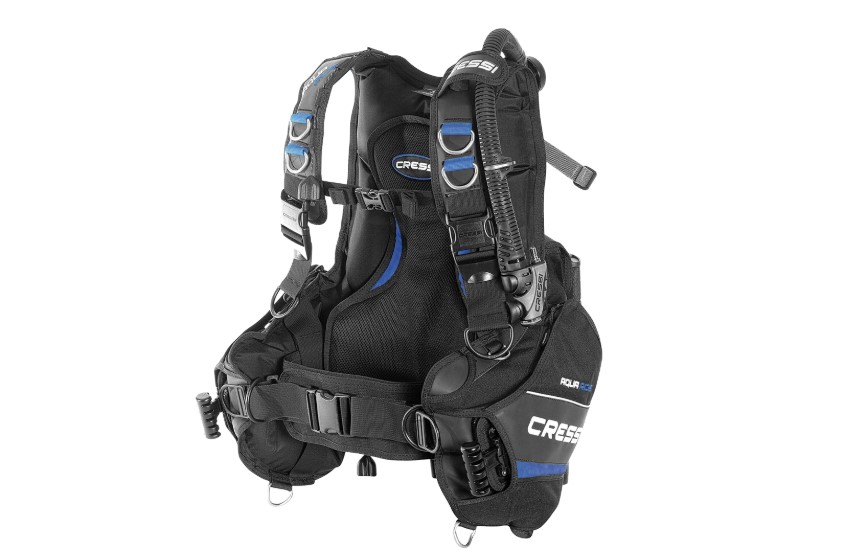
We've all been there: strapping on a rental BCD that feels like a stiff cardboard box, shifting around with every kick, or struggling to locate dump valves when your buoyancy needs immediate adjustment. When you invest in your own dive gear, you're buying more than just nylon and plastic; you're buying peace of mind, physical comfort, and underwater streamlining. Over decades of diving, I've seen countless BCD designs come and go. Some look sleek in the dive shop but fall apart after fifty saltwater immersions. Others are bulletproof but weigh so much they eat up your entire airline baggage allowance. The Cressi Aquaride BCD strives to walk the fine line between heavy-duty construction and travel-friendly ergonomics.
As we unpack this review, we'll dive deep into the mechanical components, material performance, underwater trim physics, and long-term ownership details. Whether you're a newly certified open-water diver or a seasoned divemaster looking for a reliable workhorse, you'll find everything you need to know about how this unit behaves where it actually matters: seventy feet below the surface.
The Design Philosophy: Understanding Jacket-Style BCDs
Before we dissect the nuts and bolts of the Cressi Aquaride BCD, it's essential to understand its core design category. Buoyancy compensators generally fall into three design camps: back-inflation wings, hybrid systems, and traditional jacket-style BCDs. The Aquaride is a classic jacket-style unit, but with modern engineering refinements designed to combat the common flaws of this style.
Traditional jackets wrap the air bladder entirely around your torso, extending from your back under your armpits and along your rib cage. The benefit of this is unparalleled stability at the surface. When you're waiting for a boat pickup in a heavy swell, a jacket-style BCD keeps you floating upright with your mouth and nose high out of the wash. It requires zero effort to maintain this position, which is why dive schools and public safety dive teams heavily favor this style.
However, the downside of historical jacket designs has been "torso squeeze." When you fully inflate the bladder on the surface, the expanding air chambers press inward against your ribs, making it feel difficult to take a deep, satisfying breath. Cressi addresses this issue in the Aquaride by separating the harness from the bladder chamber. The air cell is mounted in a way that allows it to expand outward and away from your body, maintaining a secure fit without restricting chest expansion. When you take a deep breath during a pre-dive check, you'll immediately notice the difference: the harness holds your cylinder firm, while the inflated bladder expands into the surrounding space rather than crushing your ribs.
Technical Specifications: Materials and Durability
The longevity of a BCD relies heavily on the quality of its textiles. Saltwater, UV radiation, chlorine, and abrasive contacts (like rusty shipwrecks or jagged reef structures) are brutal on synthetic fabrics. Let's look closely at how Cressi put this unit together.
| Feature / Specification | Details & Materials |
|---|---|
| Outer Bladder Material | 500-Denier Cordura® (High Abrasion Resistance) |
| Inner Bladder Material | 420-Denier Nylon (Optimal Flexibility and Weight) |
| Weight System | Integrated Lock Aid System (LAS) 2.0 |
| Trim Pockets | Two rear non-releasable pockets (up to 5 lbs / 2.2 kg each) |
| D-Rings | 6 Marine-Grade Stainless Steel (4 angled, 2 flat) |
| Backplate | Rigid anatomical backplate with thick padding |
| Dump Valves | 3 total (Shoulder pull, inflator pull, lower right rear) |
| Lift Capacity (Size M) | 31.5 lbs / 14.3 kg |
By blending 500-denier Cordura with 420-denier nylon, Cressi struck a deliberate balance. The outer sections, which are most prone to rubbing against cylinder bands, boat ladders, or rocky ledges, utilize the heavy-duty Cordura weave. This fabric has incredible tensile strength and resists tearing or fraying. The inner sections use a slightly lighter 420-denier nylon, which reduces the dry weight of the BCD and allows it to pack down more easily for travel. This dual-fabric engineering keeps the unit exceptionally tough without turning it into a stiff, heavy piece of armor.
The sewing and seam welds are similarly robust. The inner bladder is constructed with radio frequency (RF) welding, creating permanent chemical bonds between the polyurethane-coated layers. These welds are designed to handle repeated over-inflation without bursting, managed by the safety relief valves built into the dumps.
The Lock Aid System (LAS) 2.0: Integrated Weight Management
Ditching the old-fashioned weight belt is one of the most significant upgrades a diver can make. Weight belts have a nasty habit of slipping down your hips as your wetsuit compresses at depth, and they can be incredibly uncomfortable on your lower back during long surface walks. The Aquaride utilizes Cressi’s proprietary Lock Aid System (LAS) 2.0 to integrate your ballast directly into the BCD.
The LAS 2.0 operates via a mechanical track-and-lock mechanism. You load your lead weights (either block lead or soft mesh pouches) into the dedicated zippered pockets. You then slide these pockets into the BCD receptacles along the bottom rail. When fully inserted, you will hear a distinct mechanical click. This audible cue is critical; it tells you and your dive buddy that your weights are locked securely in place and will not slip out during entry or while swimming in a head-down position.
In an emergency scenario where you or your buddy must ditch weight to establish positive buoyancy at the surface, the release is highly intuitive. You simply grip the ergonomic, oversized handles on the front of the pockets and pull firmly outward. The locking mechanism releases instantly, letting you drop your ballast cleanly away from your body. Because the handles are molded from a bright, contrasting color and sit exactly where your hands naturally fall, locating them under stress or while wearing thick neoprene gloves is incredibly straightforward.
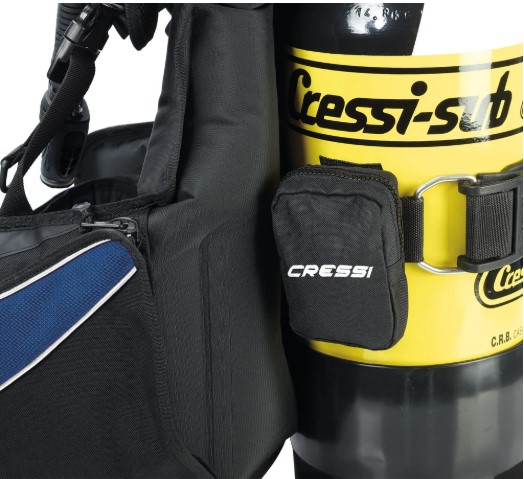
To complement the main weight pockets, the Aquaride features two trim pockets located on the back of the BCD, situated on either side of the tank band. These pockets are non-releasable and are designed to hold up to five pounds of weight each. By moving a portion of your ballast to these rear pockets, you shift your center of gravity slightly backward. This helps offset the natural buoyant tendency of your legs, making it much easier to maintain a perfect, horizontal swimming posture (known as "trim") without constantly kicking to adjust your position.
Diver's Tip on Weighting: When diving with a new integrated BCD, start by putting about 60% of your total required weight in the front releasable pockets and 40% in the rear trim pockets. If you find yourself constantly fighting to keep your feet down, move more weight to the rear trim pockets. If you feel like your tail is dragging, move all your weight to the front. Fine-tuning this balance will dramatically reduce your gas consumption because you aren't wasting energy staying level.
Ergonomics, Adjustability, and In-Water Fit
An ill-fitting BCD ruins a dive faster than cold water. If the harness doesn't support the weight of your cylinder properly, the tank will wobble from side to side with every kick, throwing off your balance and straining your shoulders. The Cressi Aquaride BCD addresses this through its rigid anatomical backplate and comprehensive adjustment harness.
The backplate is made of a lightweight, highly rigid composite material that extends the length of your spine. This rigid spine acts as a bridge, transferring the weight of the scuba cylinder directly to your hips rather than letting it hang from your shoulders. This structure is heavily padded with a soft, quick-drying 3D mesh cushion that dampens the hard edges of the plastic plate and tank band. When you're standing on a rocky shoreline or navigating a pitching dive boat deck, this backplate design makes a twelve-liter steel cylinder feel incredibly stable and secure.
The shoulder straps are mounted on pivoting buckles that allow them to self-adjust to the angle of your collarbone and chest. This is a game-changer for divers of varying shoulder widths or chest sizes. Whether you have broad shoulders or a narrow frame, the straps pivot to lay flat against your body, preventing chafing under your arms. Additionally, the chest strap is height-adjustable, allowing you to move it up or down to clear drysuit valves, computer consoles, or camera mounts.
The waist closure uses a dual-system elastic cummerbund topped with a heavy-duty webbing strap and quick-release buckle. This elastic cummerbund is brilliant because it compensates for wetsuit compression. As you descend, the water pressure compresses the microscopic air bubbles inside your neoprene suit, making the suit thinner and looser. A standard webbing belt would start to slide around. The elastic cummerbund automatically contracts, keeping the BCD snug and securely centered on your torso throughout the entire dive profile.
Buoyancy Control and Air Distribution
At depth, your buoyancy needs change constantly as you breathe down your gas supply and your wetsuit compresses. The Aquaride handles these transitions smoothly due to its highly responsive inflation and deflation systems.
The unit features Cressi's Direct System inflator, which is widely recognized for its reliability and low maintenance requirements. The inflation button has a tactile, progressive feel; a light squeeze lets in a tiny whisper of air for micro-adjustments, while a firm press fills the bladder rapidly. The exhaust button sits ergonomically at the top of the inflator head, shaped to allow comfortable one-handed operation.
For quick venting of air, the Aquaride is equipped with three dump valves strategically placed around the bladder:
- The Right Shoulder Pull-Dump: Operated by a high-visibility pull bobbin resting over your right shoulder. This is the go-to valve for venting air while swimming upright or during a controlled descent.
- The Inflator Cable-Pull Dump: By gently tugging down on the entire inflator hose assembly, you open a mechanical dump valve at the top-left shoulder. This allows you to vent air without changing your hand position.
- The Lower Right Rear Dump: Located at the bottom right hip. This valve is indispensable when you are swimming horizontally or head-down. Instead of tilting your body upright to vent air through the shoulder, you simply pull the rear bobbin to release air from the lowest point of the bladder.
The distribution of lift capacity on this BCD is designed to offer maximum stability at the surface while preventing unwanted rolling underwater. Because the air cell wraps around your waist and shoulders, it cradles your body securely. When deflated, the bladder profile is kept compact by internal elastic bands that pull the fabric inward, preventing "parachute drag" when you are swimming against a current.
Storage, Customization, and Gear Attachment
Recreational divers carry a surprising amount of gear: backup lights, surface marker buoys (SMBs), reels, slates, cutting devices, and underwater cameras. Finding a secure, accessible place for all these accessories can be a logistical headache. Fortunately, storage is one of the Aquaride's greatest strengths.
The BCD features two exceptionally large zippered pockets that run along the sides of the waist. Unlike many BCD pockets that become completely useless when the bladder is fully inflated, these pockets are gusseted. This means they expand outward, allowing you to access your gear even when the BCD is at full lift capacity. The zippers are heavy-duty plastic teeth that resist salt crystallization, topped with oversized pull tabs that are easy to operate with thick gloves.
For external gear attachment, the Aquaride features six marine-grade stainless steel D-rings. Four of these D-rings are strategically bent or angled at the shoulders, positioning them perfectly to keep your backup lights, primary regulator console, or camera lanyard easily accessible. The remaining two D-rings are located flat along the bottom edge of the pockets, ideal for securing gear bags, collection bags, or long hoses. Because they are forged from high-quality marine-grade stainless steel, they resist rusting and corrosion, provided they are rinsed with fresh water after use.
Additionally, the BCD includes dedicated hose routing slots on both sides. This allows you to tuck your octopus (backup regulator) and pressure gauge console flat against your torso, preventing them from dangling, dragging across delicate marine environments, or getting snagged on underwater obstructions.
Real-World Testing: Warm Water vs. Cold Water Performance
To truly understand a piece of dive gear, you have to push it out of its comfort zone. I took the Cressi Aquaride BCD through two drastically different diving environments to see how it adapted to varying thermal protection and buoyancy demands.
Scenario A: Tropical Drift Diving in Cozumel (3mm Shorty)
In warm water, the Aquaride feels like luxury. Wearing only a light 3mm shorty wetsuit, the soft 3D mesh padding on the backplate eliminated any pressure points from the cylinder. With only 10 pounds of lead split between the integrated pockets, the BCD felt virtually weightless. During drift dives along deep walls, the streamlined profile of the deflated bladder made moving through mild currents effortless. Controlling buoyancy was incredibly precise; a short tap on the inflator was all it took to hover perfectly over a reef structure. At the surface, the BCD held me upright in a comfortable reclining position, letting me chat with my buddy while waiting for our dive panga to arrive.
Scenario B: Temperate Kelp Forest Diving in Monterey (7mm Full Suit + Hood & Gloves)
Cold-water diving is the ultimate test of a BCD's ergonomics. Wearing a thick 7mm wetsuit with a hooded vest requires significantly more ballast—in this case, 24 pounds of lead. I loaded 16 pounds into the front Lock Aid System pockets and 8 pounds into the rear trim pockets. The LAS 2.0 handles took the weight without sagging, and the mechanical click gave me confidence that the heavy pouches were secure. Despite wearing 5mm neoprene gloves, grasping the inflator hose, locating the dump bobbins, and zipping open the side pockets was remarkably easy. The elastic cummerbund did its job perfectly; as my 7mm suit compressed at 85 feet, the waist remained snug without any tank slippage or twisting. The rear trim pockets kept me perfectly horizontal, preventing my feet from sinking into the kelp canopy.
The Importance of Community Feedback and Verified Experiences
When you're buying critical life-support equipment, you shouldn't rely solely on one reviewer's opinion. Savvy divers look to the global diving community to see how gear holds up over years of abuse. Online forums and retail feedback loops are goldmines of long-term testing data.
For example, buying your gear from a highly rated, authorized dealer ensures that you receive genuine products backed by full factory warranties. If you look at the Dive Right In Scuba Trustpilot Review Page, you'll see why selecting a reputable shop with excellent customer service is so important. They consistently receive stellar ratings for their support, fast shipping, and willingness to assist divers with sizing exchanges.
Online communities are incredible resources for verifying technical tolerances and dimensions. Just as automotive enthusiasts swap highly specific mechanical specifications in forums—such as discussing the center bore of wheels on a Ford Ranger on Reddit—divers have similar deep-dive threads debating BCD sizing, tank band tolerances, and D-ring placements. It's this level of community-driven detail that helps us verify that Cressi’s sizing charts run true to life, meaning you can buy with confidence knowing that if you measure your height and waist accurately, the BCD will fit perfectly out of the box.
To see the Cressi Aquaride BCD in action and get a better sense of its physical scale, hose routing, and weight pocket operation, take a look at this comprehensive video breakdown:
Comparing the Aquaride to Alternative BCD Styles
To make an informed purchase, you must understand how the Aquaride stack up against alternative options. Below, we break down the practical differences between the Aquaride (Jacket), a standard Back-Inflation Wing, and a Hybrid BCD.
| Feature | Cressi Aquaride (Jacket) | Back-Inflation Wing | Hybrid BCD |
|---|---|---|---|
| Surface Comfort | Excellent (Floats you effortlessly upright) | Poor (Tends to push your face forward) | Good (Balanced air distribution) |
| In-Water Trim | Very Good (With rear trim pockets used) | Excellent (Keeps you perfectly flat) | Excellent (Keeps you flat) |
| Storage Capacity | Outstanding (Large zippered pockets) | Minimal (Pockets are rare or tiny) | Moderate (Medium-sized pockets) |
| Simplicity & Familiarity | Very High (Standard training configuration) | Moderate (Requires adjustment) | High (Easy learning curve) |
For the vast majority of recreational divers, the jacket-style Aquaride is the most logical choice. It provides the security, storage, and ease of use that make diving relaxing. While technical divers planning deep decompression stops or tight cave penetrations may prefer the modularity of a backplate and wing system, recreational divers will find the integrated features and surface comfort of the Aquaride far superior for standard ocean and lake diving.
Understanding Sizing and Fitment
Cressi produces the Aquaride in several sizes, ranging from Extra Small (XS) to Extra Large (XL). Because it is a jacket-style BCD, getting the correct size is crucial. A BCD that is too large will shift around on your body, while one that is too small will restrict your breathing and have insufficient lift capacity.
When selecting your size, always prioritize your waist/cummerbund measurement over your height. Remember to account for the thickness of the exposure suit you will be wearing. If you plan to use this BCD in cold water with a thick 7mm wetsuit or a drysuit, you may need to size up slightly or ensure you have plenty of overlap on the adjustable shoulder straps. If you are ever between sizes, we recommend contacting the customer support team at Dive Right In Scuba; their experienced staff can help you select the ideal fit based on your height, weight, and dive style.
Pros and Cons: An Honest Assessment
No piece of dive gear is flawless. To maintain absolute honesty, we must look at both the highlights and the shortcomings of the Cressi Aquaride BCD.
The High Points (Pros)
- Superb surface flotation, keeping your airway high out of water without torso squeeze.
- Extremely durable 500-denier Cordura and 420-denier nylon hybrid construction.
- Lock Aid System 2.0 provides an audible, secure click for absolute peace of mind.
- Generous, expandable side pockets that remain usable even when fully inflated.
- Six marine-grade stainless steel D-rings for extensive gear attachment.
The Low Points (Cons)
- It is slightly bulkier than dedicated ultra-light travel BCDs, eating up more luggage space.
- Jacket-style air distribution requires active use of trim pockets to maintain horizontal trim.
- Integrated weight pockets can be stiff to insert the first few times before the material breaks in.
Long-Term Maintenance and Care Instructions
Your BCD is a life-support system. Taking care of it ensures that the fabric remains strong, the valves seal perfectly, and the internal bladder remains free of mold and bacteria. Based on the guidelines in the Cressi BCD Official User Manual, here is the optimal post-dive maintenance routine:
- Freshwater Rinse (External): Soak the BCD in clean, fresh water for at least 15 minutes after every saltwater or pool dive. Pay special attention to the inflator mechanism, the dump valves, and the weight pocket tracks. Actuate the dump valves and inflator buttons while submerged to flush out trapped salt or sand particles.
- Internal Bladder Rinse: Saltwater can enter your BCD bladder when you vent air. To prevent salt crystals from tearing the delicate inner lining, depress the exhaust button on the inflator and hold it under a freshwater tap. Fill the bladder about one-third full with fresh water, inflate it rest of the way with air, and shake the BCD vigorously to coat all internal surfaces. Flip the BCD upside down and dump the water out through the inflator hose or one of the quick-dump valves. Repeat this twice.
- Drying: Hang the BCD in a cool, shaded area away from direct sunlight. Partially inflate the bladder so that the inner layers do not stick together as they dry. Never use a dryer or expose the BCD to artificial heat sources.
- Storage: Store the BCD partially inflated in a cool, dry closet. Avoid placing heavy gear on top of it, which can deform the rigid backplate or damage the plastic buckles and dump valves.
Buyer's Journey and Purchase Peace of Mind
When you are ready to invest in your own Cressi Aquaride BCD, where you buy matters just as much as what you buy. Purchasing through an authorized dealer like Dive Right In Scuba ensures that your investment is fully protected.
Let's look at the customer-focused policies that make purchasing this BCD worry-free:
- Comprehensive Shipping: Dive Right In Scuba offers reliable and efficient shipping policies to get your gear to you quickly, ensuring you don't miss your next planned dive trip. You can review their complete shipping terms on the Dive Right In Scuba Shipping Policy Page.
- Warranty and Support: Cressi stands firmly behind their engineering. By ordering from an authorized dealer, you receive full manufacturer warranty support. Dive Right In Scuba is renowned for honoring manufacturer policies and offering quick resolutions. Learn more on their Warranty and Support Information Page.
- Flexible Payments: Outfitting yourself with high-quality scuba gear can be a financial commitment. To make this easier, they offer price-matching and flexible payment structures so you can get the gear you need today without breaking the bank. Explore your options on the Dive Right In Scuba Payment Plan Page.
- Dedicated Support: If you have questions about sizing, hose configuration, or matching this BCD with the right regulator system, you can contact their team of active diving professionals directly through the Dive Right In Scuba Contacts Page.
The Verdict: Is the Cressi Aquaride BCD Right for You?
After diving the Cressi Aquaride BCD across multiple seasons, analyzing its construction, and gathering feedback from the global diving community, our conclusion is clear: this is one of the most reliable, comfortable, and functional jacket-style BCDs on the market today.
If you are a technical diver looking to squeeze through tiny cave restrictions or plan multi-hour decompression schedules, you will be better served by a specialized technical wing. But if you are a recreational diver who wants a comfortable, rugged, and feature-rich BCD that performs beautifully in warm-water reefs, cold-water kelp forests, and everywhere in between, the Aquaride is an outstanding choice. It delivers exceptional durability, intuitive safety features, and a level of comfort that will let you focus entirely on the beauty of the underwater world.
Frequently Asked Questions (FAQs)
Is the Cressi Aquaride BCD suitable for travel?
Yes, though with some caveats. Because it utilizes heavy-duty 500-denier Cordura and features a rigid backplate, it is slightly heavier than ultra-light, "travel-specific" BCDs. However, it still folds remarkably flat. For most divers, the added comfort, durability, and storage capacity of the Aquaride far outweigh the minor weight penalty when packing for a dive trip.
Can I use soft mesh lead weights in the Lock Aid System 2.0?
Absolutely. The Lock Aid System pockets are designed to accommodate both solid lead blocks and soft mesh lead shot pouches. Soft pouches are generally preferred as they mold to the shape of your body, making the BCD even more comfortable to wear.
What is "torso squeeze," and how does the Aquaride prevent it?
Torso squeeze occurs when a BCD's air bladder is inflated, pressing inward against your rib cage and making it uncomfortable to breathe. Cressi solves this in the Aquaride by separating the harness from the air cell. When inflated, the bladder expands outward and away from your body, maintaining a secure fit without restricting your chest.
Where are the dump valves located, and how do I use them?
The Aquaride has three dump valves: a mechanical pull-dump on the right shoulder, a cable-activated pull-dump inside the inflator hose on the left shoulder, and a lower-right rear dump valve near your hip. The shoulder dumps are used when you are upright, while the rear dump is perfect for venting air when you are swimming in a horizontal or head-down position.
Can I mount a dive knife to this BCD?
Yes. The Aquaride has dedicated knife grommets on the left pocket flap, positioned perfectly for quick and easy access. This allows you to mount a standard dive knife securely without resorting to bulky leg straps or risking damaging the bladder fabric.

0 Comments