
The Reality of Choosing a Dive Mask and Snorkel Set for Open Water: Complete Guide
When you transition from the controlled environment of a backyard pool or a calm, shallow quarry to the unpredictable dynamics of open water, your gear requirements change instantly. In open water, you face choppy surface conditions, shifting currents, variable light, and the physical demands of longer swims. A cheap, poorly fitting mask that leaks or a snorkel that constantly floods with salt water will quickly turn an exciting marine adventure into a stressful, exhausting struggle.
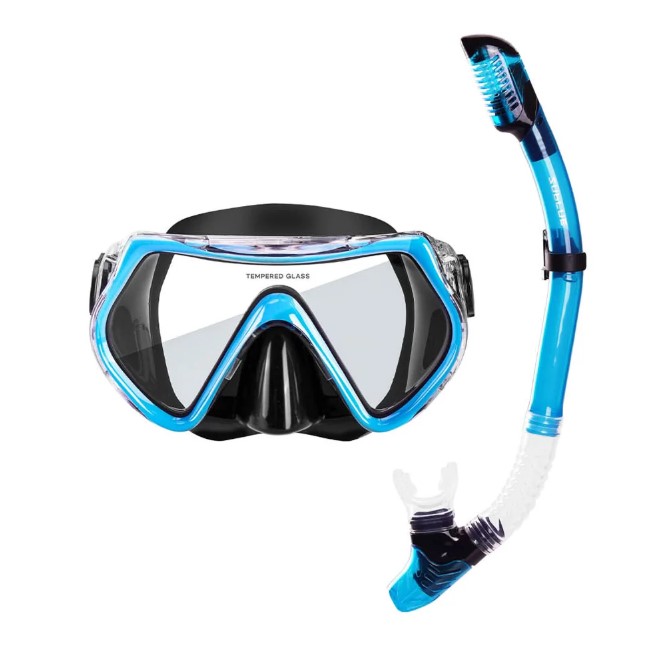
The Sublue 180° panoramic tempered glass dive mask and snorkel set is specifically designed to address these distinct open-water challenges. Created for recreational divers, snorkelers, and free-divers transitioning to coastal environments, this set aims to deliver wide-angle visual clarity and a reliable dry-top breathing mechanism. If you want to keep your focus on the marine life below rather than constantly clearing water from your eyes and throat, investing in a high-quality, dependable mask and snorkel set is one of the smartest decisions you can make. Let’s dive deep into the design, material construction, and real-world performance of this set to see how it holds up in demanding open-water conditions.
Note: Clicking the link above applies your direct discount and guarantees a secure purchase on the official Sublue portal.
Understanding the Visual Demands of the Open Ocean
Open water demands a far broader field of view than a swimming pool. When you are swimming over deep reefs, sand flats, or kelp forests, visual awareness is essential for both your enjoyment and your safety. You need to keep an eye on your buddy, watch for shifting currents, and spot marine life without constantly turning your head. Traditional masks often feature thick nose bridges or wide side frames that create distinct blind spots, mimicking a tunnel-vision effect that can feel disorienting.
The single-lens design of the Sublue mask solves this visual limitation. By removing the central plastic nose bridge found in dual-lens models, Sublue provides an uninterrupted view straight ahead. Additionally, the lens is molded with side panes that curve backward, creating a 180-degree panoramic viewing field. This expanded perspective allows your eyes to naturally track movement in your peripheral vision, which makes navigating underwater feel far more natural. You can stay aware of your dive buddy's position or monitor your depth gauge without having to make exaggerated, neck-straining movements that burn extra energy and air.
The Critical Difference: Tempered Glass vs. Plastic Lenses
When selecting a dive mask, the lens material is the single most important factor for safety and clarity. Many entry-level snorkel sets use polycarbonate (plastic) lenses. While plastic is cheap and lightweight, it scratches almost immediately when exposed to fine beach sand. Even worse, plastic lenses are highly prone to severe fogging, and they flex under pressure, distorting your depth perception and clarity.
The Sublue mask uses chemically tempered glass, which is the industry standard for any serious diving equipment. Tempered glass offers several critical performance advantages:
- Optimal Scratch Resistance: Beach sand, salty shells, and gear bags will easily scuff plastic. Tempered glass resist these abrasive particles, ensuring your lens remains crystal clear season after season.
- Safety Under Pressure: As you descend, the pressure of the water column increases. Tempered glass is engineered to withstand this pressure without flexing. In the extremely rare event of a high-impact shatter, tempered glass is designed to break into tiny, granular pieces rather than sharp, jagged shards, protecting your eyes from catastrophic injury.
- Better Anti-Fog Treatment: Tempered glass can tolerate proper pre-dive preparation. New masks have a thin layer of silicone residue on the inside of the lens from the manufacturing process. You can easily scrub this film off a tempered glass lens using a mild abrasive toothpaste without scratching the glass. Try that on a plastic lens, and you will ruin it permanently.
The Anatomy of a Leak-Free Seal: Liquid Silicone Engineering
Even the clearest lens in the world is useless if your mask constantly fills with water. Achieving a dry, comfortable fit relies entirely on the quality and shape of the mask skirt. Lower-quality masks often use PVC or cheap plastic-based skirts that feel stiff, smell strongly of chemicals, and degrade quickly under direct sunlight. When these materials get cold in open water, they stiffen further, losing their elasticity and allowing water to seep in every time you move your jaw or smile.
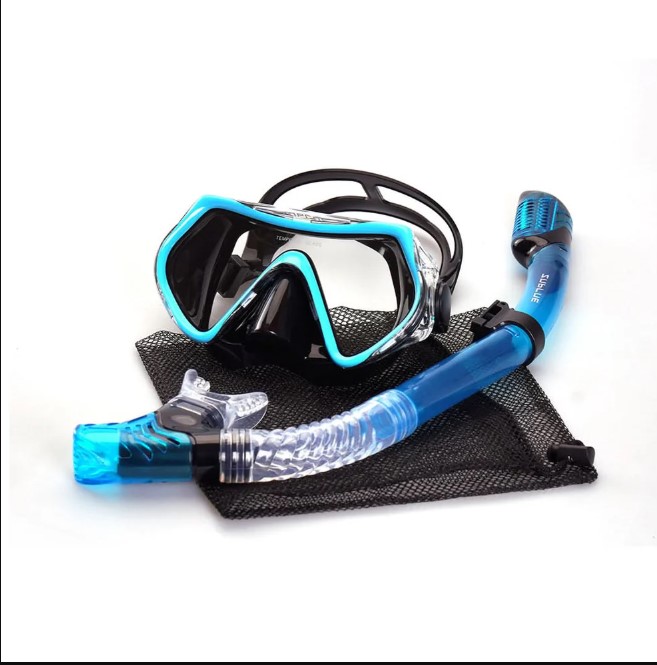
Sublue addresses this with a high-grade, food-grade liquid silicone skirt. Liquid silicone is exceptionally soft and highly elastic. It is designed to mold itself precisely to the unique contours of your face, distributing pressure evenly across your brow, temples, and cheekbones. This even distribution prevents painful pressure points from forming during long, two-hour snorkeling sessions.
Furthermore, the skirt features a double feather-edged sealing design. Think of it as a seal within a seal. The outer edge of the skirt rests gently on your skin, while an inner silicone flap provides a secondary barrier against water intrusion. This double-layer system is incredibly forgiving. If you laugh, clear your ears, or hold a snorkel mouthpiece in your mouth—all actions that alter your facial structure—the flexible silicone skirt stretches and compresses dynamically to keep the seal intact.
How a Dry-Top Snorkel Keeps Your Airway Clear in Choppy Waves
In open water, surface conditions are rarely perfectly calm. Gentle swells, passing boat wakes, or sudden wind-chop can easily splash over the top of a standard snorkel tube. If you are using a classic, open-top tube, that water runs straight down into your throat, causing you to choke, panic, and interrupt your swim.
The Sublue dry snorkel uses a responsive float valve mechanism at the top of the tube to prevent this entirely. Inside the splash guard hood, there is a lightweight, precisely balanced float. When you are floating on the surface, the float sits at the bottom of its chamber, allowing air to pass freely down the tube. However, the moment a wave washes over the top of the snorkel—or if you decide to duck-dive beneath the surface—the rising water lifts the float upward. The top of the float presses firmly against a silicone gasket, sealing the air intake instantly and keeping the tube completely dry.
Once your head clears the surface, gravity pulls the float back down, reopening the airway so you can breathe immediately without having to forcefully blow out a tube full of seawater. It is a simple, highly effective passive system that dramatically reduces surface anxiety, making it an essential feature for open-water swimmers of all skill levels.
Addressing the Purge Valve and Ergonomic Mouthpiece
Even with a premium dry-top valve, a tiny amount of water can occasionally find its way into your snorkel—usually when you transition from breathing on the surface to diving down and back. That is where the bottom purge valve and reservoir come into play.
Instead of requiring you to blast water all the way up and out of a 15-inch tube, the Sublue snorkel features a one-way purge valve situated at the lowest point of the mouthpiece assembly. Any water that enters the tube naturally drains down into a small collection reservoir below your airway. When you exhale gently, the air pressure pushes the thin silicone purge valve open, expelling the water out the bottom of the snorkel. This design ensures that even if there is a tiny splash of water inside the system, it stays safely below your breathing path until you clear it.
The mouthpiece itself is constructed from soft, food-grade silicone, featuring orthodontic bite tabs. Many cheap snorkels use stiff plastic mouthpieces that require you to clench your teeth firmly to keep the snorkel in place. This constant clenching tires out your jaw muscles within thirty minutes. The pliable, soft silicone on the Sublue mouthpiece rests comfortably between your teeth and gums, requiring minimal jaw pressure to stay secure, which helps prevent muscle fatigue during long ocean drifts.
Pro-Tip: The "Suction Test" for Perfect Mask Fit
Before you take any new mask into the ocean, you must verify the fit on dry land. To do this, pull the mask strap forward out of the way, gently press the mask skirt against your face (without the strap on), and take a light breath in through your nose. If the mask sticks securely to your face when you hold your breath and look down, you have a solid seal. If you feel air rushing in around your temples or under your nose, double-check that your hair is completely cleared away from the silicone skirt and try again.
The Scuba Community Perspective: Do You Need a Snorkel Kit?
If you search online forums like Reddit, you will find extensive discussions regarding the necessity of snorkels. For instance, a popular Reddit scuba thread focuses entirely on whether getting a snorkel kit is worth it for scuba divers. The community is famously divided on this topic, and their insights are incredibly valuable for open-water divers:
- The Practical Argument for Snorkels: Many experienced divers and instructors point out that a dry snorkel is a vital safety tool, especially during long surface swims in choppy conditions. If you are waiting for a dive boat to pick you up or if you have to swim back to shore against a current, breathing through a dry snorkel conserves the precious compressed air in your tank. Without a snorkel, you are forced to swim on your back or constantly lift your chin above the waves to breathe, which is tiring and inefficient.
- The Minimalism Argument: On the other hand, some technical divers dislike having a snorkel permanently attached to their mask strap. They argue that it creates hydrodynamic drag, can get tangled in kelp or fishing lines, and can flap around in high currents.
- The Smart Compromise: The best solution for open water is versatility. The Sublue snorkel features a quick-release mask keeper. This allows you to easily clip the snorkel onto your mask when you are snorkeling or conducting training dives where surface swims are expected. If you are going on a deep wreck dive where you want to minimize drag, you can quickly unclip the snorkel and tuck it away into your BCD pocket. Having a high-quality, detachable dry snorkel gives you the freedom to choose based on your immediate diving environment.
Deep Dive: Sublue Brand Ecosystem, Quality Control, and Support
Sublue is widely recognized in the marine industry for designing advanced underwater technology, particularly their highly-rated line of underwater scooters. This technical background in fluid dynamics and marine-grade materials directly influences how they manufacture basic diving accessories. Unlike generic white-label brands that pop up on online marketplaces overnight, Sublue maintains a dedicated manufacturing and support infrastructure.
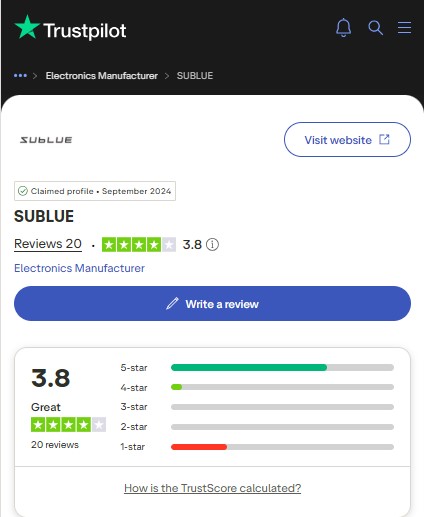
When you evaluate a brand, third-party feedback is an excellent indicator of real-world reliability. On the Sublue Trustpilot portal, customers frequently highlight the brand's responsiveness and build quality. Below, you can see a snapshot of their customer review standing, reflecting their dedication to support and buyer satisfaction.
When you purchase direct from the official Sublue store, you are backed by clear corporate policies that protect your investment:
- Shipping Reliability: Sublue provides a transparent Shipping Policy detailing transit times, international customs handling, and order tracking, ensuring your gear arrives safely before your next planned dive trip.
- Comprehensive Warranty Support: Safety gear should always be backed by the manufacturer. Sublue offers a dedicated Warranty Policy that covers any manufacturing defects in the silicone, buckles, or dry-top valves. If you experience an issue with your set, you don't have to deal with anonymous third-party sellers.
- Direct Communications: If you have questions regarding fit, replacement parts, or order details, you can contact their support staff directly through the Customer Support Directory.
- Secure Transactions: To ensure your financial details remain protected, checkout is processed via industry-standard, fully encrypted gateways. You can review their secure processing protocols at the Official Sublue Checkout Gate.
Comparing Gear Configurations: How the Sublue Stack Up
To help you decide if this configuration is right for your diving style, let’s compare the Sublue 180° Panoramic Tempered Glass set against other common styles you will find on the beach:
| Feature / Spec | Sublue Panoramic Set | Standard Dual-Lens Mask | Full Face Snorkel Mask |
|---|---|---|---|
| Field of Vision | 180° Panoramic (Continuous single lens) | Narrow/Medium (Split lens with center frame) | 180° Panoramic (Wide-angle shield) |
| Safety Profile | Excellent (Tempered Glass, Low volume) | Excellent (Tempered Glass, Low volume) | Poor/Fair (Risk of CO2 build-up, difficult to clear) |
| Equalization Capability | Yes (Soft, accessible nose pocket) | Yes (Soft, accessible nose pocket) | No (Nose is sealed inside the plastic frame) |
| Snorkel Type | Dry-Top Float Valve with Lower Purge | Varies (Usually sold separately as basic tube) | Integrated Dry-top tube |
| Versatility | High (Snorkeling, Freediving, Scuba) | High (Mainly Scuba and Freediving) | Low (Surface-only leisure floating) |
As the comparison table illustrates, traditional dual-lens masks are great for deep diving but severely restrict your peripheral vision. Conversely, full-face snorkel masks provide a wide field of view, but they are unsafe for diving below the surface because you cannot pinch your nose to equalize your ears, and they carry inherent risks of carbon dioxide build-up.
The Sublue panoramic set strikes the ideal balance. It gives you the expansive, panoramic view of a full-face mask, yet retains the classic, low-volume design of a traditional dive mask. Because the nose pocket is made of soft, pliable silicone, you can easily pinch your nose to equalize your ears as you descend. This design makes the set incredibly versatile, allowing you to seamlessly transition from surface snorkeling to deep free-dives or recreational scuba diving.
Unboxing, Setup, and Your First Dive Preparation
When you receive your Sublue set, do not immediately head straight to the beach and jump into the water. If you do, you will likely experience severe fogging. This isn't a defect in the mask—it is a natural characteristic of all high-quality dive masks. During the manufacturing process, a microscopic film of protective silicone gas settles on the tempered glass lens as the skirt is cured. To ensure a fog-free dive, you must properly prep your mask first.
Step 1: The Toothpaste Prep Method
Take a small dab of standard, non-gel toothpaste (plain white toothpaste works best because it contains mild abrasives like silica) and apply it to the inside and outside of the dry glass lens. Using your clean finger, rub the toothpaste firmly over every part of the glass for about two to three minutes. Avoid using abrasive scrubbing pads or steel wool, as they can damage the glass. Rinse the mask thoroughly with fresh water. Repeat this process twice. This gently scrubs away the invisible manufacturing film, allowing your anti-fog drops or saliva to work effectively in the water.
Step 2: Adjusting the Mask Strap
Place the mask on your face and pull the strap over the back of your head. The strap should sit high on the crown of your head, not low near your neck. The side buckles on the Sublue mask feature quick-adjust push buttons. Press the button to easily loosen or tighten the strap.
One of the most common mistakes new divers make is tightening the mask strap too much. A tight strap doesn't prevent leaks; instead, it pulls the mask too hard against your face, distorting the silicone skirt and creating gaps that let water in. The strap should only be tight enough to hold the mask gently in place. It is the water pressure itself that will push the soft silicone skirt against your face to create the seal.
Step 3: Attaching the Snorkel
Align the snorkel on the left side of your mask strap. (Snorkels are traditionally worn on the left side because scuba regulators always feed from the right). Open the quick-release clip, slide it over the mask strap, and click it shut. Put the mouthpiece in your mouth to ensure the angle feels comfortable and does not pull on your lips. If it feels awkward, slide the clip up or down the snorkel tube to adjust the height.
Want to see the Sublue Mask Set in action? Watch this helpful hands-on review:
Long-Term Maintenance: Keeping Your Gear in Top Condition
Salt water, hot sand, and harsh UV rays are highly corrosive over time. If you want your Sublue dive mask and snorkel set to last for years, you need to establish a consistent post-dive care routine. For detailed instructions on long-term maintenance and parts care, you can always consult the Official Sublue Product Manual. In the meantime, here are the core rules of dive gear maintenance:
- Rinse with Fresh Water Immediately: After every ocean swim, rinse your mask and snorkel thoroughly in warm, fresh water. This dissolves salt crystals that can accumulate under the mask buckles, inside the snorkel purge valve, and around the dry-top float mechanism. If salt is allowed to dry, it can crystallize and jam these moving parts.
- Dry in the Shade: Never leave your dive mask sitting on a boat deck or beach towel in direct, blistering sunlight. Extreme heat and UV rays quickly dry out liquid silicone, causing it to turn yellow, lose its elasticity, and crack prematurely. Hang your gear to dry in a shaded, well-ventilated area.
- Inspect the Purge Valve Gasket: Occasionally, a grain of sand or a tiny piece of seaweed can get caught under the thin silicone purge valve at the bottom of your snorkel. If this happens, the valve won't seal completely, and water will slowly seep into your tube as you breathe. Gently lift the valve flap, rinse out any debris, and make sure it sits completely flat against its plastic seat.
- Store Separately from Black Neoprene: Keep your clear silicone mask away from black rubber items, like dive boots or fins, inside your gear bag. Black rubber off-gasses chemicals that will permanently stain and discolor clear silicone over time, turning it a muddy brown color. Keep your mask in its protective hard case when not in use.
Real-World Scenario: Confronting Panic and Keeping Calm
Every experienced diver knows that safety under the water is all about mental control. Imagine this scenario: You are swimming over a beautiful reef in thirty feet of water, and a sudden swell washes over your head. If you are using low-quality, cheap gear, your mask might suddenly leak, or your snorkel might fill with cold salt water. If you are not prepared, your natural instinct is to gasp for air, swallow salt water, and panic, rushing to the surface without looking up.
Now imagine that same scenario with the Sublue set. As the wave washes over you, the float valve in your dry snorkel rises instantly, blocking the water and keeping your airway dry. Even if a little water manages to seep past your hairline into the mask, you don't panic. You know the tempered glass lens won't shatter under pressure, and you have plenty of room inside the low-volume nose pocket to clear it. You simply look up, exhale gently through your nose to push the water out of the bottom of the mask skirt, and blow softly into your snorkel to clear any residual drops through the bottom purge valve. Within three seconds, your vision is clear, your breathing is relaxed, and you are back to enjoying your dive. That peace of mind is the real value of investing in high-quality open-water gear.
The Final Verdict: Is the Sublue 180° Panoramic Set Worth Your Money?
Choosing the right dive mask and snorkel set comes down to balancing performance, durability, safety, and price. The Sublue 180° panoramic tempered glass set offers an exceptional combination of high-end features at an incredibly accessible price point.
With its wide-angle, uninterrupted panoramic view, you get the visual freedom of a full-face mask without compromising your ability to dive deep and equalize comfortably. The high-grade liquid silicone skirt delivers a soft, adaptive seal that conforms comfortably to different face shapes, preventing the annoying leaks and painful red pressure marks common with cheaper masks. At the same time, the dry-top snorkel performs reliably in choppy surface conditions, keeping your airway safe from sudden wave splashes.
Whether you are a casual snorkeler preparing for a tropical beach vacation, an aspiring free-diver practicing your depth descents, or a certified scuba diver looking for a high-quality surface-swim kit, this set delivers the durability and clear vision you need to explore the ocean safely. Don't let cheap, leaky gear ruin your time in the water. Invest in a set that is engineered for the realities of the open sea.

0 Comments