
Understanding Underwater Navigation: The Role of the Pilot 1 Dive Compass
When you're fifty feet below the surface and the visibility begins to drop from fifty feet to a murky five, your sense of direction can vanish in seconds. Many divers rely entirely on their dive computers, thinking that the digital screen will solve all their navigation problems. But if you've spent enough time in the water, you know that batteries fail, screens freeze, and electronic compasses sometimes require annoying calibration steps mid-dive. That's why a robust, analog instrument remains a staple on the wrists and consoles of experienced divers.
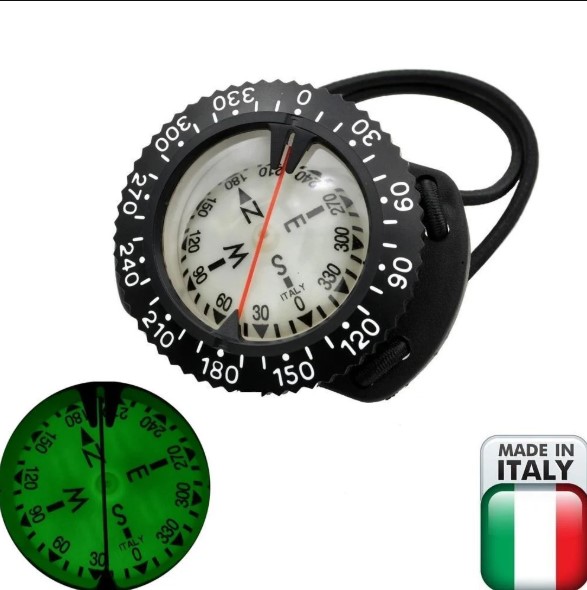
The PILOT 1 is a highly responsive, liquid-filled dive compass engineered specifically for recreational, technical, and professional divers who need reliable directional tracking in challenging conditions. Its standout benefit is an exceptional tilt tolerance, allowing you to read your heading accurately even when your wrist isn't perfectly flat. Whether you are navigating a sweeping sand flat, tracing a low-visibility quarry wall, or trying to find your way back to the boat anchor, this instrument offers the reliability that digital systems struggle to match. If you are serious about your safety and want to refine your underwater navigation, this dive compass is absolutely worth your consideration.
The Realities of Navigating in Low Visibility
Under ideal conditions, navigation feels straightforward. You look at the sun, follow sand ripples, or keep an eye on a distinct rock formation. But ideal conditions are rare. Currents can pull you off course without you realizing it, a phenomenon known as sideslip. If you don't have a reliable instrument to reference, you will find yourself swimming in a giant circle, wasting precious gas and adding unnecessary stress to your dive.
Natural navigation should always be your first line of defense, but it works best when paired with an analog compass. When you read the Official Manual and training guidelines from major agencies, they emphasize that a compass acts as your ultimate sanity check. It doesn't care about shifting light, it doesn't care if the thermocline has turned the water foggy, and it doesn't require a satellite signal to know where North is.
Why Digital Compasses Fall Short as Primary Navigation Tools
Many modern dive computers include integrated digital compasses. While convenient, they have notable limitations. First, they consume battery power rapidly. Second, they often require you to hold your wrist completely flat to get an accurate reading, and any slight tilt can cause a significant error or trigger a warning screen. Finally, reading a small digital screen in direct, bright sunlight near the surface or in extremely silty water can be incredibly difficult. The bold, physical dial of a traditional instrument is much easier to read at a quick glance.
The Technical Blueprint of the PILOT 1
To understand why this instrument performs well, we need to look at its physical construction. The housing is made from a rugged, impact-resistant polycarbonate shell designed to withstand the knocks and scrapes that occur when climbing back onto a dive boat or squeezing through tight spaces. Inside, the compass card sits suspended in a highly viscous liquid that dampens movement, preventing the needle from spinning wildly when you change direction.
The rotating bezel features aggressive, easy-to-grip teeth. This design choice is vital because you'll often be adjusting your bezel while wearing thick neoprene gloves. If the bezel is too smooth, your fingers will slip, making it difficult to set your heading or calculate your return course. The bezel on this model rotates with positive, distinct clicks, helping you feel the adjustments even when your hands are cold and numb.
The Side-Read Window: A Crucial Design Feature
One of the most practical aspects of the design is the dual-reading window. You can read your heading from the top, which is perfect when you are holding the compass directly in front of you during a dedicated navigation run. However, it also features a side-scan window. This allows you to hold the compass at eye level and read your direct heading while looking straight ahead. This side-read design makes it much easier to maintain your heading while keeping your eyes on your buddy and your surroundings, rather than constantly staring down at your wrist.
Technical Specifications at a Glance
- Housing Material: Heavy-duty, scratch-resistant polycarbonate
- Filling Fluid: High-viscosity damping oil for card stability
- Bezel Type: 360-degree rotating bezel with tactile clicks
- Readout Design: Dual-read (top-down and side-scan window)
- Luminescence: Phosphorescent backing for dark water and night dives
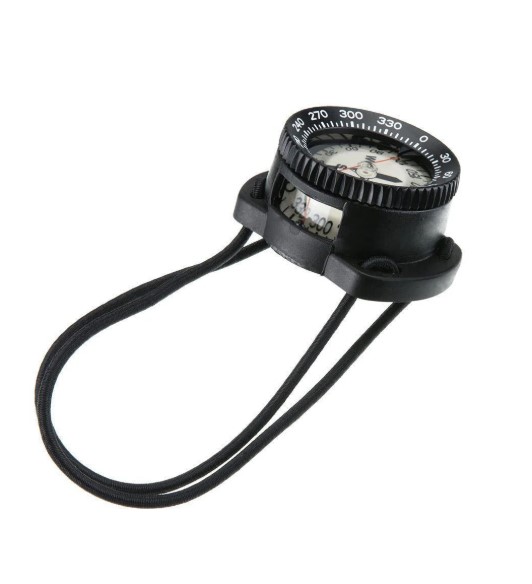
- Mounting: Supports traditional wrist straps and can be retrofitted for bungee boots
The High-Tilt Advantage Explained
If you've used cheap compasses, you know the frustration of the card locking up. When you tilt your wrist even slightly, the card inside hits the top casing and gets stuck, giving you a completely false reading. To fix this, you have to awkwardly adjust your hand until the compass is perfectly flat, which distracts you from your dive and ruins your streamlined posture.
The PILOT 1 addresses this with a generous tilt tolerance. This means the internal card can tilt significantly without getting stuck against the housing. This feature is particularly valuable when you are swimming against a current, carrying a camera rig, or holding a dive light. You can keep a natural swimming position and still get an accurate, real-time heading. It removes the constant need to micro-manage your wrist position, making your underwater navigation smoother and far more accurate.
Luminescence and Visibility in Dark Waters
Diving isn't always done in crystal-clear tropical waters. If you are exploring a local lake, diving at night, or entering a deep wreck, you will quickly find yourself in pitch-black conditions. Under these circumstances, you need an instrument that remains visible without requiring you to shine your dive light directly onto it every two seconds, which can ruin your night vision.
This compass features a highly phosphorescent dial. Before you descend, or during the dive, you can charge the backing by shining your dive light onto the face for a few seconds. The glow lasts long enough to let you track your heading through dark passages or during your safety stop. The numbers and hash marks are bold and black, providing a sharp contrast against the glowing background to prevent any misreadings when you are tired or experiencing mild nitrogen narcosis.
Step-by-Step Guide to Mastering Compass Navigation
Owning a high-quality instrument is only half the battle; you also need to know how to use it. Many divers pass their open water navigation exercises and then promptly forget the core skills. Let's break down the most common navigation maneuvers you'll perform with your equipment.
Setting a Straight Heading
To swim a straight line, point the lubber line (the prominent line on the casing) in your desired direction of travel. Turn the rotating bezel until the double index marks align perfectly with the North-seeking arrow. As you swim, keep the North arrow nested between those two marks. If the arrow drifts out of the marks, you are veering off course and need to correct your body position.
Calculating a Reciprocal Course
A reciprocal course is simply the 180-degree return path to your starting point. If you swam out at 90 degrees, you need to return at 270 degrees. To calculate this easily without doing math in your head under water, use your bezel. Once you reach your turning point, rotate the bezel until the single index mark aligns with the North arrow (opposite of where you started). Alternatively, keep your body turning until the North arrow points directly to the single mark on the opposite side of your bezel. This simple technique ensures you head straight back to your entry point without getting lost.
Executing a Square Search Pattern
Square search patterns are incredibly useful for locating a lost object, a specific reef feature, or the anchor line. To run a square search:
- Set your initial heading and swim for a set number of kick cycles (e.g., 10 kicks).
- Turn 90 degrees by rotating your bezel 90 degrees in your desired direction, then turn your body until the North arrow aligns with the new setting.
- Swim for the same number of kick cycles.
- Repeat the turn and swim sequence. After four 90-degree turns of equal distance, you should end up exactly back where you started.
Analyzing the YouTube Video Review
To see how this instrument performs in action, watch the video review linked below. It shows the responsiveness of the internal card, the tactile feel of the bezel, and how the luminescence behaves under different lighting conditions. Seeing the card settle quickly after a sudden turn highlights the quality of the internal damping fluid.
In the video, you can observe how the user tests the tilt limits of the card. Notice that even when held at a noticeable angle, the card continues to spin freely and point North without sticking. This visual demonstration confirms the practical utility of the high-tilt design, showing that it isn't just a marketing claim but a functional feature that works in real-world scenarios.
Community Insights: What Divers Are Saying on Reddit
When you browse the Reddit Scuba Community, you quickly realize that divers are highly opinionated about their navigation gear. A major point of discussion is the comparison between wrist mounts and alternative mounting options. Many technical divers prefer to remove the standard rubber wrist strap and install a bungee mount instead.
The reasoning behind this is simple: as you descend, your wet suit or dry suit compresses under pressure. A standard rubber strap that felt tight on the surface can become loose and start sliding around your forearm at ninety feet. A bungee mount, however, automatically contracts as your suit compresses, keeping the compass securely in place on your arm. The housing of this model is compatible with aftermarket bungee boots, making it a versatile choice for divers who want to customize their gear configuration.
Another common topic on Reddit is the debate between hose mounts and wrist mounts. Hose-mounted compasses attach directly to your pressure gauge console. While this keeps your wrists free, many experienced divers point out that it forces you to hold your console out in front of you, which can disrupt your trim and make it harder to maintain a clean swimming position. A wrist- or forearm-mounted instrument allows you to swim naturally with your arms tucked in, which is much better for air consumption and overall streamlining.
Real-World Comparison: Akuana Pilot 1 vs. Other Brands
To help you decide if this is the right tool for your dive kit, let's look at how it compares to other common models on the market, such as the Suunto SK-8.
| Feature | PILOT 1 | Standard Dive Compasses |
|---|---|---|
| Tilt Compensation | Excellent (up to 30 degrees) | Poor (typically locks at 10-15 degrees) |
| Side-Scan Window | Yes, large and easy to read | Sometimes missing or very small |
| Bezel Grip | Deep, aggressive teeth for cold gloves | Shallow ridges, hard to turn with thick gloves |
| Luminescence | Long-lasting phosphorescent backing | Standard paint, fades quickly |
While standard compasses might save you a few dollars initially, they often become a source of frustration under water. The inability to handle minor wrist tilts and the lack of a prominent side-scan window can make navigating feel like a chore. Investing in an instrument built for harsh conditions pays off every time you step into the water.
Analyzing Pros and Cons
No piece of dive equipment is absolutely perfect for every single scenario. To give you an honest appraisal, let's break down the advantages and the minor drawbacks of this particular model.
- High tilt tolerance prevents the card from locking up when your arm is slightly angled.
- The aggressive bezel grip is incredibly easy to turn, even when wearing 5mm neoprene gloves.
- The side-scan window allows you to keep an eye on your surroundings while tracking your heading.
- Phosphorescent dial glows brightly and is easy to charge with a standard dive torch.
- Highly durable casing protects the internal capsule from hard impacts on dive boats.
- It is physically larger than some minimalist compasses, which might feel bulky on smaller wrists.
- Like all liquid-filled compasses, small bubbles can form at extreme altitudes or temperatures (though they typically disappear once back in normal conditions).
Brand Credibility: The Story Behind Akuana Gear
When buying gear that your safety depends on, you want to know who is standing behind the product. Akuana Gear has established a solid reputation among technical and recreational divers for building hard-wearing, reliable equipment that doesn't rely on flashy marketing tricks. They focus on clean engineering, durable materials, and functional designs.
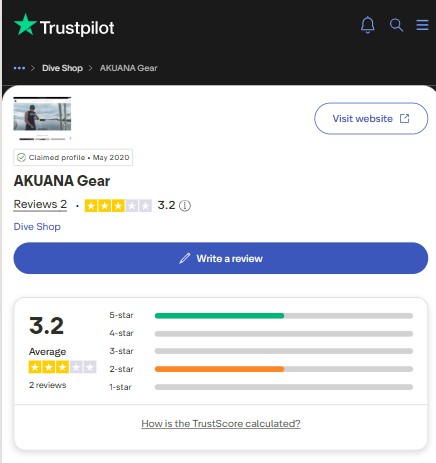
Their standing in the dive community is reflected in their customer feedback. If you check their Trustpilot Profile, you will see consistent praise for their product build quality, reliable shipping, and responsive customer service. Below is a snapshot of their community rating, demonstrating their commitment to customer satisfaction:
Shipping, Payments, and Customer Support
When you purchase your gear, you want a smooth, secure transaction. The checkout process is fully protected, supporting a wide range of secure payment options including major credit cards and digital wallets. You can review their payment security and complete your purchase directly on the Official Payment Portal.
They offer fast international shipping options, ensuring your gear arrives in time for your next dive trip. If you have questions about shipping rates, tracking numbers, or international delivery times, you can find all the details on their Contact and Shipping Page. Additionally, their products are backed by a robust warranty to protect against manufacturing defects. You can read the full legal details of their warranty coverage on their Terms of Service Page. If you ever run into an issue or need advice on how to maintain your equipment, their customer service team is easy to reach through their Customer Support Portal.
Maintenance Practices to Protect Your Gear
An analog compass is a tough instrument, but it still requires basic care to ensure a long service life. Saltwater is highly corrosive, and fine sand particles can find their way under the rotating bezel, making it difficult to turn. Follow these simple steps after every day of diving:
- Rinse thoroughly with fresh water: Soak your compass in warm, fresh water for at least fifteen minutes after diving. This helps dissolve salt crystals that have formed in the crevices.
- Rotate the bezel while submerged: While rinsing, gently turn the rotating bezel back and forth. This flushes out any trapped sand grains or grit that could scratch the housing or jam the mechanism.
- Avoid direct sunlight when storing: Keep your compass out of direct sunlight when you aren't using it. Prolonged exposure to intense UV rays and heat can cause the liquid inside to expand, potentially damaging the seals and creating a permanent air bubble.
- Keep away from magnetic sources: Store your instrument away from dive lights, speakers, knives, and other gear that contains magnets. Strong magnetic fields can demagnetize the needle, causing it to lose its orientation to North.
Frequently Asked Questions About the Pilot 1
Can I use this compass in both the Northern and Southern Hemispheres?
Most analog compasses are balanced specifically for either the Northern or Southern Hemisphere. Because the Earth's magnetic field lines point down into the ground at the poles, a compass needle must be balanced to sit flat in its specific region. This model is calibrated for the Northern Hemisphere. If you take it deep into the Southern Hemisphere, the card will tilt significantly and may drag against the top or bottom casing, which can affect its accuracy. If you plan to travel across hemispheres, keep this calibration in mind.
What should I do if a small bubble appears inside the liquid chamber?
It is not uncommon for a tiny bubble to appear if you dive in extremely cold water or travel to a high-altitude dive site. This happens because the liquid inside contracts slightly in response to temperature and pressure changes. In most cases, a small bubble will not affect the rotation or accuracy of the card. Once you return to normal temperatures and sea-level pressures, the bubble will typically shrink or disappear entirely. However, if a large bubble forms and stays, it could indicate a compromised seal, and you should contact customer support to get it inspected.
Is it difficult to convert this compass from a wrist strap to a bungee mount?
No, the process is straightforward. The compass capsule sits securely inside a protective boot. You can carefully pop the capsule out of its standard wrist boot and insert it into an aftermarket bungee boot. Many divers find that using two pieces of shock cord (bungee) provides excellent security and automatic depth compensation, making it much easier to wear over a thick dry suit sleeve.
How does the side-scan window actually help underwater?
The side-scan window is designed to let you check your heading without changing your swimming posture. When you hold the compass at eye level, you can look straight through the window and read your exact heading. This is incredibly helpful when swimming over reefs or wrecks, as it allows you to maintain your trim and keep your eyes on your buddy, rather than constantly staring down at your wrist to read the top dial.
Can exposure to direct sunlight damage the compass?
Yes, excessive heat and UV exposure can cause damage. Leaving your compass on a hot boat deck under direct sunlight can heat the damping fluid, causing it to expand. This expansion can crack the housing or rupture the internal seals, leading to fluid leaks and large air bubbles. Always store your compass in a cool, shaded gear bag when you are not in the water.
The Final Verdict on the PILOT 1
When it comes to underwater navigation, there is no substitute for a reliable, well-engineered analog instrument. While digital screens offer plenty of conveniences, they cannot match the sheer dependability of a liquid-filled compass that requires no batteries, no software updates, and no mid-dive calibrations.
The PILOT 1 stands out because it solves the most common frustrations of analog navigation. Its generous tilt tolerance ensures that your readings remain accurate even when your body position isn't perfect. The aggressive bezel teeth allow you to make quick, precise adjustments while wearing thick gloves, and the highly phosphorescent backing makes it a reliable tool in the dark, murky waters that divers often encounter. Combined with its tough polycarbonate housing and versatile mounting options, this is an exceptional piece of safety gear that deserves a permanent place in your dive kit.

0 Comments