
Atomic Regulator: In-Depth Technical Review of the Atomic Aquatics T3 Titanium System
The Atomic Aquatics T3 Titanium Regulator represents the absolute peak of lightweight underwater life-support engineering. Designed specifically for serious warm-water travelers, demanding recreational divers, and gear enthusiasts who demand non-corroding hardware, this flagship system drops your overall dive gear bag weight without sacrificing breathing performance. If you're looking for an atomic regulator that delivers a silky-smooth airflow at 130 feet while virtually eliminating jaw strain during two-hour dives, the T3 stands out as a top contender. It's built to withstand decades of heavy saltwater exposure without showing the green scale or internal pitting typical of standard chrome-plated brass models. While the steep price tag requires a real investment upfront, its 2-year or 300-dive service interval and robust build make it one of the most reliable rigs you can buy today.
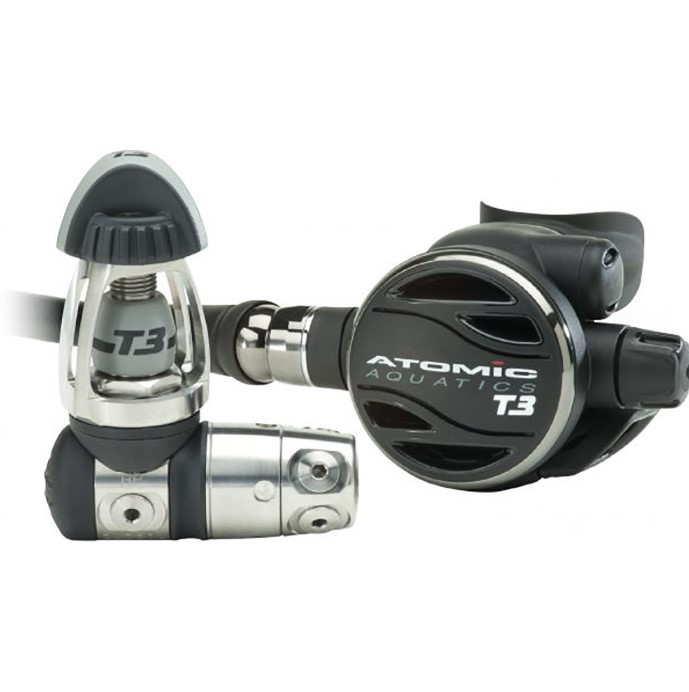
An extra discount is automatically applied when purchasing through our secure partner link above.
Engineering and Metallurgy: Why Titanium Construction Matters Under Water
When you drop below the surface, seawater immediately goes to work corroding metals. Standard regulators rely on marine-grade brass treated with chrome plating. Over time, salt crystals, minor scratches, and moisture inside the first stage cause chrome to flake, leaving underlying brass open to oxidation. Atomic Aquatics solved this structural headache by precision CNC-machining the T3 first and second stage bodies entirely from exotic exotic titanium alloys.
Titanium doesn't rust, scale, or react with salt brine. It forms an immediate, self-healing microscopic oxide layer when exposed to oxygen. This chemical property gives the T3 total immunity to harsh ocean environments. Beyond raw corrosion resistance, titanium boasts an incredible strength-to-weight ratio. The total weight of the T3 first and second stage combined comes in under 1.8 pounds (approx 780 grams), making it significantly lighter than traditional brass setups.
How Weight Reduction Eliminates Mouth Fatigue
If you've ever completed a week of three-tank daily boat dives, you know the dull ache in your front teeth and jaw muscles caused by heavy second stages pulling downward. Standard regulators require your mouth to maintain upward pressure against the weight of the second stage body and stiff rubber hoses.
Because titanium is nearly half the density of brass, the second stage achieves near-neutral buoyancy in the water column. Combined with Atomic's full 360-degree titanium ball swivel on the LP hose, the second stage floats comfortably in your mouth without pulling to one side when you turn your head to check a gauge or look at a buddy.
First Stage Architecture: The Flow-Through Balanced Piston Engine
The T3 first stage uses a high-flow, balanced piston design rather than a diaphragm mechanism. Piston first stages are favored by deep divers because they respond almost instantly to breathing demands, pushing large volumes of gas to the second stage even when tank pressure drops low toward the end of a dive.
Key First Stage Specifications
- Material: Solid Machined Titanium Body & Internal Components
- Design: High-Flow Balanced Piston
- Ports: 2 High Pressure (HP) Fixed Ports, 5 Low Pressure (LP) Ports on a Revolving Turret
- Factory Freeze Protection: Sealed ambient chamber to limit ice buildup and internal contamination
- Working Pressure: Yoke option rated to 3000 PSI (232 bar), DIN option rated to 4350 PSI (300 bar)
Atomic engineered an exclusive sealing system into the T3 first stage that packs special silicone fluid into the ambient chamber. This design isolates the main piston spring from direct contact with raw ocean water. By blocking salt, sand, and silt from reaching the internal moving parts, internal wear drops sharply. It also helps prevent icing inside the spring cavity when diving in chilly water, though for sub-40°F (4°C) extreme ice diving, specialized diaphragm regulators built specifically for freezing conditions remain a common alternative choice.
Low-Pressure Turret Routing for Clean Hose Management
Hose routing can quickly turn into a cluttered web of rubber lines if your first stage ports sit at awkward angles. The T3 includes an integrated low-pressure swivel turret on the bottom of the first stage. With five LP ports arranged around the rotating cap—including a high-flow axial end port—you can route your primary regulator hose, octopus, BCD inflator, and drysuit hose along smooth, natural angles.
When diving back-mounted single tanks or light travel rigs, this swivel action allows your hoses to sit low along the neck of the cylinder, preventing tall loops that catch on overhangs, kelp, or wreck openings.
Second Stage Mechanics: AFC and Dynamic Seat Protection
While the first stage regulates incoming tank pressure down to an intermediate delivery level, the second stage determines how naturally gas feels when you pull a breath. The T3 second stage features two distinct mechanical features patented by Atomic Aquatics: Automatic Flow Control (AFC) and the Seat-Saving Orifice.
Automatic Flow Control (AFC) Explained
Most traditional second stages feature a manual venturi lever marked "Dive / Pre-Dive." On the surface, you flip the lever to "Pre-Dive" to stop the regulator from free-flowing if dropped into the water. Before descending, you manually switch it to "Dive" to direct air movement inside the housing for easy inhalation.
The T3 eliminates manual levers entirely using its depth-compensating AFC system. A pressure-sensitive computer-designed silicone diaphragm inside the bypass tube senses ambient water pressure and automatically shifts a venturi vane position as you descend:
- At the surface: Venturi airflow is restricted, stopping accidental free-flows during giant stride entries or surface swims.
- As you descend: Increased ambient pressure pulls the internal vane back, opening up natural venturi assistance for effortless gas flow without requiring manual adjustment.
The result is a simple, intuitive breathing response. You don't have to keep track of extra switches or knobs at 90 feet when managing multi-tasking photo gear or navigation floats.
The Seat-Saving Orifice: Extending Maintenance Intervals
In standard regulators, the sharp edge of the brass orifice rests tightly against a soft rubber valve seat 100% of the time—even when your gear sits packed inside a warm storage bag for six months. Over time, that constant pressure cuts a deep permanent groove into the soft seat rubber, causing slow air leaks (creeping) and requiring frequent technician tuning.
Atomic's dynamic Seat-Saving Orifice retracts away from the rubber seat whenever the regulator is depressurized. The moment you pressurized the system by opening your tank valve, internal air pressure pushes the orifice forward against the seat. When you bleed the system down after a dive, a delicate spring pulls the orifice away from the rubber pad. Based on long-term testing, this mechanism helps preserve factory intermediate settings and keeps breathing efforts silky smooth for years.
Real-World Field Testing: In the Water with the T3
To truly understand how this atomic regulator handles, you have to push it through varied conditions—from high-current drift dives in Cozumel to deep recreational wrecks off Florida's coast. During in-water trials across various depths, the immediate observation is the low inhalation resistance across changing cylinder pressures.
At a depth of 120 feet with a cylinder pressure dropping under 800 PSI, breathing resistance stays consistent. There's no subtle "gasping" sensation or lag during deep inhalations under heavy work loads (like swimming against a stiff current). Air delivery feels smooth and steady rather than rushing into your throat aggressively.
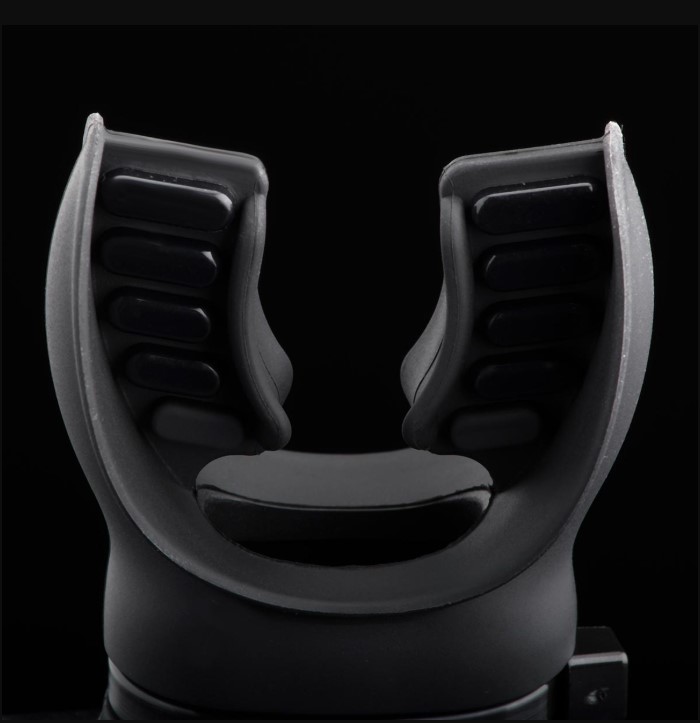
The physical comfort of the titanium second stage also stands out during long dives. Combined with the factory dual-material mouthpiece (which blends firm bite tabs with soft silicone flanges), your jaw stays completely relaxed. You don't need to bite down hard on the rubber tabs to keep the regulator centered in your mouth, which helps prevent jaw fatigue on long multi-dive days.
Detailed Comparison: Atomic T3 vs. Top Competitors
Choosing a top-tier regulator means comparing technical specs, materials, and long-term costs against competing gear. Below is a head-to-head breakdown showing how the Atomic T3 stack up against the Atomic B2, Scubapro's MK25 EVO/A700, and the cold-water Apeks MTX-RC.
| Feature / Model | Atomic T3 | Atomic B2 | Scubapro MK25 EVO / A700 | Apeks MTX-RC |
|---|---|---|---|---|
| First Stage Material | Full Machined Titanium | Chrome-Plated Brass | Chrome-Plated Brass | Satin Chrome Brass |
| Second Stage Material | Titanium & Composite | Titanium & Composite | Full Metal Brass Case | Reinforced Polymer / Metal |
| First Stage Design | Balanced Piston | Balanced Piston | Balanced Piston | Over-Balanced Diaphragm |
| Combined Weight (Yoke) | ~1.76 lbs (798g) | ~2.5 lbs (1133g) | ~2.9 lbs (1315g) | ~2.88 lbs (1306g) |
| Service Interval | 2 Years / 300 Dives | 2 Years / 300 Dives | 2 Years / 100 Dives | 1 Year |
| Primary Strength | Ultra-light, anti-corrosion flagship travel rig | Great performance value with lightweight 2nd stage | Deep air flow delivery, all-metal durability | Extreme cold-water ice diving resistance |
T3 vs. Atomic B2: Is Titanium Worth the Extra Investment?
One of the most frequent debates among gear buyers revolves around whether to buy the all-titanium T3 or choose the Atomic B2 model instead. In online discussions like this Reddit r/scuba thread comparing the T3 and B2 regulators, divers consistently point out that both models deliver identical breathing performance under water because their internal second stage components are practically identical.
The critical difference comes down to the first stage body material. The B2 pairs a chrome-plated brass first stage with a titanium second stage. This keeps breathing effort and mouth comfort identical to the T3 while saving significant money upfront. However, the brass first stage of the B2 is nearly a pound heavier than the T3 titanium first stage and requires more thorough surface rinsing to prevent chrome corrosion over long periods of use.
If you fly frequently with dive gear where every pound counts toward airline baggage limits—or if you simply want complete immunity to metal corrosion—the T3 justifies its position. If luggage weight isn't a main concern, the B2 offers similar breathability for less money.
Maintenance Directives and Service Intervals
Proper care is straightforward, but titanium requires a few specific precautions during annual maintenance and surface care:
- Rinsing Protocol: Always keep the protective dust cap firmly seated over the first stage filter before soaking your gear. Wash with fresh water after every ocean dive day. Never press the second stage purge button while rinsing on a unpressurized system, as water can leak past the open valve seal into the hose.
- Service Requirement: Under standard operating conditions, the official service window is 2 years or 300 dives—whichever comes first. You can double-check service routines directly inside the official Atomic Aquatics Regulator Manual.
- Specialized Servicing: Titanium threads can strip or lock up (gall) if serviced using improper lubricants or incorrect torque settings. Always send your T3 to an authorized Atomic repair center where trained technicians use oxygen-compatible lubricants like Christo-Lube MCA 111.
Retailer Buying Advice, Shipping, Warranty, and Support
Buying investment-grade life support equipment requires picking an authorized dealer with solid warranty coverage, fast order fulfillment, and dedicated technical support. Purchasing through verified retail partners ensures full access to manufacturer warranty protections and authentic replacement parts.
Check independent buyer satisfaction on the Dive Right In Scuba Trustpilot page.
When purchasing your equipment, review these customer service resources to help ensure a smooth ordering experience:
- Shipping Details: Review delivery timeframes, tracking updates, and international transit coverage on the Dive Right In Scuba shipping policy page.
- Warranty Terms: Learn how repair guarantees, registered owner coverage, and component replacement policies operate via the Dive Right In Scuba warranty documentation.
- Flexible Financing: Look over available interest-free payment options, layaway, and price protection on the payment plans and price-match policy page.
- Expert Customer Support: Speak directly with certified dive technicians for gear setup advice using the Dive Right In Scuba contact support desk.
Video Breakdown: Seeing the Atomic T3 Architecture Up Close
To view the physical layout, internal dynamic seals, and light frame of the Atomic T3 in detail, check out this video overview:
Final Verdict: Is the Atomic T3 Worth the Investment?
The Atomic Aquatics T3 isn't meant for casual divers who log two quarry dives a year. It's a high-end, carefully engineered breathing system built for divers who spend extensive time in the water and appreciate top-tier metallurgy.
Its strength lies in what you feel—or rather, what you don't feel—during a dive. You won't feel heavy jaw strain, you won't feel sudden inhalation lag at depth, and you won't see green corrosion flaking off your first stage after years of ocean diving. If you travel frequently, appreciate precision engineering, and want one of the lightest, smooth-breathing regulators available today, the T3 remains a standout choice for long-term reliability.
Order today through our direct retail link to lock in safe ordering and discounted pricing.
Frequently Asked Questions
Can I use the Atomic T3 regulator for Nitrox mixtures?
Yes. Atomic regulators come factory-cleared for Enriched Air Nitrox (EANx) mixtures up to 40% oxygen right out of the box using standard pre-blended gas. If you plan to use higher oxygen concentrations (up to 100% O2) for dedicated decompression staging, the regulator must be specially serviced and cleaned by an authorized technician using oxygen-compatible O-rings and lubricants.
Is titanium safe for cold water or extreme ice diving?
While the T3 includes a factory-sealed ambient spring chamber that helps slow internal ice formation, pure titanium transfers ambient temperatures quickly. For standard temperate diving down to 50°F (10°C), it performs exceptionally well. However, for specialized sub-freezing ice diving under thick ice sheets, an environmentally sealed diaphragm regulator with specialized cold-water heat sinks (like the Apeks MTX-RC) is generally recommended.
Why is the Atomic T3 more expensive than standard regulators?
The cost difference stems directly from raw materials and machining complexity. Machining solid Grade 5 titanium requires specialized cutting tools, slower manufacturing speeds, and strict quality control compared to working with soft brass. This process creates an ultra-light, non-corroding component designed to last decades without surface breakdown.
What is the main difference between Yoke and DIN connections on the T3?
The Yoke fitting slides over standard cylinder valves and clamps down with a rear screw knob, which is widely used across North America and Caribbean resorts (rated to 3000 PSI / 232 bar). The DIN version screws directly into the cylinder valve threads, forming a tighter internal seal rated up to 4350 PSI (300 bar). DIN connections are lighter, safer against high-pressure impact, and preferred by deep and technical divers worldwide.

0 Comments