
Field Evaluation: Why the Zeagle Ranger BCD Remains the Gold Standard for Heavy-Duty Diving
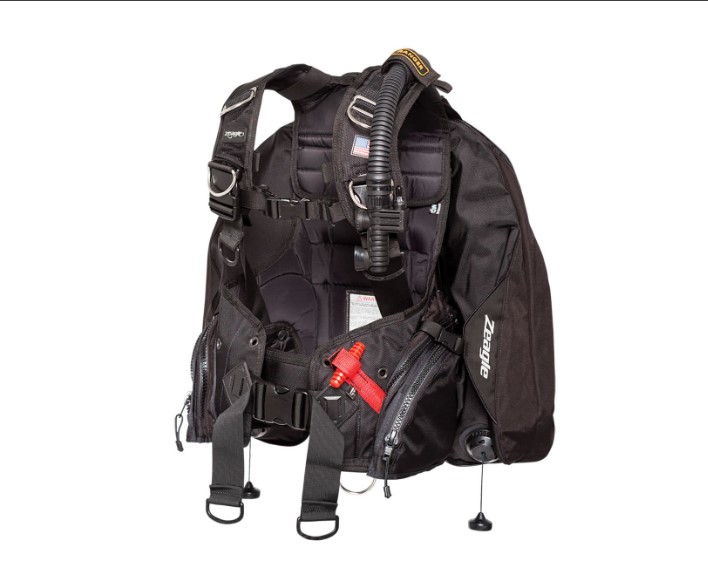
The zeagle ranger bcd is a heavy-duty, back-inflation buoyancy compensator engineered specifically for recreational divers who demand professional-grade durability, cold-water divers carrying heavy ballast, and working divers who need custom sizing options. With its massive 44-pound lift capacity bladder and construction made from 1050 Denier ballast nylon, it solves the problem of flimsy gear that wears out after a few seasons. If you want a BCD that maintains effortless trim underwater, handles heavy steel tanks without flexing, and offers completely independent shoulder and waist sizing, the Ranger is absolutely worth every penny of your investment.
Purchases are processed securely through Dive Right In Scuba with automatic discount activation applied via the link above.
When you sit down on a dive boat and take a look at what local charter captains, public safety divers, and instructor trainers are wearing, you notice a recurring pattern. You don't see delicate, lightweight travel BCDs with thin plastic buckles. You see worn, salt-crusted Zeagle Rangers that have been through two decades of abuse and thousands of bottom hours. The reason for this longevity isn't clever marketing; it comes down to raw material selection and simple, mechanical engineering.
Most modern recreational jacket-style BCDs rely on 420 Denier nylon or even 210 Denier ripstop fabric to save weight for airline baggage limits. While that works fine for occasional warm-water vacations in 3-millimeter wetsuits, it quickly fails when exposed to rusty boat ladders, barnacle-encrusted wreck hulls, or heavy weight belts. The Ranger takes the exact opposite approach. Its outer bladder assembly is constructed entirely from 1050 Denier heavy-duty nylon, featuring an inner urethane laminate that prevents water absorption and resists punctures from sharp edges.
Key Specifications & Physical Attributes
- Outer Bladder Material: 1050 Denier Ballast Nylon (maximum puncture and abrasion resistance)
- Inner Bladder Material: 15-mil Urethane heavy-duty internal air cell
- Lift Capacity: 44 lbs (19.9 kg) standard back-inflation air cell
- Weight Release System: Mechanical Ripcord cable system (up to 30 lbs drop capacity)
- Rear Trim Weight Capacity: Dual rear pockets holding up to 16 lbs total non-ditchable weight
- Sizing Framework: Personal Fit System (PFS) allowing independent shoulder, vest, and waist sizing
- Hardware: Heavy-duty forged stainless steel D-rings (4 on shoulders, 2 on waist, plus lower attachment points)
- Tank Compatibility: Single tank standard, expandable to twin tank setup using optional dual-tank band kit
Understanding the Personal Fit System (PFS): Tailored Ergonomics Without Custom Tailoring
One of the biggest struggles divers encounter with off-the-shelf BCDs is finding a size that fits both their shoulder height and waist circumference. If you have broad shoulders but a narrow waist, a standard "Large" BCD will feel loose around your torso, causing the tank to slide side-to-side during the dive. Conversely, if you wear thick cold-water undergarments beneath a drysuit, a "Medium" might restrict your shoulder mobility while fitting your waist perfectly.
Zeagle solved this structural issue by inventing the Personal Fit System (PFS). Instead of stitching the entire harness together as a single rigid garment, the zeagle ranger bcd uses a modular design where three distinct components—the shoulder section, the rear vest panel, and the waist cummerbund—are assembled using heavy-duty webbing locks and stainless steel fasteners.
This modular construction means you can pair Large shoulder straps with a Medium vest section and a Small cummerbund. If your body shape changes over time, or if you switch from a 3mm tropical suit to a heavy drysuit with undergarments, you don't need to purchase an entirely new BCD. You simply swap out individual components, which can be sourced directly through authorized dealers like Dive Right In Scuba.
How the Modularity Changes Underwater Stability
When a BCD fits your torso frame precisely, the center of gravity of your scuba cylinder aligns directly with your spine. During lateral turns along a reef wall or when swimming sideways to inspect a ledge, a properly fitted Ranger stays locked to your body. You eliminate that annoying tank-roll sensation that forces your core muscles to constantly adjust underwater.
Furthermore, the shoulder straps feature swiveling side-release buckles. Rather than forcing the webbing to lie flat at a fixed 90-degree angle across your chest, these pivot points automatically route the shoulder straps across your pectoral muscles according to your natural posture. This reduces shoulder pinching during long surface swims and prevents restriction across your chest when you inhale fully.
Buoyancy Engineering: The 44 lb Back-Inflation Air Cell
To understand why the Ranger performs so well in the water, you need to examine the physics of back-inflation vs jacket-style construction. In a traditional jacket BCD, air surrounds your torso under your arms and across your chest. When you inflate the unit, it expands inward, creating chest squeeze. In contrast, the zeagle ranger bcd places 100% of its air volume behind your body, leaving your chest completely open and uncluttered.
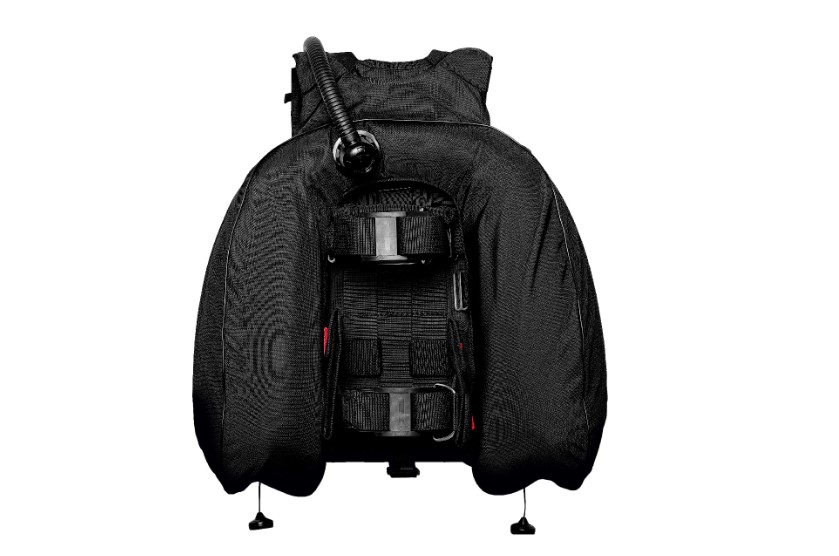
The standard air cell provides 44 pounds of positive lift. To put that in context, a standard aluminum 80 tank needs about 2 to 6 pounds of buoyancy adjustment depending on your depth and tank pressure. A heavy steel 100 or 120 cylinder, combined with a 7mm wetsuit that loses buoyancy as it compresses at 100 feet, might demand 20 to 25 pounds of total lift compensation. The Ranger’s 44-pound capacity gives you a massive safety margin, easily allowing you to bring a heavily weighted rig to the surface or support an incapacitated dive buddy during an emergency assist.
Managing Back-Inflation Tendencies at the Surface
A common critique of back-inflation BCDs from novice divers is that they "push you forward" onto your face while floating at the surface. This happens because the air bladder acts as a pivot point behind your center of gravity. However, this is purely a matter of proper technique and weight placement rather than a flaw in the BCD's design.
To maintain a comfortable upright or slightly reclined position at the surface in a back-inflation BCD, follow these practical field steps:
- Avoid over-inflating the air cell at the surface: You only need enough air in the bladder to keep your eyes and mouth clear of the water. Adding 44 pounds of lift when you only need 10 pounds forces the air cell high out of the water, creating an upward force behind your shoulders that tips you forward.
- Utilize the trim weight pockets: The Ranger includes two rear trim pockets mounted on the cylinder band. Placing 2 to 4 pounds of ballast in each rear pocket shifts your lower body center of mass backward, perfectly counteracting the forward torque of the bladder.
- Lean back into the harness: Rest your head back slightly against the cylinder valve, letting the back-inflation bladder act like a comfortable lounge chair on top of the water.
The Ripcord Weight System: Mechanical Reliability Under Pressure
Integrated weight systems are standard on modern BCDs, but the implementation varies drastically between manufacturers. Many brands use plastic clip-in pouches that slide into fabric holsters. Over time, these plastic clips can wear down, leading to accidental loss of weight pockets when jumping off a dive boat—or worse, the clips can warp with sand grit, making them nearly impossible to pull in a real emergency.
The zeagle ranger bcd uses a patented mechanical system known as the Ripcord Weight Release. Instead of individual plastic clips for each pocket, a heavy-duty flexible plastic cable threads through a series of reinforced cloth loops along the bottom of both weight compartments.
When you grab the bright red Ripcord handle located on the right side of the harness and pull it outward, you draw the single cable completely out of the loops on both sides simultaneously. The bottom seams of both weight pockets immediately drop open, dropping all main ballast instantly.
Field Advantages of the Ripcord System
- Zero Plastic Fatigue: There are no plastic latches to crack, split, or degrade in sunlight. The system relies entirely on mechanical cable tension and heavy fabric loops.
- Single-Action Operation: In an out-of-air or emergency surface scenario, you don't need to locate and independently dump two separate weight pockets. A single pull releases all primary ballast at once.
- High Capacity: The Ripcord pockets can securely hold up to 30 pounds of lead weights (split between both sides), making it suitable for cold-water divers wearing thick neoprene or drysuits who require significant ballast.
Re-Threading the Ripcord: What You Need to Know
While the Ripcord system is exceptionally reliable in underwater emergency scenarios, re-threading the cable after a ditch exercise requires a specific technique. You must feed the flexible cable back through the series of alternate fabric loops while placing your weight pouches back inside.
Based on direct operational testing and guidance from the Official Zeagle BC Manual, it takes about 3 to 5 minutes to properly reload and thread the Ripcord system on a flat surface like a dive deck or workbench. It is not something you want to do while floating in choppy water. For routine transport after a dive, most divers simply open the top zippered access panels to load block lead or soft shot weights into the pouches, leaving the Ripcord cable fully engaged.
Deep-Dive Breakdown: Official Documentation & Engineering Standards
A detailed review of the technical literature provided in the Official Zeagle BC Manual reveals critical operational specs that highlight the engineering depth of the Ranger platform:
| Feature Component | Engineering Specification | Practical Diver Benefit |
|---|---|---|
| Primary Material | 1050 Denier Ballast Cloth | Resists tears, cuts, and severe abrasion from wrecks and rock structures. |
| Dump Valves | 3 Total: Top Inflator Pull-Dump, Right Shoulder Pull-Dump, Lower Right Rear Pull-Dump | Allows rapid, precise venting of air from any body position (head-up, head-down, horizontal). |
| Weight Capacity | 30 lbs Ditchable (Ripcord) + 16 lbs Non-Ditchable (Rear Trim) | Provides flexibility for drysuit diving without requiring an additional weight belt. |
| Utility Pockets | Dual zippered expandable utility pockets on side panels | Securely stores slates, spools, SMBs, backup flashlights, or compact dive knives. |
| D-Rings | 4 Stainless Steel on shoulders (angled), 2 on waist, 2 on pockets | Offers solid attachment points for stage bottles, lights, reels, and camera lanyards. |
Real-World Community Consensus: What Divers Say on Reddit
To cross-reference our field experience with long-term community feedback, we analyzed discussions across active diving communities. On the popular Reddit Scuba Ranger Discussion, experienced divers, instructors, and commercial operators frequently debate the merits of the Ranger versus backplate-and-wing setups.
The overall consensus from long-term owners centers around three main points:
1. Bulletproof Construction: Multiple redditors report using their Ranger for over 10 years and 500+ dives without a single tear, failed zipper, or broken buckle. The heavy-gauge stitching and 1050D fabric stand up to intense environmental punishment.
2. Superior Cushioning Compared to Backplates: While technical divers often advocate for bare metal backplates, many recreational and working divers prefer the Ranger because it offers generous padding along the backplate and shoulder straps. This extra cushioning prevents cold-spots when wearing thin wetsuits and cushions heavy cylinders against your spine during long surface walks on boat decks.
3. Versatility Across Environments: Divers routinely highlight how easily the BCD transitions between warm water and cold water. By simply adjusting the waist cummerbund straps and shoulder buckles, you can switch from diving in a rash guard in Cozumel to a heavy drysuit with thermals in Puget Sound without needing a second harness.
Retailer Credibility & After-Sale Support
When purchasing high-end life-support equipment like a BCD, where you buy matters just as much as what you buy. Authorized retailers like Dive Right In Scuba provide factory-backed warranties, genuine replacement components, and professional customer service.
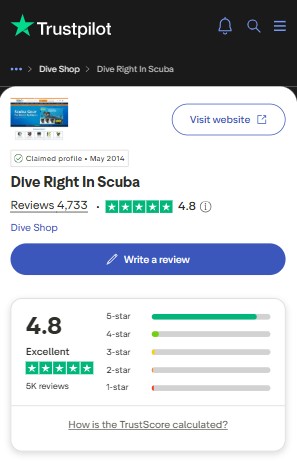
Checking independent review platforms shows that Dive Right In Scuba maintains an exceptional reputation among the dive community. Their verified Dive Right In Scuba Trustpilot Rating reflects thousands of positive customer reviews, emphasizing fast shipping, knowledgeable staff who are active divers, and hassle-free returns.
Before purchasing, it is helpful to review key store policies to ensure a seamless order process:
- Shipping Policies: Review details on international delivery options and transit times on their official Shipping Policy page.
- Warranty Coverage: Learn about manufacturer backing and long-term protection through their Warranty Policy page.
- Financing & Payment Plans: If you prefer to split your equipment costs into monthly installments or request price matching, consult their Payment Methods and Price Match page.
- Direct Expert Advice: If you need help sizing your PFS harness before buying, you can reach out directly via their Customer Support Contact page.
Video Overview & Visual Inspection
For a complete visual walkthrough of the zeagle ranger bcd features, including how the harness adjusts and how the Ripcord mechanism operates, watch this detailed video review:
Comparing the Zeagle Ranger to Competitors
To help you decide if the Ranger is the exact right fit for your diving style, let's look at how it stacks up against other popular BCD options in the industry:
| BCD Model | Primary Style | Outer Shell Fabric | Lift Capacity | Best Used For |
|---|---|---|---|---|
| Zeagle Ranger | Back-Inflation (Modular) | 1050 Denier Nylon | 44 lbs | Heavy cold-water diving, working divers, ultimate durability |
| Zeagle Covert XT | Back-Inflation (Travel) | 1000D / 420D Nylon | 34 lbs | Warm water travel, lightweight packing needs |
| Scubapro Hydros Pro | Back-Inflation (Gel Harness) | Monprene Elastomer | 36-40 lbs | Fast drying, warm/cold crossover, modular fit |
| Standard Steel Backplate & Wing | Tech / Back-Inflation | 1000D Cordura Wing | 30 to 40 lbs | Minimalist tech divers, rigid tank locking, stream-lined profile |
Ranger vs. Covert XT
If you fly frequently to tropical destinations and strictly dive in warm water with a 3mm wetsuit or shorty, the Zeagle Covert XT is lighter and folds down smaller in your luggage. However, if you plan on doing local cold-water diving, carrying heavy steel tanks, or diving in high-abrasion environments like quarries or wrecks, the zeagle ranger bcd is far more durable and provides greater lift capacity.
Ranger vs. Backplate & Wing (BP&W)
Technical divers often recommend a traditional metal backplate and continuous webbing harness. While a BP&W system is highly customizable, it lacks the integrated padding, convenient zippered storage pockets, and rapid-adjust buckles found on the Ranger. The Ranger bridges the gap between technical back-inflation performance and recreational comfort.
Step-by-Step Sizing Guide for the Personal Fit System (PFS)
Getting the correct fit on your Ranger ensures optimum stability and comfort in the water. Follow these four steps to measure yourself accurately before placing your order:
- Measure Torso Length (Shoulder Size): Measure from the top of your shoulder (trapezius muscle) down to your natural waistline (top of your hip bone). Match this to the Zeagle shoulder strap sizing chart (Small, Medium, Large, Extra Large).
- Measure Waist Circumference (Cummerbund Size): Measure around your waist at the navel line while wearing the thickest exposure suit you intend to use (e.g., drysuit with thermals). The heavy-duty Velcro cummerbund offers several inches of adjustment.
- Check Vest Panel Fit: The rear vest section connects the shoulders to the waist panel. For standard height and weight ratios, standard factory pairing works out-of-the-box. If you have an elongated torso, order a larger vest component.
- Fine-Tune Underwater Alignment: Once your BCD arrives, strap on your air cylinder while wearing your dive suit at home. Stand up and adjust the sternum strap so it sits flat across your chest without squeezing your shoulders together.
Maintenance and Long-Term Care Protocols
Because the Ranger is constructed from top-tier materials, a modest amount of routine maintenance will ensure it lasts for thousands of dives over decades of use:
- Rinse Inner Bladder Thoroughly: After diving in salt water, drain all air from the bladder. Depress the inflator button while running fresh water through the mouthpiece to fill the inner cell about 1/3 full. Inflate the cell with air, shake the BCD vigorously to dissolve salt crystals inside, and drain the water out through the lower rear dump valve.
- Inspect the Ripcord Cable: Periodically pull the Ripcord cable partially out during post-season cleaning to inspect for salt buildup, sand, or grit inside the sheath. Lightly rinse the plastic cable with fresh water and re-thread it securely.
- Store Partially Inflated: Store your Ranger on a wide, heavy-duty BCD hanger in a cool, dry place away from direct sunlight and electric motors (which generate ozone that can degrade rubber seals). Keep a small amount of air in the bladder to prevent internal urethane surfaces from sticking together.
Who Should Buy the Zeagle Ranger BCD?
The zeagle ranger bcd is the ideal choice if you fall into any of these diver categories:
- Cold Water & Drysuit Divers: You need a robust weight capacity (up to 46 lbs total ballast options) and substantial lift capacity (44 lbs) to handle thick neoprene or drysuit air compression.
- Working Divers & Instructors: You spend hundreds of hours in the water every year, hauling gear across concrete boat ramps, docks, and rocky shorelines, and need equipment that refuses to tear or break down.
- Hard-to-Fit Divers: You struggle with off-the-shelf BCD sizing and require independent shoulder and waist measurements via the PFS harness framework.
- Divers Upgrading from Standard Jacket BCDs: You want to improve your underwater trim, open up your chest area for freer breathing, and experience the streamlined horizontal stability of back-inflation.
Final Verdict: An Unmatched Legacy of Performance
In an era where many dive gear manufacturers cheapen their products with lightweight plastic parts and thin materials to cut production costs, the Zeagle Ranger stands out as an uncompromised piece of life-support equipment. It combines rugged durability, modular customization, precise buoyancy trim, and a time-tested mechanical weight release system.
If you want to buy a BCD once and dive it for the next decade without worrying about gear failure, the Ranger remains one of the smartest investments you can make in your diving setup.
Order securely from Dive Right In Scuba with full manufacturer warranty and verified customer support.

0 Comments