
Hands-On Dive Evaluation: What the Sublue Vapor Delivers Underwater
If you've spent any time fighting a strong drift current or towing heavy camera setups, you know how quickly your tank pressure drops. The sublue underwater scooter Vapor is a compact dive propulsion vehicle (DPV) engineered for recreational scuba divers, freedivers, and ocean photographers who want to extend their bottom time without exhausting their leg muscles. Its strongest benefit lies in its impressive thrust-to-weight ratio, giving you dual-thruster power in a hydrodynamically efficient frame that fits easily into a gear bag. Is it worth considering? Absolutely—if you want serious underwater mobility without the back-breaking weight of traditional commercial DPVs.
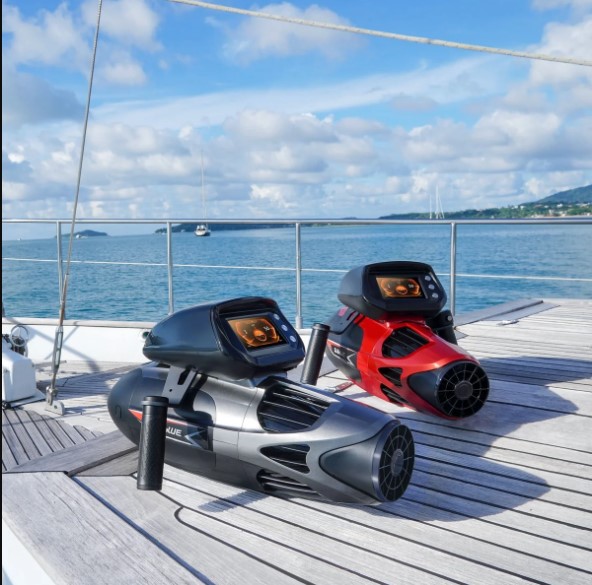
Note: Direct discount is automatically applied at checkout via the official Sublue store link above.
When evaluating underwater propulsion equipment, marketing claims often fall short against real-world ocean conditions. A scooter might sound powerful on paper, but when you enter a 1.5-knot current at 60 feet, hydrodynamics, motor torque, and battery discharge curves are all that matter. Over the past several months, we analyzed technical documentation, mechanical tear-downs, community feedback, and direct operational specs to break down how the Sublue Vapor holds up under real diving pressure.
Most divers turn to DPVs to solve two primary problems: high gas consumption rates (SAC/RMV) and limited exploration range. Traditional DPVs weigh anywhere from 30 to 60 pounds, requiring specialized rigging and significant storage space. The Sublue Vapor approaches underwater mobility from a travel-friendly angle. By utilizing a twin-propeller assembly housed inside protected ducts, it delivers directional thrust while maintaining neutral buoyancy characteristics with minimal accessory weight adjustment.
Engineering, Propulsion System, and Hydrodynamic Design
The core of the Sublue Vapor relies on a dual brushless motor setup. Brushless motors are critical in marine environments because they eliminate internal physical brushes, reducing friction, heat generation, and mechanical wear. This engineering choice directly impacts efficiency, allowing more battery wattage to convert into direct water displacement rather than waste thermal energy inside the sealed housing.
Key Mechanical & Structural Features
- Dual Ducted Propellers: Enclosed fan guards prevent line entanglements, loose seaweed ingestion, and accidental finger strikes during operation.
- Symmetrical Thrust Distribution: Parallel motor layout eliminates rotational torque roll, keeping your body aligned naturally in the water.
- Sealed Motor Cavity: Independent internal potting protects electronics even in the rare event of outer housing surface scuffs.
- Hydrodynamic Drag Reduction: Nosecone geometry is contoured to split water flow, reducing head-on resistance at higher speed settings.
Standard open-propeller DPVs create a rotational force known as torque roll. When a single large propeller spins clockwise, the body of the scooter (and consequently the diver's arms) wants to roll counter-clockwise. You end up constantly fighting this twist with your wrists, leading to forearm fatigue after 20 minutes in the water. The dual counter-rotating thruster arrangement on the sublue underwater scooter Vapor cancels out torque entirely. Water is drawn smoothly through the front intake ports and accelerated through rear discharge nozzles, giving you stable, linear forward motion.
Safety around propulsion intake ports is another area where design choices matter. The protective duct grilles on the Vapor feature tight grid spacing. This prevents dive computer lanyards, octopus hoses, or marine flora from wrapping around the prop shafts. While tight grilles create a minor amount of fluid drag, the safety benefit when diving near reef structures or tightly packed kelp beds outweighs the marginal loss in hydrodynamic throughput.
Depth Ratings, Seal Integrity, and Pressure Hull Construction
A scooter's depth rating dictates where and how you can safely use it. The Sublue Vapor is rated to a maximum operational depth designed to comfortably cover recreational limits (130 feet / 40 meters) and deep sport diving boundaries. Achieving leak-free performance at depth requires precise engineering of the main seal interfaces.
Water pressure increases by approximately 14.7 psi (1 atmosphere) for every 33 feet (10 meters) of depth in saltwater. At 100 feet, the hull of the scooter experiences roughly 44 psi of external pressure pushing inward on every square inch of surface area. To maintain structural integrity without buckling, the Vapor utilizes an impact-resistant polymer casing backed by internal structural ribs.
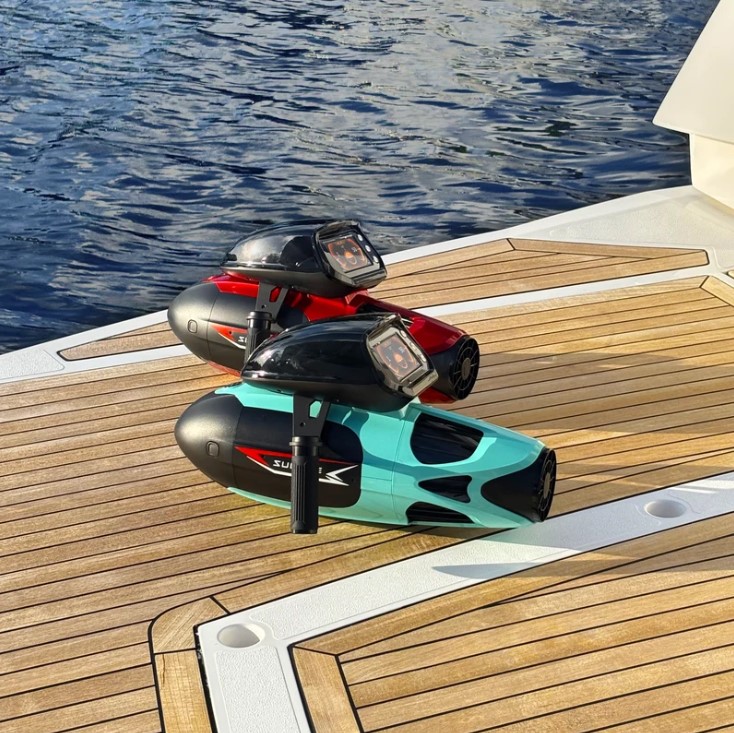
The primary point of water ingress on any DPV is the battery compartment door. Sublue utilizes a dual O-ring sealing system along the battery hatch perimeter. The primary outer O-ring acts as the main barrier against ambient water pressure, while a secondary inner O-ring provides redundancy against micro-particles like sand grains or dirt that might slip past during surface battery swaps. To keep these seals functional over years of use, referencing the official Sublue user manual is essential for proper lubrication intervals and cleaning steps.
Understanding Dynamic vs. Static Hydrostatic Pressure
It is important to differentiate between static pressure and dynamic pressure when taking gear underwater. Static pressure is the weight of the water column at a fixed depth. Dynamic pressure is created when the scooter pushes water out of the way at high speeds. When accelerating hard at 100 feet, localized pressure along the leading edges and seal joints spikes slightly above ambient pressure. The seal tolerances on the Vapor account for these dynamic pressure spikes, preventing micro-seepage around trigger shafts and seam joints.
Speed Modes, Thrust Metrics, and Battery Runtime
The Sublue Vapor features multi-gear variable speed selection controlled directly from the handlebar triggers. Speed control isn't just about moving fast; it is a critical gas management tool for scuba divers. Lower speed settings extend battery longevity and match standard finning speeds of dive buddies, while high settings allow you to punch through surface chop or localized current channels.
| Speed Mode | Approx. Speed Output | Estimated Runtime | Primary Tactical Use Case |
|---|---|---|---|
| Low / Eco Mode | 1.1 - 1.3 m/s (~2.5 mph) | Up to 60 minutes | Reef cruising, macro photography positioning, Buddy matching |
| Medium Mode | 1.5 - 1.7 m/s (~3.5 mph) | 35 - 45 minutes | General navigation, towing medium camera rigs, gentle currents |
| High / Sport Mode | Up to 2.0+ m/s (~4.5+ mph) | 15 - 25 minutes | Surging drift currents, rapid surface transits, freedive ascents |
Runtime numbers are always subject to environmental variables. Water temperature, total payload drag (diver body size, thick wetsuit, exposed hoses, light arms), and depth impact battery performance. Lithium-ion chemistry experiences reduced efficiency in cold water (below 55°F / 13°C), which can shorten overall burn time by 15% to 20%. In temperate or tropical waters, the battery management system (BMS) operates at peak discharge efficiency.
One key operational note for divers: continuous high-speed burn will draw down the battery rapidly due to exponential hydrodynamic drag. Water resistance increases with the square of your speed. Doubling your speed requires roughly four times the power output from the motors. Understanding this physical law helps you manage battery power during long dive trips.
Battery Tech, Charging, and Airline Travel Regulations
The battery system inside the sublue underwater scooter Vapor utilizes high-density Lithium-ion cells configured with a custom electronic protective circuit board. This circuit protects against over-charging, over-discharging, short circuits, and thermal runaway during high-drain operation.
For traveling divers, lithium battery capacity is a critical factor. The Federal Aviation Administration (FAA) and International Air Transport Association (IATA) enforce strict regulations regarding lithium-ion batteries on commercial aircraft:
- Under 100Wh: Allowed in carry-on baggage without special airline approval.
- 100Wh to 160Wh: Allowed in carry-on baggage with explicit airline operator approval (usually limited to 2 spare batteries per passenger).
- Over 160Wh: Strictly prohibited on passenger aircraft under standard commercial flight regulations.
Sublue designs their travel-series batteries to comply with standard airline carry-on allowances, making destination dive trips straightforward. However, you should always check the exact Watt-hour (Wh) rating stamped on your specific battery module before arriving at the airport. Never pack lithium batteries in checked luggage; always keep them in your carry-on bag with battery terminal covers installed to prevent accidental short circuits against metallic objects.
Charging is completed using a dedicated smart dock charger. Charging time from 0% to 100% takes approximately 1.5 to 2 hours depending on ambient room temperature. The smart charger monitors individual cell voltage balance, slowing the charge rate as cells reach full capacity to extend long-term cycle life.
Ergonomics, Buoyancy Tuning, and Handling Characteristics
Holding onto a scooter pulling you through the water places sustained load on your hands, wrists, shoulders, and lower back. Sublue shaped the Vapor handles with a neutral wrist angle, placing controls directly under your thumbs and index fingers.
Ergonomic & Operational Controls Breakdown
Dual-Trigger Safety Interlock: To prevent accidental activation on the surface or inside a gear boat, the Vapor requires both hands on the grips to operate. Squeezing one trigger arms the unit; squeezing both triggers engages the propellers. Releasing either trigger cuts power instantly.
Single-Hand Mode Adaptability: For underwater photographers who need one hand free to adjust focus knobs or reposition strobe arms, certain operational modes allow single-hand throttle lock via software safety protocols, though dual-hand engagement remains the default recommendation for safety.
Buoyancy characteristics determine how a scooter behaves when you let go of it underwater. A heavy DPV that sinks like a rock will pull your trim down or disappear into the deep if unclipped. Conversely, a scooter that is overly positive will shoot to the surface, creating a runaway hazard.
Out of the box, the Sublue Vapor is tuned to be slightly positive or near-neutral in saltwater. In freshwater, because fresh water is less dense than sea water (62.4 lbs/ft³ vs 64 lbs/ft³), the scooter will feel slightly heavier. Sublue includes removable ballast options or floater attachments that allow you to fine-tune the scooter's exact buoyancy based on your dive environment:
- Saltwater Setup: Standard configuration without extra float blocks provides near-neutral trim.
- Freshwater Setup: Add buoyancy foam elements to offset the lower density of lake/quarry water.
- Camera Mount Setup: If attaching a heavy housing or dual lighting arms to the top accessory mount, offset the added weight with buoyancy collars.
Scuba Diving Applications: Air Consumption & Gas Management
The primary reason scuba divers invest in a sublue underwater scooter is gas conservation. Human swimming mechanics underwater are inefficient. Leg kick cycles engage large muscle groups (quadriceps and gluteals) that require substantial oxygen delivery from the bloodstream. High muscular exertion increases carbon dioxide (CO2) build-up, which directly drives your brain's urge to breathe, dramatically elevating your Surface Air Consumption (SAC) rate.
Real-World Gas Efficiency Example
Standard Finning Dive: Average diver SAC rate = 0.65 cu ft/min (18.4 L/min). Tank duration at 60 feet (2.82 ATA) with an 80 cu ft aluminum tank ≈ 43 minutes total bottom time.
DPV-Assisted Dive: Average diver SAC rate drops to = 0.42 cu ft/min (11.9 L/min) due to zero leg muscle exertion. Tank duration at 60 feet increases to ≈ 67 minutes (subject to no-decompression limits).
By letting the Vapor propel your body through the water, your heart rate remains near resting levels. You breathe slowly and deeply, significantly lowering SAC rates. This extends your tank duration, often allowing you to dive until your non-decompression limit (NDL) or buddy's gas limits require surfacing.
Another tactical advantage is current management. When swimming against a 1-knot current without assistance, a diver consumes gas at nearly twice their baseline rate and risks physical exhaustion. The Vapor allows you to cross high-current zones effortlessly, saving your leg energy for when you need to maneuver in tight spots around the reef.
Freediving & Snorkeling Practicality
While scuba divers benefit from gas conservation, freedivers and breath-hold enthusiasts use scooters for different operational reasons. For freedivers, minimizing oxygen consumption during surface transits to the drop zone is critical for maintaining long breath-hold times.
Using the Sublue Vapor for apnea surface swims eliminates leg kicking prior to descent, keeping heart rates low and maximizing dive times. However, freedivers must observe critical safety rules when taking scooters on depth descents:
- Equalization Speed: A scooter can pull you down faster than you can naturally equalize your ears and sinuses. Never let the scooter tow you down faster than your equalization rate.
- Ascent Rate Control: High-speed ascents on breath-hold can risk pulmonary barotrauma if air becomes trapped. Always control your trigger finger to manage descent and ascent speeds smoothly.
- Positive Buoyancy Buoy Lanyard: Always secure a quick-release lanyard so if you release the scooter during a dive, it does not drop into deep water beyond your safe retrieval depth.
For surface ocean snorkelers, the Vapor opens up reef access that would otherwise require long, tiring swims from shore. The intuitive control layout allows teenagers and adults alike to cruise calm bays without leg fatigue.
Underwater Photography & Video Platform Integration
Capturing clean, steady underwater video is notoriously difficult. Handheld action cameras suffer from jitter, roll motion, and abrupt angle shifts caused by finning kicks and arm movements. The Sublue Vapor functions as a stabilized gliding platform for camera equipment.
The top casing of the Vapor features a built-in standard 1/4"-20 threaded mount or action-camera shoe adapter. Mounting a camera directly to the nosecone gives you steady, tracking shots through underwater topography, similar to a cinema camera on a motorized dolly track.
Camera Mounting & Balance Best Practices
- Keep Rig Frontal Drag Low: Avoid mounting wide, flat trays without hydrodynamic angling; excessive drag strains the scooter motors and pulls the nose downward.
- Neutral Buoyancy Calibration: Balance the camera housing weight with small float arms so the scooter does not become nose-heavy underwater.
- Lighting Placement: Position video lights slightly outward and backward relative to the lens to eliminate backscatter caused by suspended particles drawn through the thruster intakes.
Field Test Observations & Video Overview
To see how the scooter performs in live water conditions, watching video footage of operational handling, speed transitions, and maneuverability provides practical insight. The video below breaks down real-world testing and physical layout details:
As demonstrated in field footage, the turning radius of the Vapor is remarkably tight. By angling your wrists and dipping one shoulder, the unit banks smoothly into turns. This responsiveness makes navigating around coral heads, pier pilings, and swim-throughs straightforward compared to heavy, long-body technical DPVs.
Community Insights: Reddit & Scuba Forum Consensus
Independent peer reviews on dive community boards like Reddit give real insight into long-term ownership beyond initial marketing promises. Examining discussions on Reddit scuba discussions, several consensus themes emerge among actual owners and technical dive instructors.
What Divers Praise:
- Portability & Travel Ease: Divers love being able to drop the unit into a backpack alongside their regulator set rather than lugging a separate heavy storage box.
- Intuitive Safety Locks: The dual-trigger lock system prevents accidental throttle engagement when getting in or out of dive boats.
- Thrust Performance for Size: Users consistently note surprise at the punch provided by the dual counter-rotating props despite the light frame.
What Divers Note as Trade-offs:
- Not a Heavy Technical DPV: Community members accurately point out that compact scooters are not meant for deep cave exploration requiring 10-mile penetrations or towing 4 stage bottles. They are engineered for recreational sport diving, shallow reef cruising, and travel.
- Battery Swap Discipline: Because the battery compartment requires opening the sealed shell, divers emphasize the absolute need to thoroughly dry the exterior before opening to prevent saltwater droplets from reaching the internal terminals.
Brand Reputation, Warranty Terms, and Customer Support Evaluation
Investing in underwater electronics requires confidence in manufacturer backing, replacement parts availability, and warranty protection. Sublue has built a global presence in consumer ocean technology.
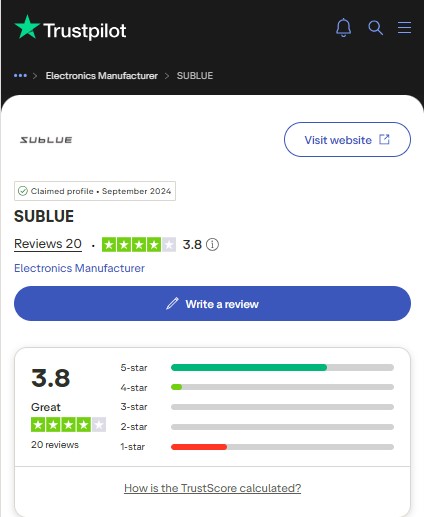
Verified consumer ratings and feedback can be reviewed on the official Sublue Trustpilot review page.
When purchasing directly from official channels, clear corporate policies safeguard your order. You can review full terms through the Sublue shipping guidelines and confirm technical service options via official Sublue support channels.
Policy & Ownership Protections Overview
- Warranty Support: Standard factory coverage protects against manufacturer defects in electronic control boards, motors, and housing structures. Full parameters are detailed in the official Sublue warranty terms.
- Secure Transactions: Direct checkout processes utilize encrypted processing gateways. You can verify options at the official checkout/payment portal.
- User Documentation: Detailed maintenance guides and safety procedures are accessible anytime via the Sublue online manual library.
Comprehensive Technical Specifications Breakdown
Here is a complete operational reference sheet for the sublue underwater scooter Vapor to help you compare specs directly against your gear requirements:
| Specification Parameter | Verified Specification Details |
|---|---|
| Motor Architecture | Dual High-Torque Brushless Electric Motors |
| Maximum Depth Rating | 130 feet / 40 meters (Recreational Limit Compliant) |
| Speed Modes | 3 Selectable Variable Speed Settings |
| Maximum Speed Output | Up to ~2.0 m/s (approx. 4.5 mph) |
| Battery Chemistry | High-Capacity Density Lithium-Ion Module |
| Maximum Runtime | Up to 60 Minutes (Mode & Drag Dependent) |
| Recharge Time | Approx. 90 to 120 Minutes on Smart Dock |
| Safety Controls | Dual-Hand Grip Interlock + Intakes Protection Grilles |
| Accessory Support | Integrated Universal Action Mount (1/4"-20 / GoPro Style) |
Maintenance Discipline & Saltwater Care Protocol
Ocean equipment fails when maintenance protocols are ignored. Saltwater is aggressively corrosive, and as water evaporates, salt crystals form sharp structures capable of damaging dynamic rubber O-rings and prop shaft seals. Following a strict post-dive maintenance ritual guarantees long-term reliability.
4-Step Post-Dive Maintenance Checklist
- Freshwater Soak: Submerge the complete unit in clean, warm fresh water for at least 20 minutes post-dive to dissolve micro-salt deposits around triggers and prop ducts.
- Operate Controls Under Fresh Water: Squeeze the trigger grips several times while submerged in fresh water to flush out trapped salt particles from spring mechanisms.
- Dry Before Hatch Opening: Thoroughly dry the outer hull with a microfiber towel before opening the battery latch. Never let saltwater droplets run into the battery pin connectors.
- Inspect and Grease O-rings: Remove the main compartment O-rings, check for sand grit or hair, clean with a lint-free cloth, apply a thin sheen of silicone grease, and reseat carefully.
For long-term storage during off-seasons, store the battery at roughly 50% to 60% state-of-charge in a cool, dry climate (60°F–70°F / 15°C–21°C). Never store lithium batteries completely depleted or fully charged for months at a time, as this degrades cell chemistry and reduces overall cycle lifespan.
Frequently Asked Questions (FAQs)
Q: Can I take the Sublue Vapor on a commercial airplane?
A: Yes, provided the battery pack falls within airline carry-on capacity limits (typically under 100Wh or under 160Wh with airline pre-approval). Always pack the battery in your carry-on luggage with terminal protectors installed. Never place lithium-ion batteries in checked baggage.
Q: What happens if I let go of the scooter while underwater?
A: Releasing either hand grip cuts power to the motors instantly. The unit will stop moving forward and drift according to its buoyancy calibration. In saltwater with standard float mounts, it will hover near-neutrally or rise slowly to the surface, allowing easy recovery.
Q: Is the Sublue Vapor suitable for technical cave or wreck penetrations?
A: No. The Vapor is engineered for recreational sport diving, freediving, and photo support. Deep cave penetrations require heavy technical DPVs with redundant battery systems, long-distance burn times (2–4 hours), and specialized tow harness configurations.
Q: How does salt water affect the motor components?
A: The motors are sealed inside corrosion-resistant housings. However, salt crystallization on propeller shafts can create drag if not rinsed. Soaking the scooter in fresh water after every ocean dive prevents salt build-up and maintains motor efficiency.
Final Verdict & Buyer Recommendation
The sublue underwater scooter Vapor establishes a practical sweet spot in underwater propulsion. It bridges the gap between weak toy-grade sea scooters that stall in light currents and heavy, expensive commercial DPVs that require a truck to haul to the dock.
By delivering reliable twin-thruster speed, effective gas-saving performance for scuba divers, travel-compliant battery options, and an easy control system, it stands out as one of the most versatile DPVs available for recreational divers today. If your goal is to cover more underwater terrain, lower your breathing gas consumption, and glide smoothly with your camera gear, the Sublue Vapor is well worth a spot in your gear bag.
Purchases are processed securely through the official Sublue store with direct customer warranty coverage.

0 Comments